House Republicans are locked in a contentious leadership battle just days after suffering sweeping midterm defeats, with factions split over whether to retain the current command team or install new figures who can rebuild the party's standing. The internal strife has laid bare competing theories about what went wrong—and who is responsible—as the conference prepares to operate in the minority.
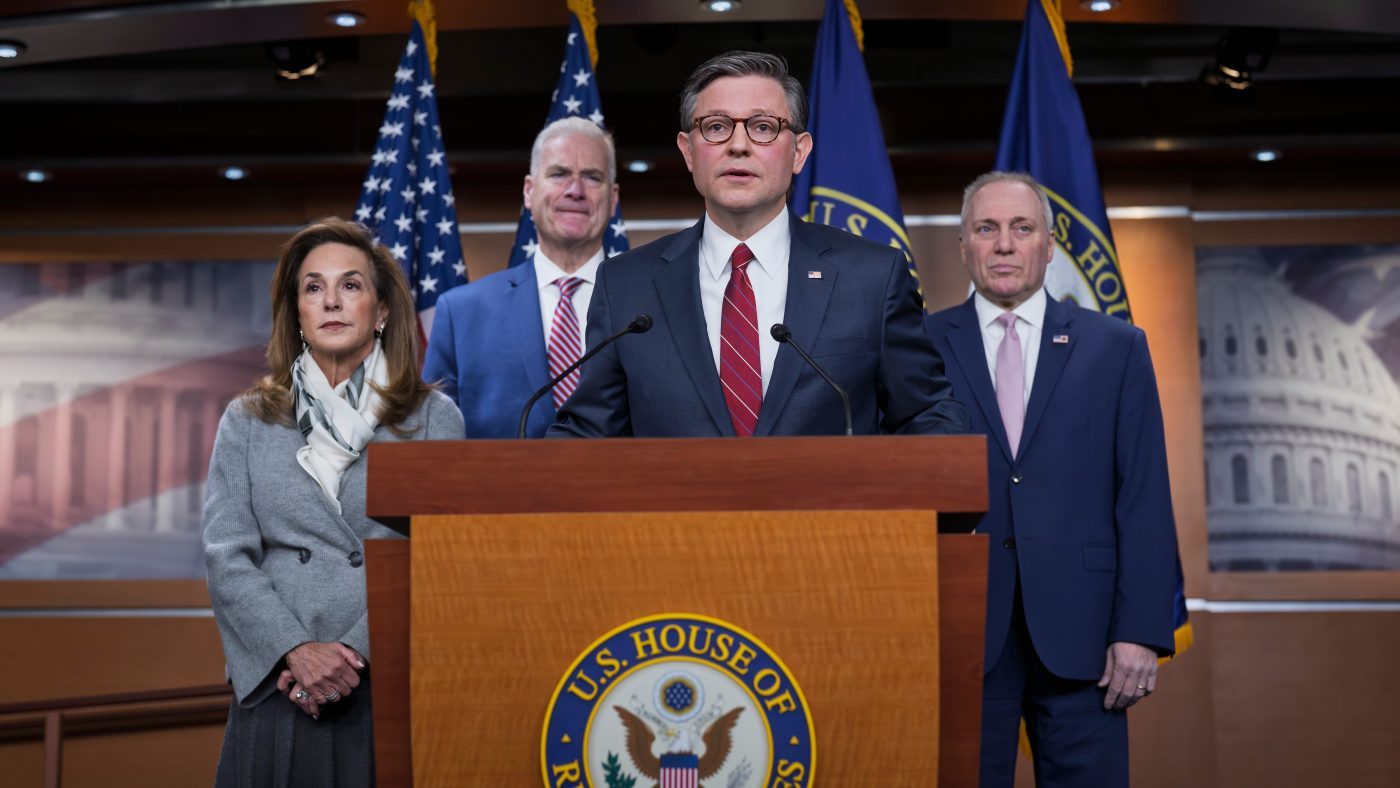
Speaker Mike Johnson (R-La.) announced to staff on a Wednesday call that he would not seek the minority leader post, immediately triggering a race between House Majority Leader Steve Scalise (R-La.) and House Judiciary Committee Chair Jim Jordan (R-Ohio). Both are seasoned conservatives, but they represent different wings of the party and different strategies for clawing back power in 2028.

At the same time, House Majority Whip Tom Emmer (R-Minn.) and House GOP Conference Chair Lisa McClain (R-Mich.) are working to hold onto their roles, but both face primary-style challenges from within the conference. Rep. August Pfluger (R-Texas), chair of the Republican Study Committee, is running against Emmer, while Reps. Erin Houchin (R-Ind.) and Greg Steube (R-Fla.) are challenging McClain.
The leadership contests are unfolding as Republicans try to sharpen their message, counter Democratic initiatives, and lay groundwork for a comeback. But many conservatives argue that the old guard—the same people who led them into the electoral abyss—cannot be trusted to chart a new path. “If we send up the same leadership team that led us to the slaughter, we will look like clowns,” one GOP lawmaker, speaking anonymously, told The Hill. “You can’t have the same team.”
That lawmaker and others contend that leaders failed to sell the party’s accomplishments and instead focused on niche issues that didn’t resonate with voters. “They saw us work on things like name, image, and likeness, or cryptocurrency reform, or whatever stuff that had nothing to do with making their lives better,” the lawmaker said. A second GOP member went further, calling for “all new leadership, top to bottom,” and said several colleagues have pledged not to vote for any current leader.
Rep. Anna Paulina Luna (R-Fla.) took to X to accuse leadership of obstructing her efforts on stock trading bans, central bank digital currency prohibitions, and FISA reform, writing, “Let the reckoning begin.” Jordan, a co-founder of the House Freedom Caucus, has emerged as the standard-bearer for those seeking a more combative approach. “We’re going into a wartime situation where we are going to be the rebel alliance,” said the first lawmaker, “and Jim Jordan knows how to fight.”
But Scalise’s backers argue he is the steadier hand, given his current leadership experience and his previous victory over Jordan in the 2023 speaker nomination race—even though he ultimately withdrew. “Steve is the right guy for the job,” a third GOP member said. “He’s a tried and tested leader, who has the experience to lead House Republicans for the next two years, and the chops to reclaim the Majority in 2028.” A GOP staffer noted that Scalise would have an “easier transition” due to his existing role.
The whip and conference chair races are equally fraught. Some see Pfluger as a fresh face who has excelled as RSC chair, while others defend Emmer as a “warrior” and “fighter” needed in the minority. The division reflects a broader debate over whether the party needs new leadership or simply better execution under the current team.
Not all Republicans blame the leadership, however. A fourth lawmaker pointed squarely at President Trump, arguing that his decisions—including on the Epstein files and a war with Iran—triggered the “blue tsunami” that wiped out the party. “I blame the man at the top,” the lawmaker said, adding that Johnson, Scalise, and Emmer were “dealt a really sh…” hand.
As the conference prepares for leadership elections, the outcome will signal whether Republicans intend to double down on the Trump-aligned, hardline approach or pivot toward a more institutional, pragmatic strategy. The stakes are high, with the party needing to rebuild its coalition and win back voters who abandoned it in November. The internal battles over who should lead are, in many ways, a proxy for the larger fight over the party’s identity.