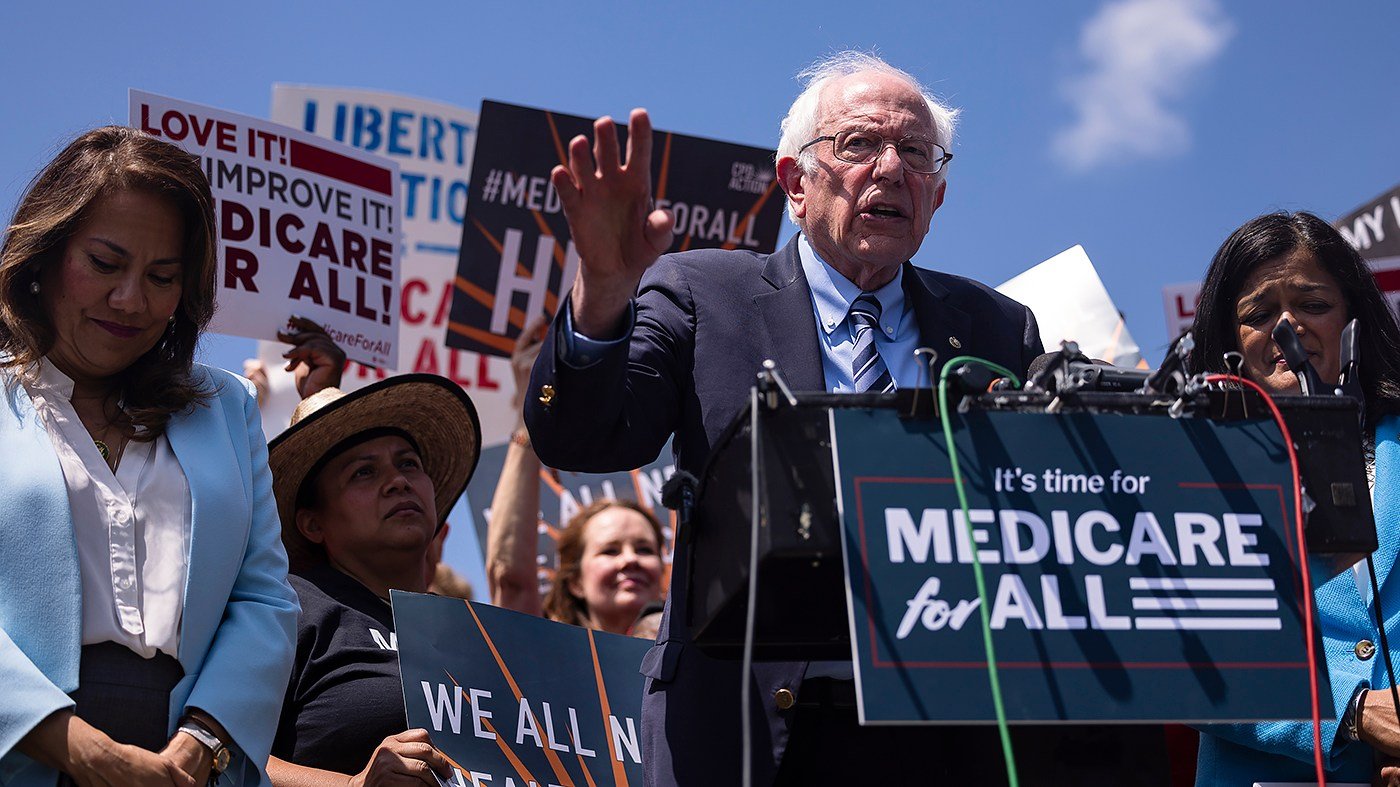
Sen. Bernie Sanders (I-Vt.) on Thursday urged Democrats to enact Medicare for All when they assume control of the Senate in January, framing the push as a defining test for the party after its sweeping midterm victories.
“Healthcare must be considered as a human right, not a privilege. That means passing Medicare for All legislation now supported by 66 percent of the American people,” Sanders said in a video message.
Sanders is positioned to become the next chairman of the Senate Health, Education, Labor and Pensions Committee, giving him a powerful perch to advance a single-payer agenda in the 119th Congress. His expected gavel comes as progressives argue that Tuesday’s Democratic landslide — including wins like Abdul El-Sayed’s in Michigan — proves their platform can compete nationwide. The party’s midterm wins were earned, not just GOP losses, they contend, and they intend to translate that momentum into a serious legislative drive for universal coverage.
While Sanders acknowledged that full Medicare for All may not be achievable immediately, he laid out a step-by-step strategy. As a first move, he said Democrats should lower the Medicare eligibility age from 65 to 55, add dental, vision, and hearing benefits to the program, and guarantee coverage for every child from birth through age 19. Those measures, he argued, would expand access without disrupting existing private insurance arrangements.
“As an immediate first step, Democrats must lower the Medicare eligibility age from 65 to 55, expand Medicare to cover dental, vision, and hearing, and guarantee universal health care coverage for every child from birth through age 19,” Sanders said.
To bypass Republican resistance, Sanders is advocating for reconciliation, the budget procedure that allows the Senate to avoid the filibuster and pass legislation with a simple 51-vote majority. Republicans previously used reconciliation to approve the One Big Beautiful Bill Act, which slashed nearly $1 trillion from Medicaid. Sanders said reversing those cuts and restoring the Affordable Care Act’s enhanced premium subsidies should be top priorities for Democrats. The push aligns with a broader multifront Democratic strategy to curb Trump’s agenda, which party leaders have been mapping since their midterm wins.
Progressives in both chambers are expected to make a significant push for single-payer healthcare, buoyed by a slate of new lawmakers who campaigned on the issue. The Democratic sweep, which saw the party sweep Congress on a healthcare backlash, has emboldened advocates who believe voters rewarded candidates who championed expanded coverage.
Still, major structural change faces steep odds with President Trump in the White House for the next two years. Any Medicare for All legislation would almost certainly face a veto, and even reconciliation has limits. But Sanders and his allies view the coming Congress as a chance to build the foundation — and the public case — for a future overhaul.
“We have a mandate to act,” Sanders said, pointing to polling that shows broad public support for guaranteeing healthcare as a right. Whether Democrats can convert that mandate into law will depend on their ability to stay united and navigate a narrowly divided Senate.