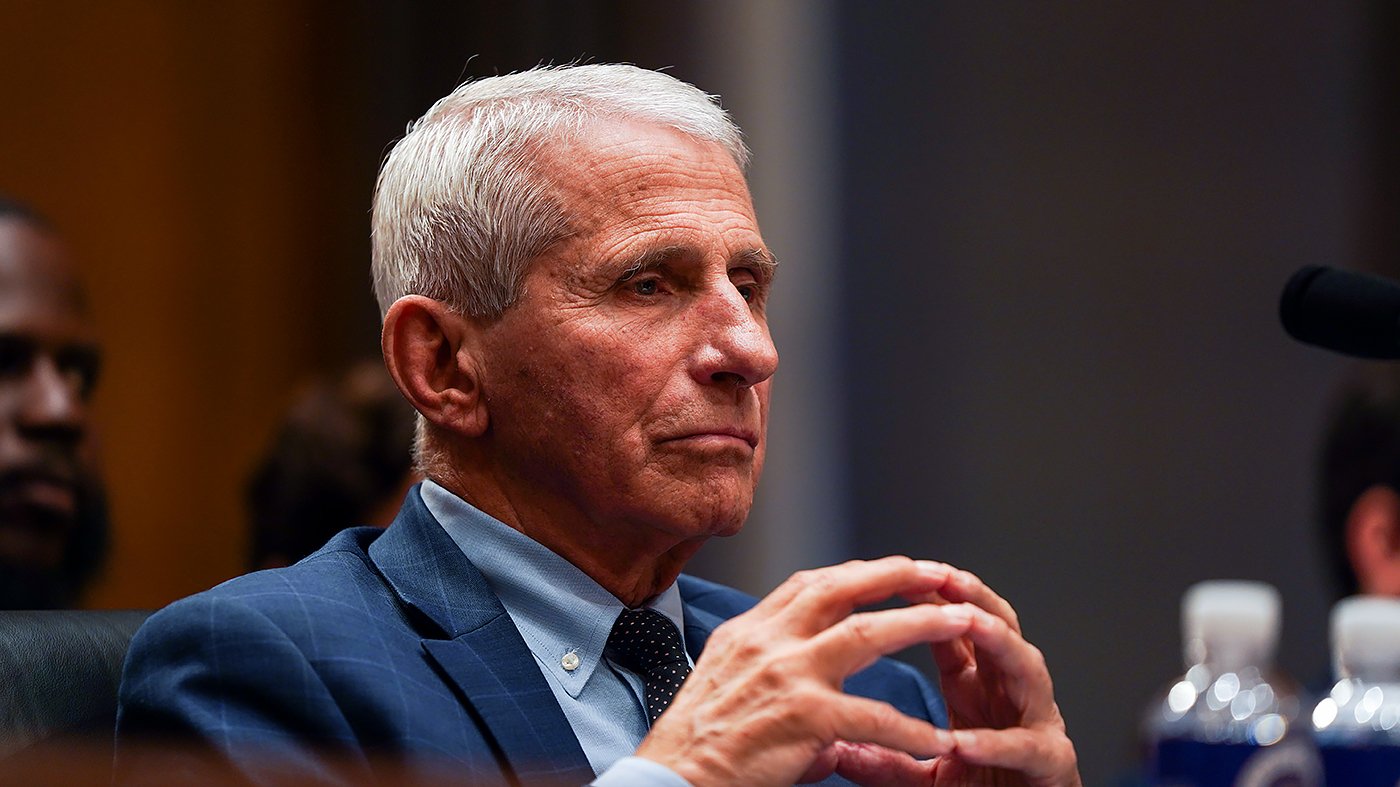
The Senate Homeland Security Committee is poised to vote Thursday morning on a resolution to hold former White House chief medical adviser Anthony Fauci in contempt of Congress. The move follows a contentious hearing last week in which Fauci invoked his Fifth Amendment right against self-incrimination more than 100 times.
Fauci, who served as the public face of the U.S. COVID-19 response, received a sweeping pardon from former President Joe Biden in the final days of his administration. That pardon has become a flashpoint in the contempt fight, with committee chair Sen. Rand Paul (R-Ky.) and other Republicans arguing that Fauci’s repeated refusal to answer questions was unjustified given the clemency.
“The pardon removes any legal basis for his silence,” Paul said in a statement ahead of the vote. “He cannot hide behind the Fifth Amendment after the president has already wiped away any potential federal liability.”
Democrats on the panel, however, have pushed back, noting that a pardon does not eliminate the risk of state-level prosecution or civil suits. Sen. Gary Peters (D-Mich.), the committee’s ranking member, argued that Fauci’s legal strategy remains valid and that the contempt vote is politically motivated.
“The Fifth Amendment is a constitutional right, not a privilege that can be revoked by a pardon,” Peters said. “This is a partisan exercise designed to score points, not to uncover the truth.”
The standoff stems from Paul’s release of over 1,000 pages of Fauci’s personal diaries, which Republicans say raise questions about the origins of COVID-19 and the government’s response. Democrats contend that the diaries have been taken out of context and that the hearing was a distraction from ongoing oversight work.
Thursday’s vote is scheduled to begin at 8:30 a.m. EDT. If the resolution passes, it would recommend that the full Senate hold Fauci in contempt, a step that could lead to further legal action.
The contempt resolution is the latest escalation in a long-running feud between Paul and Fauci, who has become a lightning rod for criticism of pandemic-era policies. Paul has previously called for Fauci to face criminal charges, while Fauci has denied any wrongdoing.
Legal experts are divided on whether the pardon actually undermines Fauci’s Fifth Amendment claims. “A pardon does not erase the risk of perjury or false statements charges if he testifies falsely,” said Jonathan Turley, a constitutional law professor at George Washington University. “But it does remove the threat of prosecution for past actions, which could weaken his argument.”
The vote comes as the committee also weighs other oversight matters, including a watchdog probe into Reflecting Pool failures and advancing the Kids Online Safety Act while an age verification bill stalls. The Fauci vote, however, is expected to dominate the morning’s proceedings.
If the committee approves the contempt citation, it would mark the first such action against a former White House official in recent memory. The full Senate would then decide whether to pursue the matter, which could lead to a federal lawsuit or other enforcement measures.
Fauci’s legal team has declined to comment on the vote, but sources say they are prepared to fight any contempt finding in court. The former official has maintained that he cooperated with the committee to the extent allowed by law and that his Fifth Amendment invocation was a protected right.
As the vote approaches, both parties are bracing for a political showdown that could resonate into the 2026 midterm elections. Republicans see the issue as a way to keep the pandemic response in the spotlight, while Democrats are framing it as an abuse of congressional power.