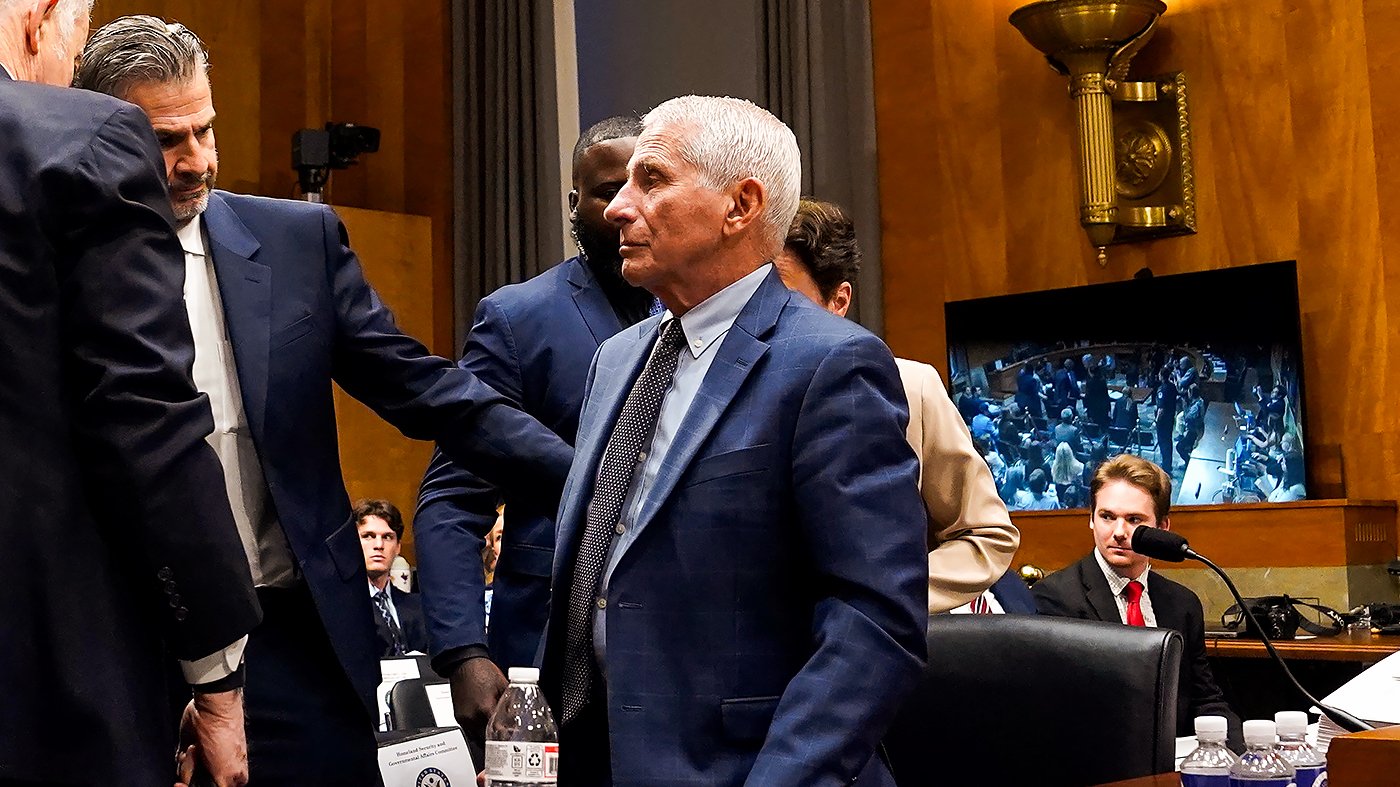
The Senate Homeland Security and Governmental Affairs Committee (HSGAC) is set to vote Thursday morning on a resolution to hold Dr. Anthony Fauci in contempt of Congress, following his contentious appearance last week where he declined to answer any substantive questions, repeatedly invoking his Fifth Amendment protection against self-incrimination.
The resolution, which was announced after the hearing, specifically cites Fauci's "refusal to answer questions pertinent to the subject under inquiry before the Committee as required by Committee subpoena." If approved, the measure would direct Vice President JD Vance, in his capacity as president of the Senate, to transmit the committee's contempt report to the U.S. Attorney for the District of Columbia for potential prosecution.
During the hearing, Fauci, who served as the nation's top infectious disease expert and led the COVID-19 response, made clear from the outset that he would not answer questions, accusing Committee Chairman Rand Paul (R-Ky.) of using the proceeding to try to put him "behind bars." His repeated invocation of the Fifth Amendment — more than 100 times — drew sharp criticism from Republican members, who argued that a sweeping pardon granted by former President Biden nullified any such protection.
The tension escalated to the point where Paul ordered the removal of one of Fauci's attorneys, David Schertler, from the hearing room. The move underscored the increasingly confrontational nature of the committee's oversight efforts.
Following the hearing, Paul acknowledged the legal ambiguity surrounding Fauci's Fifth Amendment claim, stating, "Maybe the Fifth Amendment doesn't attach when you have a pardon in place." That uncertainty reflects a broader legal debate, as Supreme Court precedent generally requires witnesses to have a degree of certainty about their immunity before they can be compelled to testify.
The committee's action is part of a larger Republican push for accountability related to the origins and handling of the COVID-19 pandemic. Critics argue that Fauci's silence has hindered efforts to uncover the truth, while supporters contend that his constitutional rights should be respected regardless of the political pressure.
This contempt vote follows a series of hearings and investigations that have highlighted deep partisan divisions over pandemic response. Some observers have noted that the proceedings have often devolved into political theater, overshadowing the substantive policy lessons that could be drawn from the crisis.
Fauci's attorneys have not yet responded to requests for comment on the planned vote. If the committee approves the resolution, it would then move to the full Senate for consideration, though the timeline for any further action remains unclear.
The outcome of this vote could set a precedent for how Congress handles witnesses who assert their Fifth Amendment rights, particularly in high-profile political investigations. It also raises questions about the limits of executive pardons and their interaction with congressional subpoena powers.