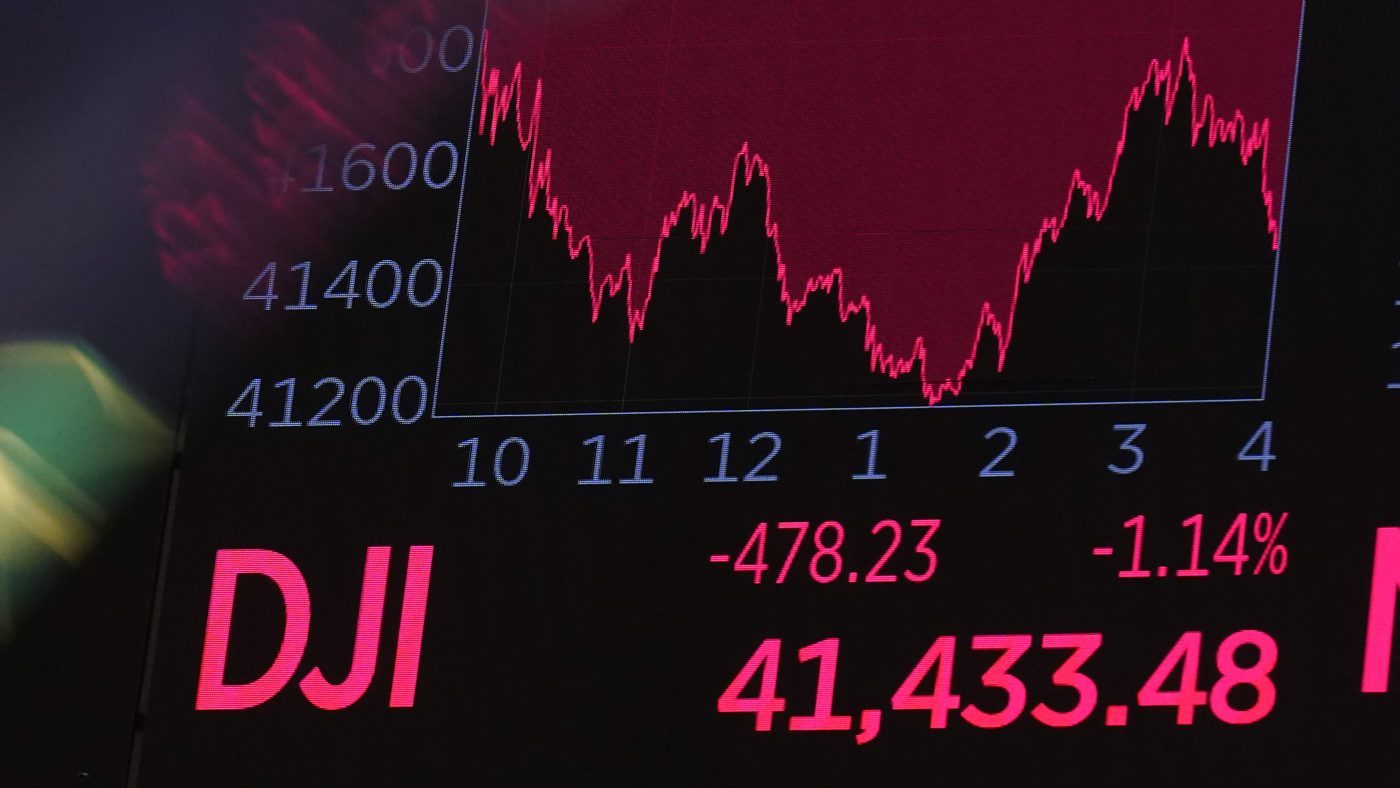
Wall Street took a beating Wednesday after the Federal Reserve decided to keep interest rates unchanged for the fifth consecutive meeting, despite inflation still running hot. The Dow Jones Industrial Average plunged 1,153 points, or 2.19 percent, marking its sharpest single-day drop since President Trump unveiled his sweeping "Liberation Day" tariffs back in April 2025.
The broader S&P 500 fell 1.52 percent to close at 7,316.15, while the tech-heavy Nasdaq Composite slid 1.74 percent to 24,442.94. The Nasdaq had hit an all-time closing high of 27,093.90 in early June, making Wednesday's decline particularly stark for that index.

In a 9-3 vote, the Federal Open Market Committee held the benchmark interest rate at a range of 3.5 percent to 3.75 percent. The decision extends a holding pattern that began after the central bank cut rates by a quarter-point at each of its final three meetings last year.
Warsh: Economy resilient but inflation still above target
Speaking to reporters after the announcement, Fed Chair Kevin Warsh acknowledged that inflation remains above the central bank's 2 percent target. The consumer price index, a widely watched gauge, showed annual inflation cooling to 3.5 percent in June from a three-year high of 4.2 percent in May.
"The economy is showing impressive resilience, even with recent shocks," Warsh said, pointing to energy price spikes linked to the conflict with Iran. "The trends are positive and reveal solid growth. Job gains have kept pace with the workforce, and the unemployment rate has changed little."
Warsh has previously addressed the nation about the Fed's approach amid geopolitical turmoil, and his latest remarks reinforced the central bank's cautious stance.
Forward guidance shift leaves markets to interpret data directly
Warsh also highlighted his decision to abandon the Fed's traditional practice of issuing forward guidance—a tool the central bank's website says helps businesses and individuals make "decisions about spending and investments." Instead, Warsh argued that pulling back from such guidance gives markets a clearer, more direct signal.
"We're trying not to interfere with that market signal. That's part of the reason why we've been somewhat spare in our words, why we pulled back from forward guidance. So [markets are] reacting to events, I would say, much more directly over the 42 days since we last met," Warsh said, referencing the FOMC's previous rate decision on June 17.
This approach has left traders to parse economic data and geopolitical developments—such as the ongoing midterm political landscape and energy market volatility—without the Fed's usual hints about future moves.
The selloff underscores growing anxiety among investors that the Fed's steady hand may not be enough to tame inflation, especially with external shocks like the Iran war driving up energy costs. With no rate cuts on the horizon and inflation still above target, markets are bracing for a prolonged period of tight monetary policy.