Six months into the ongoing military and economic confrontation between the United States and Iran, the conflict has settled into a pattern of unverified claims and ambiguous escalation thresholds. The latest exchange came last Saturday when Iran's Islamic Revolutionary Guard Corps (IRGC) fired ballistic missiles at a U.S. aircraft carrier and a guided-missile destroyer. CENTCOM insists both ships evaded the attack, while the IRGC maintains they were hit and forced to retreat. Independent verification remains absent.
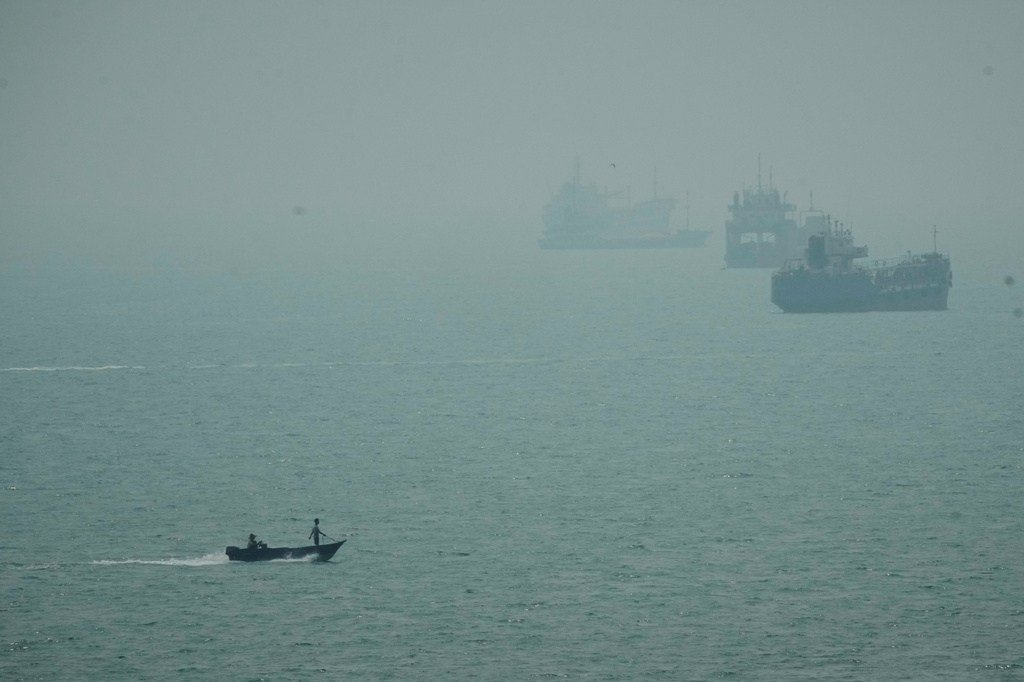
In response, the U.S. military announced it had disabled two Iranian tankers near Kharg and Jask and sank a third in the Gulf of Oman. Admiral Brad Cooper, CENTCOM's commander, articulated a new doctrine: "If you shoot at two of our ships, we will impose an even higher economic cost — taking out three of yours." This marked the most significant direct exchange since fighting resumed last week, following a lull of over a month.

The incident came on the heels of a controversial social media post by former President Donald Trump, who shared an AI-generated video claiming Iran's Kharg Island terminal had been "blown to smithereens." Reuters found no evidence to support this, and Iran's state oil company dismissed it as "laughable." Trump followed with declarations that Iran was "officially a Failed Nation" and called on Iranians to "rise up and fight."
These events highlight a critical reality: neither side has demonstrated a clear threshold that would force a change in strategy. Washington has targeted tankers rather than the Kharg terminal itself—the oil export hub whose destruction would most directly impact Iran's economy. Meanwhile, Trump's fabricated footage, which Vice President JD Vance called "a message," suggests a disconnect between official rhetoric and military action.
Economic indicators are measurable: Iran's inflation, currency collapse, and export losses are documented. U.S. interceptor expenditures are also estimated—reports suggest more than half of the prewar Patriot inventory has been used since February. However, neither metric serves as a clear decision point. Treasury Secretary Scott Bessent has described Iran's economy as a "death spiral" that could collapse "within weeks or months," but this is a forecast, not a benchmark, with no defined mechanism linking economic hardship to a change in Tehran's behavior.
Iran's internal stability remains a key unknown. The regime has long adapted to shifting economic pain onto its civilian population while shielding its security apparatus. How much hardship the public can absorb before elite cohesion breaks down is a variable that could determine the conflict's trajectory.
Washington's own opacity is a choice. The midterm elections are roughly two months away, and political timelines are public. Yet the operational math is contested. When reporters pressed on interceptor depletion, U.N. Ambassador Mike Waltz called the reporting "nonsense," insisted the military had "everything that it needs," blamed the Biden administration for prior ammunition shortages, and suggested that anyone leaking the relevant figures "deserve[s] to be in jail." His comments conflated past depletion with present readiness while criminalizing scrutiny of the numbers.
Phrases like "failing state" and "death spiral" are not measurements—they are commitments that become harder to revise as they go unchallenged. The war has seen multiple pauses: an April ceasefire, a June memorandum, July stand-downs, and an Aug. 1 halt tied to reported "perimeters of a deal." None have held, and the public record cannot confidently attribute any of them to pressure, mediation, or tactical repositioning.
The core finding is not that Iran is on the verge of collapse or that the U.S. is running out of weapons. Rather, neither government has demonstrated where the other's threshold lies, or how close either side is to its own. This ambiguity leaves the conflict without a natural stopping point, as both capitals interpret the other's denials and incomplete information as signs of imminent capitulation.
As the depletion of U.S. arsenal raises concerns about broader deterrence, and with Trump's claim that the conflict will end after the midterms, the war's trajectory remains uncertain. Economic pressures, including rising gas prices, add to the domestic stakes. The coming weeks will test whether either side can translate its rhetoric into a sustainable strategy—or whether the conflict grinds on with no clear end in sight.