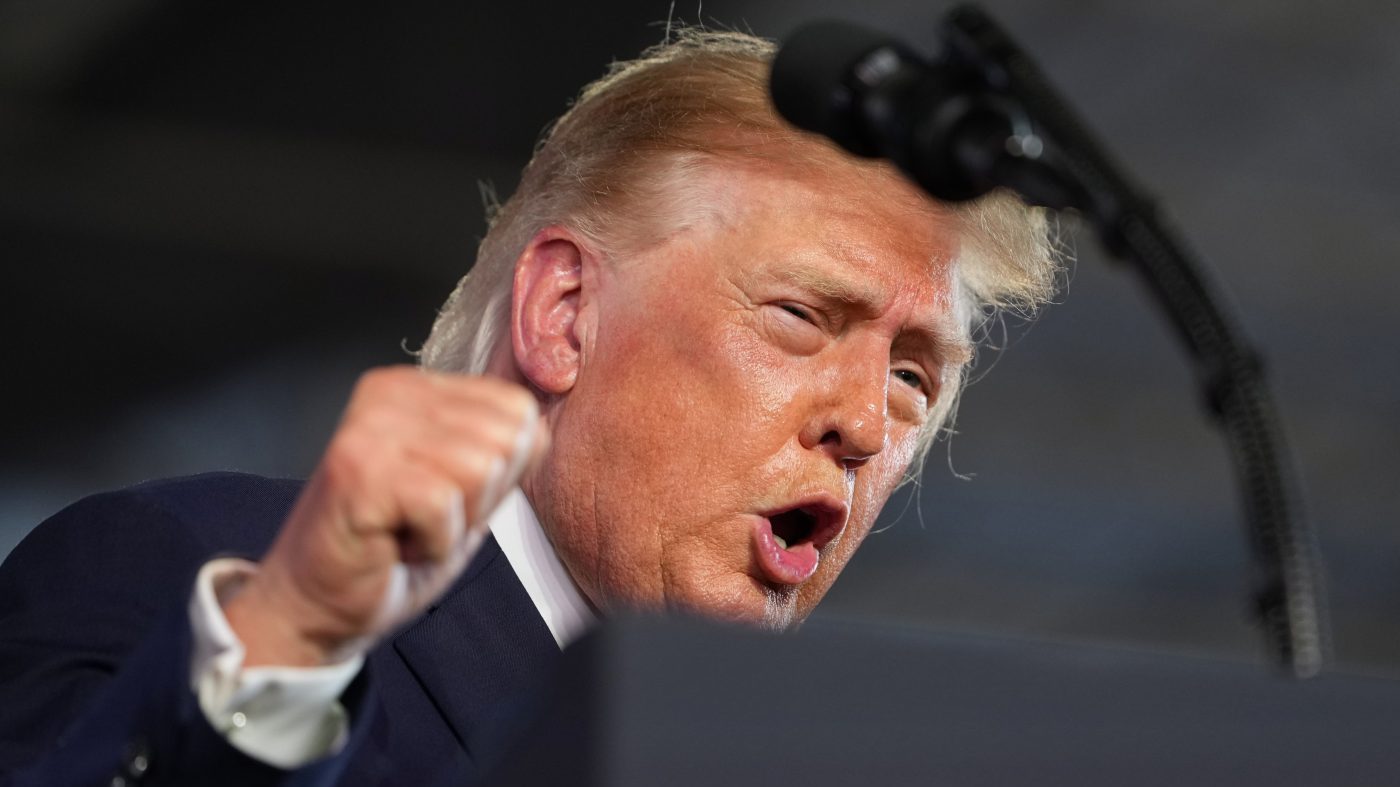
President Trump on Tuesday again floated the idea of absorbing Venezuela as the 51st U.S. state, linking the proposal to the recent flow of crude oil from the South American nation. Speaking to a crowd that included oil executive Harold Hamm, Trump suggested that Venezuela's economic potential could be unlocked under American statehood.
“It will become a prosperous country, and who knows? Maybe someday soon, it will become a prosperous 51st state,” Trump said. “That’s possible. Let’s make it the 51st state.” He added that instead of a president, Venezuela would hold an election for a governor.
The remarks came as Trump prepared to travel to Texas, where he and Secretary of State Marco Rubio are set to oversee the arrival of a Venezuelan tanker carrying crude oil destined for U.S. refineries. Trump earlier described the shipment as a “gift” of 1 million barrels. A State Department official said Rubio would accompany Trump in his capacity as national security adviser, not as secretary of state, to allow for extended discussions on a range of issues.
This is not the first time Trump has raised the prospect of Venezuelan statehood. He has made similar comments about Canada and earlier this year said he was “seriously considering” the move. The idea, however, has been firmly rejected by Venezuela’s acting president, Delcy Rodríguez, who assumed power in January after the U.S. military operation that ousted Nicolás Maduro.
“We will continue to defend our integrity, our sovereignty, our independence, our history,” Rodríguez told journalists in May, according to the Associated Press.
The oil shipment and the statehood talk come amid a delicate transition period in Venezuela, with U.S. officials urging caution. Secretary Rubio has warned opposition leader María Corina Machado against street protests as the political landscape evolves. Meanwhile, lawmakers are pushing for new elections following Machado’s return from exile.
Trump’s comments also align with his broader energy agenda, which has included easing regulations on small oil wells to boost domestic output. The administration has framed the Venezuelan oil as a step toward energy security, though critics question the long-term implications of such a deal.
Political observers note that the statehood proposal is largely symbolic and unlikely to gain traction in Congress. However, it underscores Trump’s unconventional approach to foreign policy and his willingness to challenge diplomatic norms. As he heads to Texas—where he is also backing a Senate candidate—the president continues to blend energy politics with his trademark rhetoric.