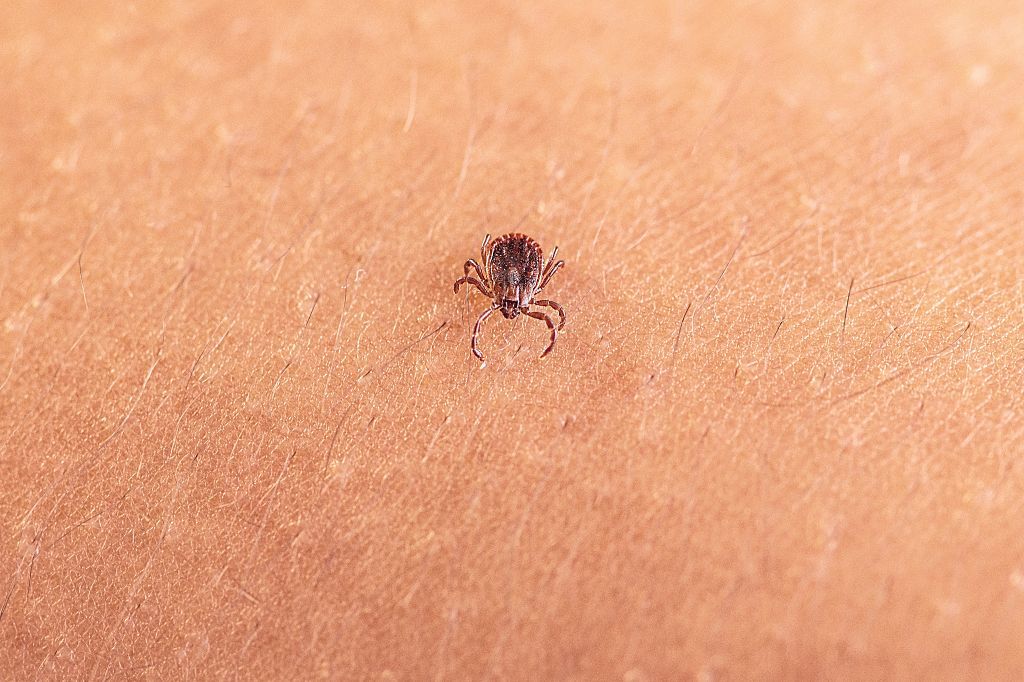
Since its first detection in the United States in 2017, the Asian longhorned tick has expanded its range to more than two dozen states, raising concerns among public health officials. Now, researchers have identified a new virus associated with this invasive species, prompting questions about the potential threat to Americans.
The virus, named Asian longhorned tick nairovirus (ALTNV), was discovered during a study in China, where scientists were investigating patients exhibiting symptoms of a related pathogen, Dabie bandavirus (DBV). The findings, published in the New England Journal of Medicine, revealed that over 15% of patients who tested negative for DBV were actually infected with ALTNV.

According to Dr. Douglas Norris, a professor at the Johns Hopkins Bloomberg School of Public Health, ALTNV alone causes flu-like symptoms, including fatigue, gastrointestinal issues, and low blood platelet counts. While it does not appear to have a high mortality rate on its own, co-infection with DBV—which occurred in 38 of over 3,100 patients studied—led to more severe respiratory and kidney problems, and seven of those co-infected patients died.
The Asian longhorned tick, which can reproduce without mating, has spread rapidly across the eastern and central United States. Emily Struckhoff, an education program specialist with Penn State Extension’s Vector-Borne Disease Team, noted that nearly all specimens found in the U.S. are female, enabling swift population growth.
However, experts emphasize that the tick has not yet been shown to transmit any diseases to humans in the U.S. Struckhoff explained that ticks acquire pathogens from feeding on infected animals, known as reservoir hosts. Without such hosts carrying the virus or bacteria, the ticks cannot spread these illnesses.
Norris added that while the Asian longhorned tick has not been implicated in human disease transmission in the U.S., it is “competent for pathogens,” meaning it could potentially carry and transmit diseases like Rocky Mountain Spotted Fever. He also warned that new viruses are often discovered only after enough cases emerge, suggesting that unidentified pathogens may already be circulating.
The U.S. Department of Agriculture notes that standard tick treatments are effective against the Asian longhorned tick. Livestock owners and pet owners are advised to consult veterinarians if they suspect exposure.
While the immediate risk to Americans appears low, the tick’s expanding presence—combined with its ability to transmit pathogens in its native range—warrants continued monitoring. As public trust in government remains a pressing issue, effective surveillance and response to emerging vector-borne diseases will be crucial.
For now, experts urge caution but not alarm. The discovery of ALTNV underscores the importance of ongoing research into tick-borne illnesses, especially as climate change and global travel facilitate the spread of invasive species.