Senior Trump administration officials have been warning that American men are facing a dramatic drop in testosterone levels, but medical experts argue that the narrative oversimplifies a complex issue and that hormone replacement therapy is not the silver bullet it's made out to be.
Defense Secretary Pete Hegseth and Health and Human Services Secretary Robert F. Kennedy Jr. have both spotlighted the issue since taking office. Kennedy has repeatedly claimed that "an American teenager has less testosterone than a 68-year-old man," while Hegseth has implemented mandatory testosterone screening for active-duty service members over 30, with voluntary hormone therapy offered to those who fall below the threshold.

The concern isn't baseless. Studies from the U.S., Denmark, and Israel have shown a broad decline in testosterone levels over recent decades. A study funded by the U.S. Army Medical Research and Development Command, published in October, found that 25.7% of active-duty male soldiers had morning testosterone readings below 300 ng/dL—a cutoff often used by the American Urological Association to suggest possible deficiency when symptoms are present.
But researchers stress that a single low reading doesn't mean a man has a clinical problem. Testosterone levels fluctuate throughout the day and are influenced by health, fitness, and stress. Claire E. Berryman, a former Pennington Biomedical researcher now at Purdue University and a corresponding author of the study, said the findings alone are not enough to diagnose hypogonadism, a condition marked by little or no sex hormone production.
"A diagnosis generally requires both consistent signs or symptoms of testosterone deficiency and unequivocally and repeatedly low testosterone concentrations," Berryman said. "Our study provides valuable information about the prevalence of testosterone concentrations below established thresholds, but we did not perform the comprehensive clinical evaluations required to diagnose hypogonadism."
The Army study used two thresholds—300 ng/dL and 264 ng/dL, the latter based on earlier research defining a "harmonized reference range" for healthy young men. The results aligned with previous population studies, including a 2018 analysis that found 30.8% of men aged 20 to 60+ fell below 300 ng/dL.
Kennedy and conservative radio host Alex Jones have cited such data to argue that environmental factors are catastrophically suppressing male testosterone. Kennedy has even suggested that chemicals in drinking water could be driving both low testosterone and gender identity changes in children, a theory experts have repeatedly dismissed for lack of evidence.
Kennedy, 72, has acknowledged using "testosterone replacements which are appropriate for my age." But endocrinologists like Sandeep Dhindsa of Saint Louis University School of Medicine attribute much of the observed decline to demographic shifts.
"I think most of the decline in testosterone that would be noticed in studies is going to be the fact that we have an aging population. We have obesity. And when you take into account those factors, then the differences become smaller, but they don't go away completely," Dhindsa said.
He noted that the role of endocrine disruptors like microplastics and phytoestrogens remains "a bit unknown," and that testosterone levels are highly sensitive to stress and illness. "Soldiers, for example, if they are going to a war, they have very, very low testosterone levels," Dhindsa said, citing the body's normal response to extreme conditions.
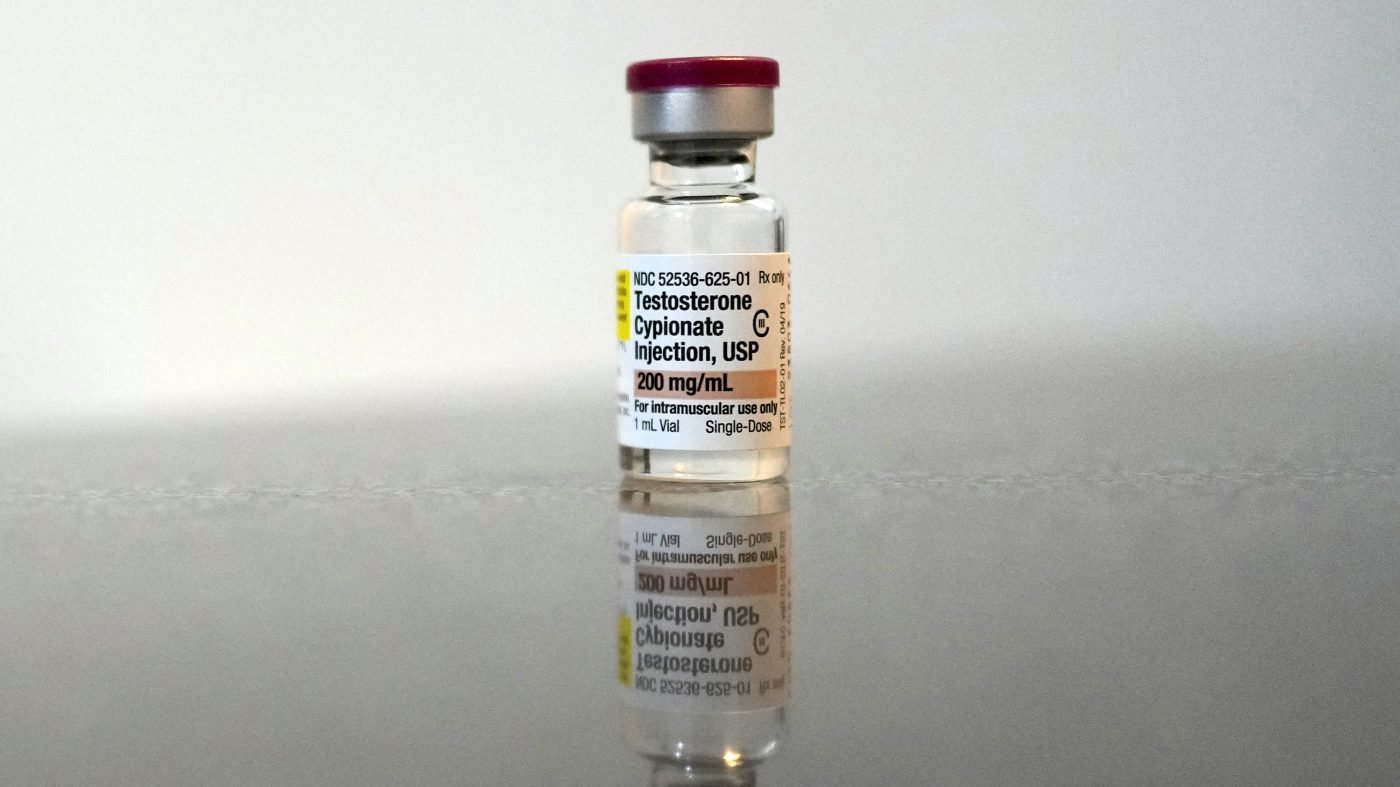
The Army study did not select participants based on symptoms, and testosterone therapy is meant to relieve those symptoms—not just hit a number. Hegseth has said the military's screening is intended to ensure troops have the "right testosterone levels to operate at your absolute best," but experts caution that treating asymptomatic men could lead to unnecessary medical interventions.
As the administration pushes this narrative, the scientific community urges a more measured approach, emphasizing that testosterone levels are just one piece of a much larger health puzzle.