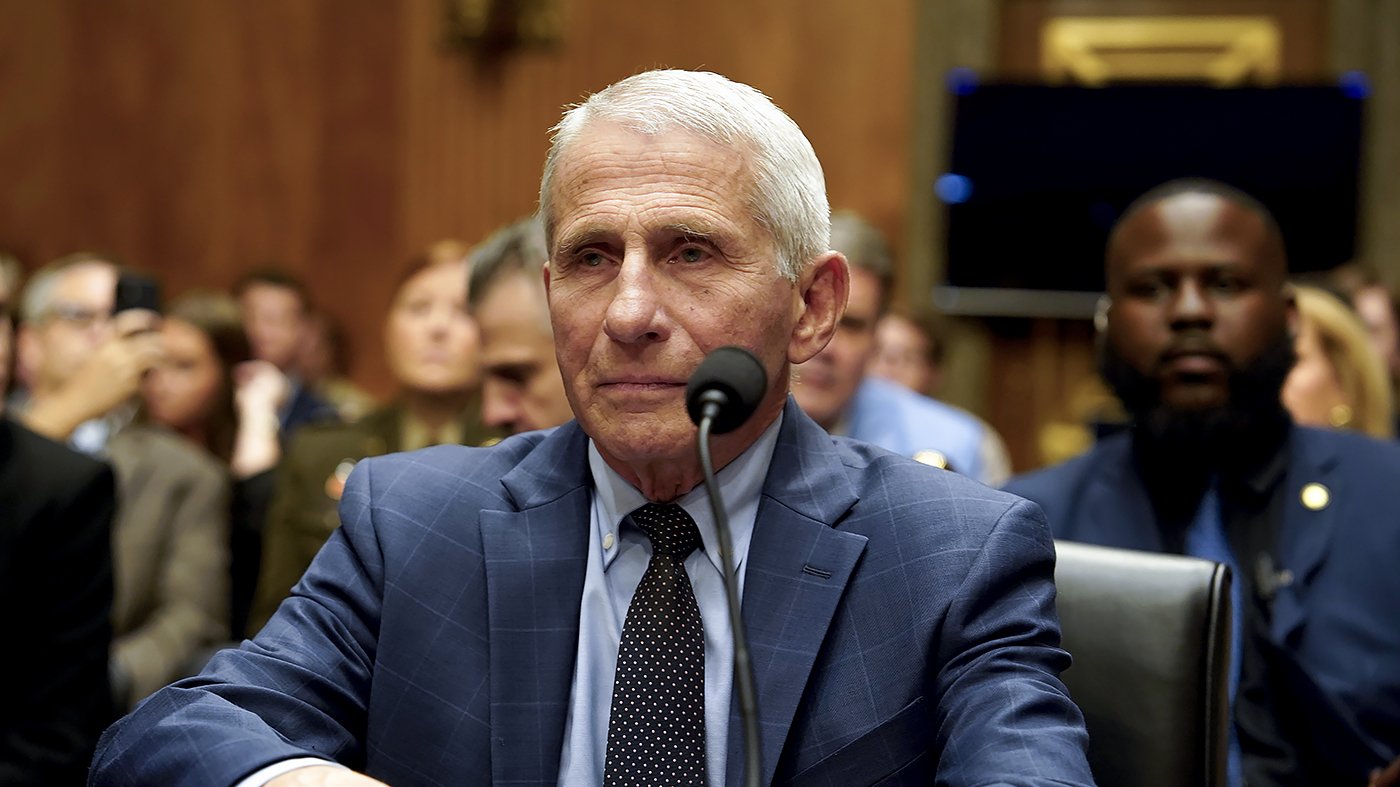
The Senate Homeland Security and Governmental Affairs Committee is scheduled to vote Thursday on whether to hold former top health official Anthony Fauci in contempt of Congress, following his refusal to answer questions at a hearing last week where he repeatedly invoked his Fifth Amendment rights.
Committee Chair Rand Paul (R-Ky.) announced the planned vote after the three-hour hearing, during which Fauci declined to respond to questions 111 times, citing the constitutional protection against self-incrimination.
The contempt resolution, introduced Tuesday, would refer the matter to the U.S. Attorney for the District of Columbia, though it could also be sent to the full Senate for a vote. Paul has indicated he may bypass the floor and directly refer the case to the Justice Department, a move similar to House Judiciary Chair Jim Jordan's recent referral against former special counsel Jack Smith.
GOP Argument: Pardon Nullifies Fifth Amendment
Republicans on the panel argue that former President Biden's sweeping pardon of Fauci, issued on his last day in office, eliminates any Fifth Amendment protection. The pardon covers offenses from Jan. 1, 2014, to Jan. 19, 2025.
Sen. Josh Hawley (R-Mo.) told Fauci during the hearing, citing the 1896 Supreme Court ruling in Brown v. Walker, that a pardoned witness cannot claim the privilege because they stand as if the offense never occurred.
Fauci's attorneys counter that the pardon only covers federal crimes, leaving him exposed to state-level prosecution, a risk they say preserves his constitutional rights. They called Paul's campaign against Fauci an "obsessive vendetta" and noted that Paul has repeatedly called for Fauci's imprisonment, which they argue contradicts his claim that Fauci should testify freely.
Democrats: Pardon Doesn't Erase Rights
Democrats on the committee maintain that Fauci retains his Fifth Amendment rights regardless of the pardon. Ranking member Gary Peters (D-Mich.) wrote in a letter to colleagues that a federal pardon does not eliminate protection if there is a "real and appreciable" risk of prosecution, including state charges.
Sen. Richard Blumenthal (D-Conn.), a former U.S. attorney, said the Justice Department would have no case, arguing that Fauci's fear of self-incrimination is justified given Paul's repeated threats. He dismissed the pardon as irrelevant, noting it covers actions before the Trump administration began.
Florida Attorney General James Uthmeier (R) has opened an investigation into Fauci, adding to the potential legal exposure beyond federal jurisdiction.
What Happens Next
The committee's vote is expected to pass along party lines, but the path forward is uncertain. If referred to the DOJ, prosecutors would decide whether to pursue charges, a process that could take months. Paul has said he will start by sending the referral directly to the Justice Department, though a full Senate vote remains a possibility.
The standoff underscores the ongoing political battle over pandemic-era decisions and the limits of congressional oversight. For more on the committee's recent actions, see related coverage of the panel's other work and the initial move toward contempt.