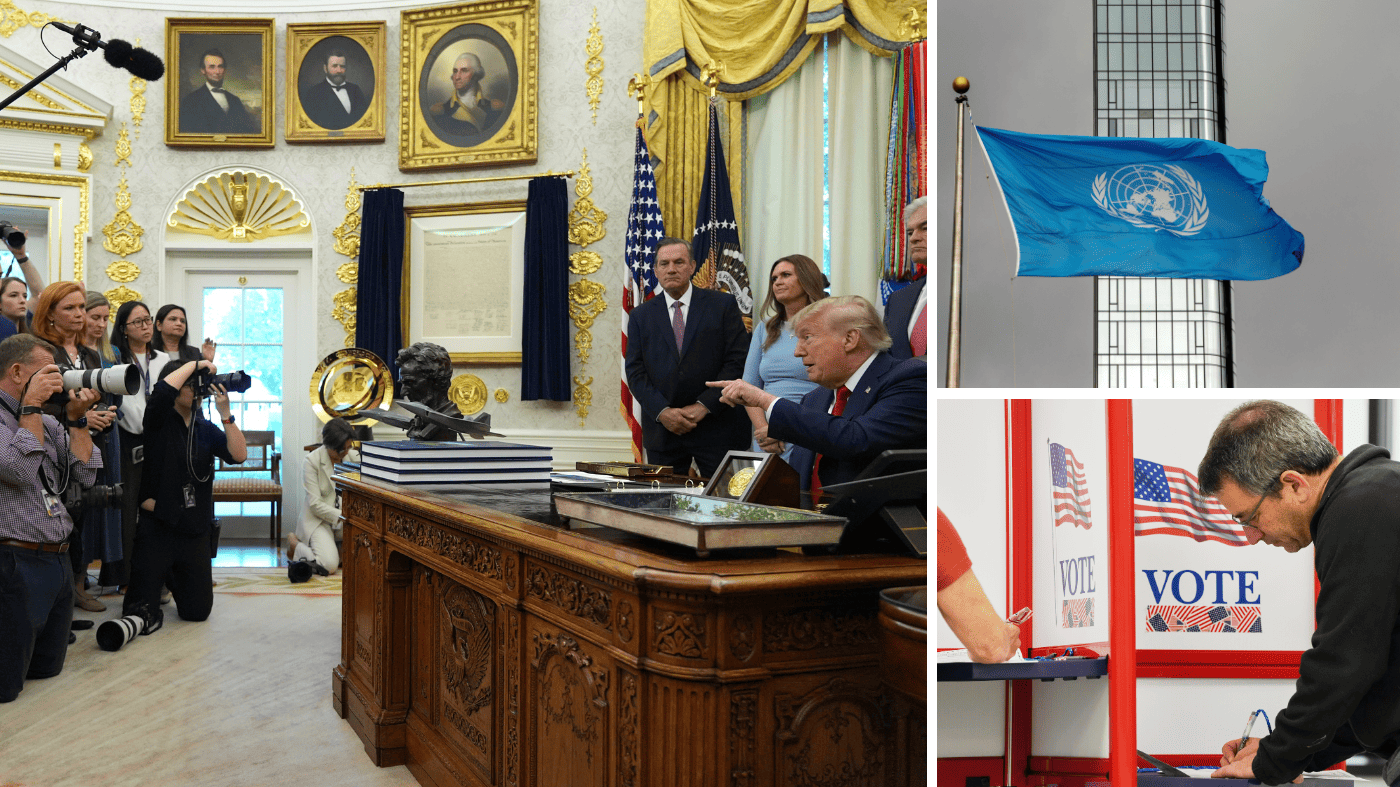
President Trump's decision to bar Politico, CNN, and MSNOW from White House access escalated this weekend, with the outlets reporting that their journalists were physically denied entry to the executive mansion on Saturday. The move, announced earlier in the week, has ignited a fierce debate over press freedom and the administration's willingness to punish unfavorable coverage.
Jacqui Heinrich, president of the White House Correspondents' Association and a senior White House correspondent for Fox News, issued a blistering statement demanding the White House "immediately" restore credentials. She argued that the ban violates the First Amendment and sets a dangerous precedent. "The implications extend beyond these organizations: a standard used to exclude one news outlet because of its coverage could be applied to any outlet in the future," Heinrich said. "The American people, through a free and independent press, must be able to scrutinize those elected to power, regardless of whether government officials view it favorably."
Illinois Governor JB Pritzker, a Democrat and frequent Trump critic, also condemned the action on social media, calling it "another attack on the First Amendment from a president who knows he and his party of bootlickers are deeply unpopular." Pritzker, who is set to appear on ABC's "This Week" on Sunday, added that Trump is "banning journalists he doesn't like to keep you from hearing about" his failing record.
The press ban comes as the administration faces mounting political headwinds over rising costs and an ongoing military campaign against Iran. The national average for regular gasoline hit $4.48 per gallon on Saturday, up from about $3.20 a year earlier, while diesel prices have surged to $6.49, near record highs. Trump, at a rally in North Carolina on Wednesday, dismissed these increases as a "very inexpensive price to pay" for the conflict, a remark that has drawn sharp criticism from Democrats and even some Republicans worried about the electoral consequences.
Republicans are increasingly anxious that inflation could cost them at the ballot box in November, with polls showing the economy as a top voter concern and many voters blaming Trump for poor financial conditions. Trump's own comments on Thursday, suggesting a "big decision" on whether to "annihilate" the Iranian regime, have only added to the uncertainty. "Anything could happen with me," he told Axios.
Amid these tensions, the president is preparing to host Chinese President Xi Jinping in Washington next week, following their May summit in Beijing. Trump will greet Xi at Joint Base Andrews on Wednesday, one day after addressing the UN General Assembly in New York. U.S. Ambassador to the UN Mike Waltz is scheduled to appear on CNN's "State of the Union" on Sunday to preview the meeting.
Meanwhile, artificial intelligence has emerged as a new political flashpoint. A POLITICO poll found that 63% of U.S. adults believe AI could one day destroy mankind, with 17% calling that outcome "almost certain." Democratic and some Republican lawmakers are demanding stricter oversight. Senator Cory Booker (D-N.J.) called on Trump to convene a special session of Congress to address AI safety, writing on social media: "This is not a moment for panic or despair. It is a moment for government to govern." Booker will appear on NBC's "Meet the Press" on Sunday.
Trump, however, has downplayed such fears. On Saturday, he announced the creation of an AI "Czar" position, posting on Truth Social that "only High I.Q. individuals need apply!" He framed AI as "the next Industrial Revolution" and a potential driver of up to 25% of U.S. GDP, vowing to keep America ahead of China. Senator Dave McCormick (R-Pa.), a member of the Senate Foreign Relations Committee, echoed that sentiment, insisting that "America must win the race for AI and energy dominance." McCormick is slated to appear on "Fox News Sunday."
The controversy over the press ban has also drawn attention to broader concerns about press freedom, with some noting that Trump's visa restrictions on foreign journalists similarly echo authoritarian tactics. Even Fox News, often aligned with the administration, has shown signs of splitting with Trump over the press bans, as WHCA's Heinrich's strong rebuke indicates.
As the midterms approach, the political landscape remains volatile. Republicans are walking a tightrope, with some in states like Iowa navigating Trump's polarizing presence while trying to address voter concerns about the economy. Meanwhile, Trump has sought to pivot to other issues, including Medicaid drug price cuts, but the press ban and economic turmoil continue to dominate the narrative.
In addition to the press ban, several states are moving to regulate data centers over concerns about water and energy usage. On Friday, Virginia Governor Abigail Spanberger (D) and Nevada Governor Joe Lombardo (R) separately announced new requirements for data centers in their states, reflecting a growing bipartisan push to address the environmental impact of the AI boom.