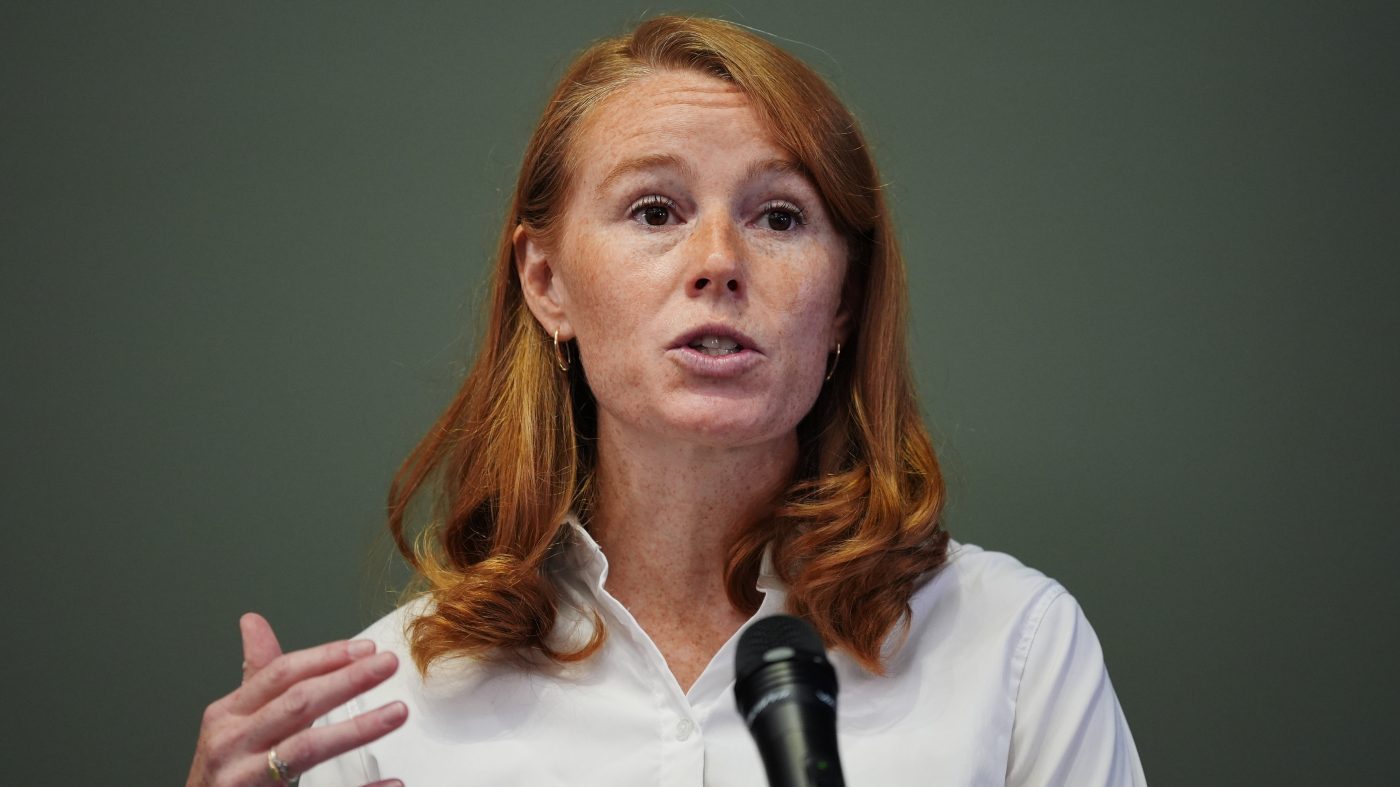
Democrat Rebecca Cooke, a former political fundraiser and current server, has unseated Republican Rep. Derrick Van Orden in Wisconsin's 3rd Congressional District, according to Decision Desk HQ projections. With all precincts reporting early Wednesday, Cooke secured roughly 52 percent of the vote to Van Orden's 46 percent, flipping a seat that has been a battleground for the past two cycles.
The rematch was widely seen as a test of Democratic strength in rural and exurban areas that have trended toward the GOP. President Trump carried the district by more than seven points in 2024, yet Van Orden won his seat by only about three points that same year—a gap that Democrats targeted aggressively. Cooke's victory adds to a string of Democratic flips in competitive House races, including Wisconsin's 1st District and Arizona's 6th, as the party builds momentum toward a potential majority.
Cooke's campaign leaned heavily on tying Van Orden to Trump, whose approval ratings sagged in the final weeks before Election Day. She hammered rising diesel and fertilizer prices, higher healthcare costs, and overall affordability concerns—issues that resonated with the district's agricultural and working-class voters. In a statement, Cooke said voters were "tired of politicians who put party over people" and promised to fight for "kitchen-table economics."
The race turned particularly contentious in its final stretch. Van Orden's campaign released an AI-generated deepfake advertisement depicting Cooke in a negative light. Cooke responded with a cease-and-desist letter, which she publicized on social media. Her attorney called the videos "the exact kind of mudslinging voters are tired of" and said they "undermine our democratic process." Van Orden then doubled down, releasing another AI deepfake that portrayed Cooke as a red bird wearing a Democratic Socialists of America shirt.
The ethics of AI in political advertising became a central theme, with Cooke accusing Van Orden of resorting to "desperate, dishonest tactics." Her campaign highlighted the contrast between her grassroots approach and what she described as the incumbent's "corporate-backed negativity." The episode drew national attention, as lawmakers and watchdog groups have increasingly raised alarms about the use of synthetic media in campaigns.
Cooke also received a boost from progressive firebrand Sen. Bernie Sanders (I-Vt.), who stumped for her in the final days. Sanders emphasized her working-class bona fides, telling a crowd, "Electing Rebecca, you will have somebody who I think in this campaign is the only working waitress to be elected in the U.S.A." That message helped solidify support among rural and union households, where Sanders has historically held appeal.
The Cook Political Report initially rated the seat as a "toss-up," but shifted it to "lean Democrat" in late October—a sign of Cooke's strengthening position. Her inclusion in the Democratic Congressional Campaign Committee's "Red to Blue" program in February provided organizational and fundraising support that proved critical in a district where Democrats have struggled to compete in recent cycles.
Cooke's victory is part of a broader Democratic surge in Wisconsin, where governor's race was also called for the Democrat, and in nearby states, as Iowa's Senate seat flipped as well. The outcome in the 3rd District underscores the volatile political landscape in the Upper Midwest, where economic anxiety and dissatisfaction with the president appear to have outweighed cultural appeals.
Van Orden, a retired Navy SEAL and first-term incumbent, conceded defeat in a statement late Tuesday, congratulating Cooke and urging his supporters to "remain engaged in the fight for our values." He did not address the deepfake controversy directly.
With this race decided, Democrats have now flipped multiple Republican-held districts, and party leaders are increasingly confident about their path to retaking the House. Cooke is expected to be sworn in with the new Congress, where she has pledged to prioritize affordable healthcare, farm support, and clean energy investments—issues she says were ignored by her predecessor.