As the midterm campaign enters its final stretch, Iowa Republicans are confronting a delicate political calculus: how closely to align with President Trump and his administration in a state where the political winds have shifted. Democrats are working to link GOP candidates to the administration's most contentious decisions, including the ongoing conflict in Iran and domestic economic frustrations.
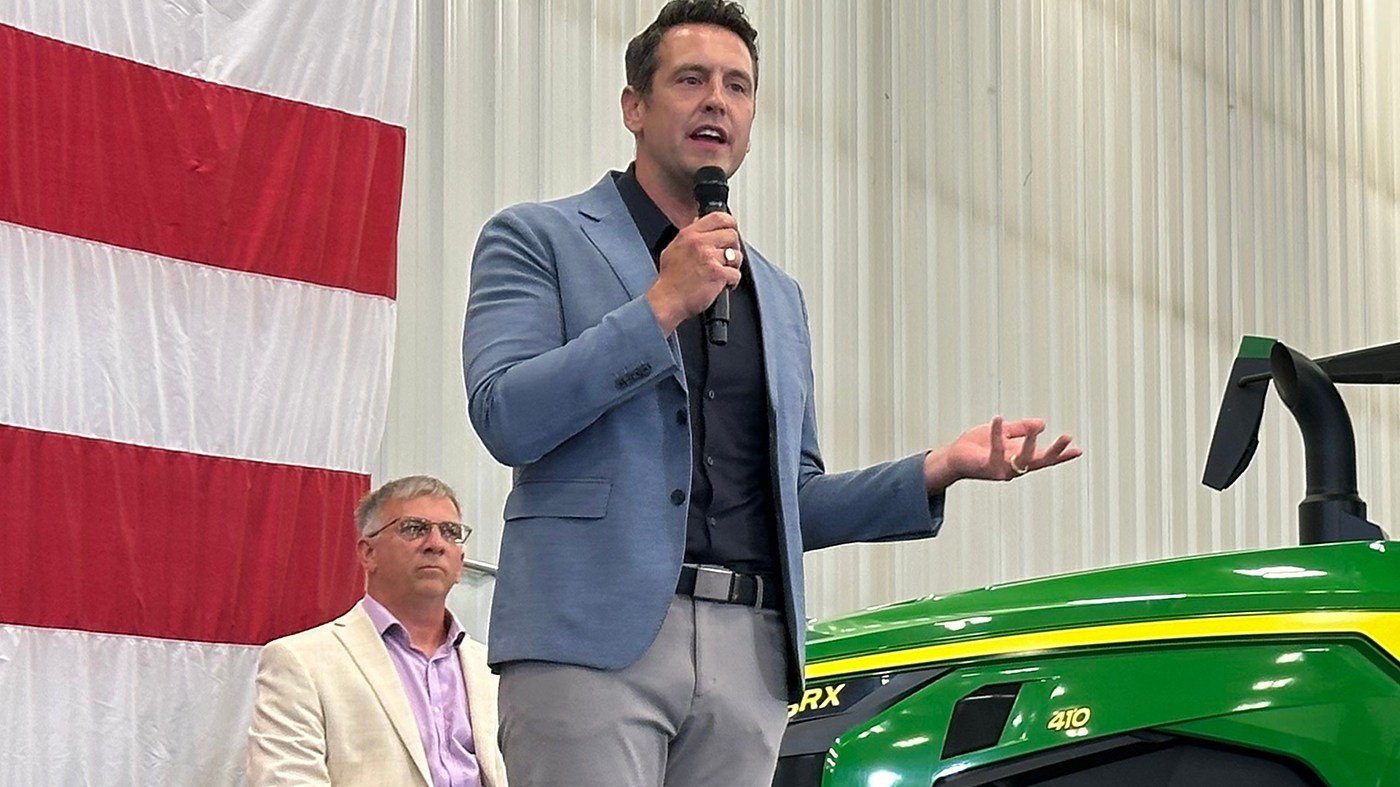
The tension was on vivid display Friday in Council Bluffs, where Vice President Vance headlined a rally for gubernatorial nominee Zach Lahn. Notably absent was Senate candidate Ashley Hinson, who cited scheduling conflicts but received a warm shoutout from Vance nonetheless.
“I know she couldn't be here today, but are we going to elect Ashley Hinson for United States Senator from the great state of Iowa?” Vance asked, drawing applause from the crowd.
Vance then pivoted to a pointed attack on Lahn's Democratic opponent, Rob Sand, framing the race as a choice between “common sense versus crazy” and accusing Sand of looking down on everyday Iowans. The vice president's remarks underscored the administration's effort to energize the GOP base, even as some Republicans worry about the political fallout from tying themselves too closely to Washington.
The unease is not unfounded. Recent polling from Emerson College/Nexstar shows Sand leading Lahn by three points (49-46), while Democratic Senate nominee Josh Turek edges Hinson by two (46-44). The nonpartisan Cook Political Report rates the Senate race a toss-up and the gubernatorial contest as “lean Democratic.”
Hinson's careful distancing is also evident in her decision not to speak at last week's GOP convention in Dallas, despite attending. Meanwhile, two Iowa House Republicans, Mariannette Miller-Meeks and Zach Nunn, joined a handful of other GOP lawmakers in voting with Democrats this week on a war powers resolution aimed at curbing Trump's authority to continue military action in Iran without congressional approval.
“It's definitely notable,” said a national Republican operative, pointing out that other vulnerable House members also backed the measure. However, the operative cautioned against interpreting the vote as a broader repudiation of Trump. “I wouldn't read into the war powers resolution as a way of 'oh my god, our candidates are distancing themselves from Trump' or anything. It's more about this issue specifically.”
Indeed, Miller-Meeks and Nunn are both military veterans, and their votes may reflect genuine concerns about the president's war powers rather than electoral strategy. Nunn has shown he is still willing to appear alongside administration officials, including Vance and Defense Secretary Pete Hegseth, in his district.
Lahn, who rode the “Make American Healthy Again” movement to a primary upset over Trump-backed Rep. Randy Feenstra, faces an uphill battle against Sand, who holds a fundraising and cash-on-hand advantage. Sand's campaign quickly fired back at Vance's visit, accusing the vice president of “bailing out” Lahn with Washington-insider tactics.
“He's bringing in another D.C. insider to try to bail him out because he can't answer for his frequent flights to Kansas or his decade-long career as a political operative,” said Sand's press secretary, Maddie Moher. She added that Lahn's attacks have been “repeatedly found false” and that “Iowa voters know the leader who will actually show up and work for them is Rob Sand.”
The broader dynamic mirrors a national trend: Republicans are grappling with an electorate frustrated by inflation and the Iran war, as voter anger over the economy and foreign policy threatens to weigh down the party. Some GOP strategists argue that sending surrogates like Vance is essential to turning out the base, even if it risks alienating moderate swing voters.
“The reason you send Vance to Iowa or any administration official to any battleground is you want to fire up the base, and you want to turn out the base voters,” said a GOP operative familiar with Iowa. The question is whether that strategy will be enough to overcome the headwinds in a state that has become increasingly competitive.