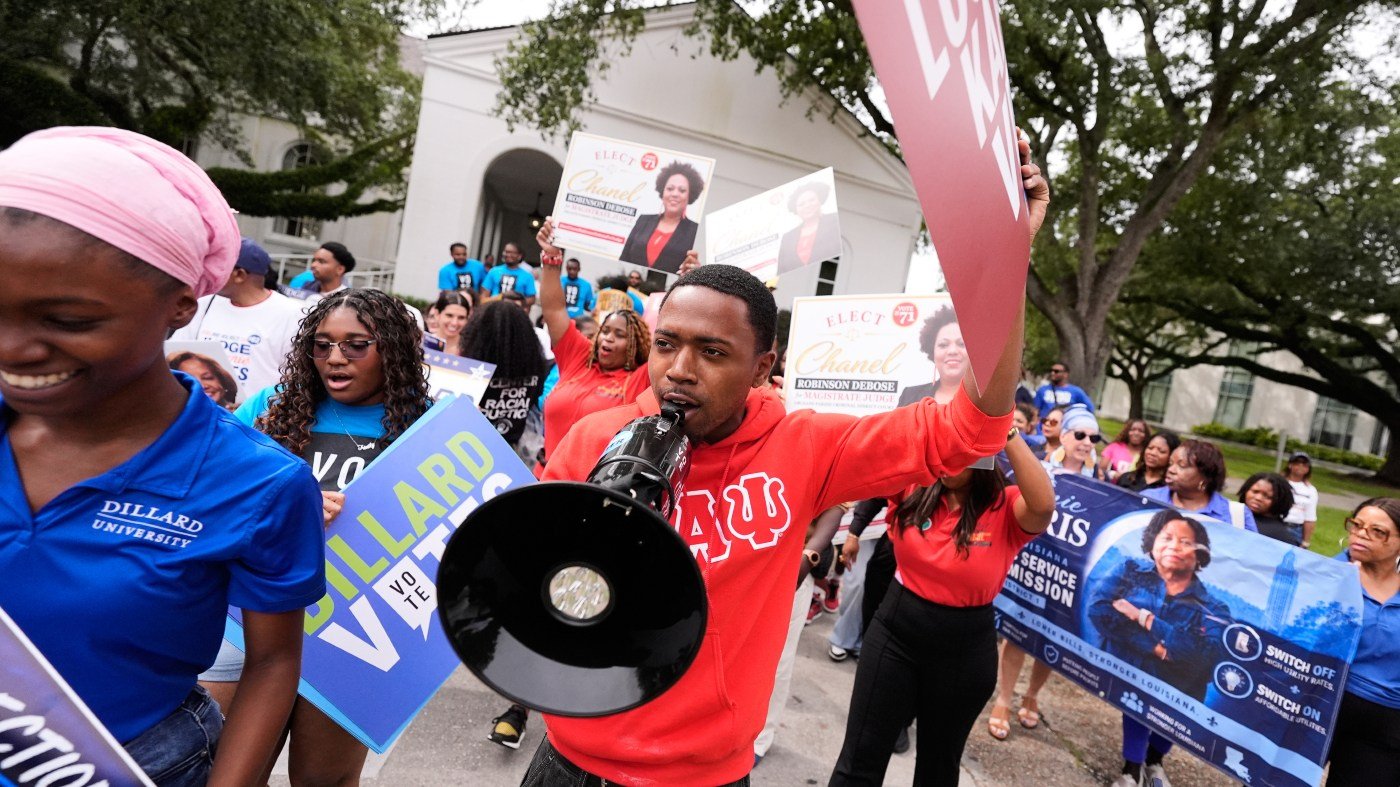
Youth organizers are betting that a surge of Gen Z voters will shape Tuesday's midterm elections, fueled by economic frustration and opposition to the Trump administration. After months of door-knocking and digital outreach, groups on the left and right say young Americans are more engaged than in recent cycles, though surveys suggest the actual turnout could fall short of expectations.
According to a recent poll, cost of living remains the top issue for voters overall, and for young people it's particularly acute. A UCLA report last month found that Gen Z voters rank rising costs, inflation, housing prices, and healthcare access as their primary concerns heading into the election.

“I do think we're going to see incredibly high levels of youth voter turnout this election, and it's because there is no lack of care amongst young people. There's an abundance of caring about the world and current events, and in the last two years, there have been no shortage of major events happening that directly affect these students,” said Jahnavi Rao, president and founder of New Voters, a nonpartisan group that registers young people.
Polling from Decision Desk HQ suggests Democrats are favored to retake the House and possibly the Senate, and for many young voters, this election is a referendum on President Trump. A Harvard Youth Poll from last month found 77 percent of young people disapprove of Trump’s handling of the economy, and 63 percent say their congressional vote is meant to oppose the president.
But turnout projections are mixed. The Harvard poll found only 33 percent of young people plan to vote, down from 40 percent in the last two midterms, with the decline driven largely by young Republicans. In contrast, a UCLA study found 74 percent of Gen Z respondents said they were likely to vote. A New York Times/Siena poll in October showed enthusiasm on the left is higher than in previous elections, with 70 percent of young voters identifying as Democrats—a 15-point jump from before the 2024 election.
“How the presidency is being ran right now is not my cup of tea, with the cost of everything so expensive,” said Kaylynn Hitchcock, a 21-year-old from Georgia. “There's not a lot of affordable housing. The price of gas is ridiculous. We are not getting raises with our jobs.”
The 2022 midterms saw the second-highest youth turnout in decades at nearly 30 percent, but this year’s issues are different—though high prices remain a constant. Kidus Girma, campaigns director at the Sunrise Movement, emphasized that “whether ICE gets more funding, whether data centers get built in their communities, whether we have fighters in Congress, will come down to whether we turn out in huge enough numbers to make a difference.”
Youth turnout could be pivotal in several races. The Center for Information and Research on Civic Learning and Engagement (CIRCLE) at Tufts University identified Maine, Michigan, and Ohio as the top Senate contests where youth could have the most impact, and Wisconsin, Georgia, and Iowa for governor. In Michigan, Democratic Senate nominee Abdul El-Sayed has run a progressive campaign focused on the economy and has actively courted younger voters.
“The Abdul El-Sayed campaign has really made clear that cost of living and a broken deal with young voters has been made, and that they are talking about what it actually means to ensure that you have fair wages, economic mobility, healthcare for all, less money out of politics,” said Dakota Hall, executive director for Alliance for Youth Action. Aastha Singh, president of the College Democrats at Michigan State University, told mlive that students appreciate El-Sayed’s directness, including “calling out a genocide for what it is, for talking about data centers and AI and Flock cameras.”
In Ohio, former Sen. Sherrod Brown (D) leads his Republican rival Jon Husted 66 percent to 32 percent among young voters, according to a New York Times/Siena poll, making youth turnout essential for his campaign. With nearly half of states allowing same-day voter registration, young people could still make a late push to the polls. As voters can skip races they’re not interested in, the focus remains on getting Gen Z to cast ballots at all.
Conservative groups are also mobilizing. A spokesperson for Turning Point Action said, “We recognize that today’s youth are the backbone of America’s next generation and future leaders for this country. We are hopeful that young Americans will show up and make history at the polls tomorrow.” With 8 million new voters eligible since 2024, the youth vote could be decisive in a closely divided country.