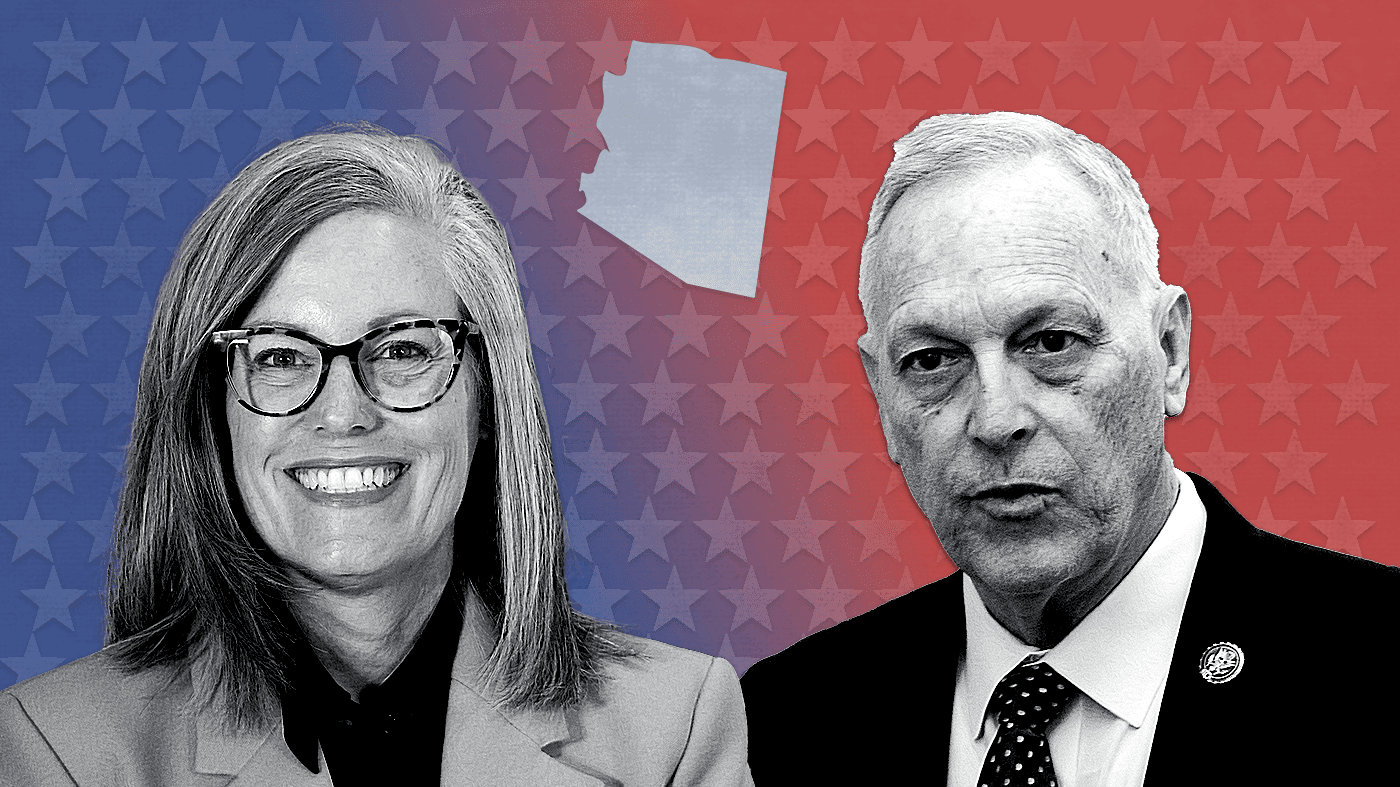
Arizonans head to the polls Tuesday to decide whether one-term Democratic Gov. Katie Hobbs keeps her job or hands the statehouse to Republican Rep. Andy Biggs, a staunch Trump ally who has spent years questioning the integrity of the state's elections.
Hobbs, who previously served as Arizona's secretary of state, narrowly defeated another Trump-backed candidate, former broadcaster Kari Lake, by less than a percentage point in 2022. That victory made Arizona one of five Democratic-held governorships up for grabs this year in states that Trump carried in the 2024 presidential election. The outcome here could offer a fresh gauge of the president's political pull in a state where he has repeatedly clashed with local Democrats over voting procedures.
During her tenure as secretary of state, Hobbs was the top elections official in 2020, when Biggs was among the most vocal promoters of unsubstantiated claims that fraud tainted that year's results. Those allegations were later rejected by courts and state officials, but they have remained a flashpoint in Arizona politics and are central to the current contest.
Hobbs ran unopposed in the Democratic primary, while Biggs cruised to the Republican nomination by defeating fellow Rep. David Schweikert by a 60-point margin. That decisive victory underscored the GOP base's appetite for a candidate who echoes Trump's grievances about election security.
The race has drawn national attention, with both parties pouring resources into Arizona as a bellwether for the 2026 midterm environment. Democrats hope to hold the governor's mansion to blunt Republican efforts to tighten voting laws, while Republicans see an opportunity to flip a key swing state ahead of the next redistricting cycle.
Polls close at 9 p.m. EST. Early returns are expected to trickle in over the evening, with the final result potentially hinging on Maricopa County, the state's most populous and politically diverse region. For context, similar dynamics are playing out in other gubernatorial contests across the country, including Georgia's open-seat race and Colorado's matchup, where voters are weighing comparable questions about leadership and election integrity.
Biggs has campaigned on a platform of border security, tax cuts, and what he calls "election honesty," while Hobbs has emphasized abortion rights, water conservation, and defending democratic institutions. The two have clashed in debates over voting access, with Hobbs accusing Biggs of seeking to undermine confidence in the system and Biggs charging that Hobbs has failed to ensure secure elections.
Turnout is expected to be high, given the intensity of the race and the broader national stakes. Political analysts note that Arizona's electorate has become increasingly competitive, with suburban voters often deciding outcomes. The result could also shape the national narrative about whether Trump's endorsement remains decisive in Republican primaries and general elections.
As the count unfolds, both campaigns are closely watching early-vote returns and precinct-level data. A win for Biggs would give Republicans a significant foothold in a state that has trended Democratic in recent cycles, while a Hobbs victory would be a morale boost for Democrats seeking to resist the president's agenda.