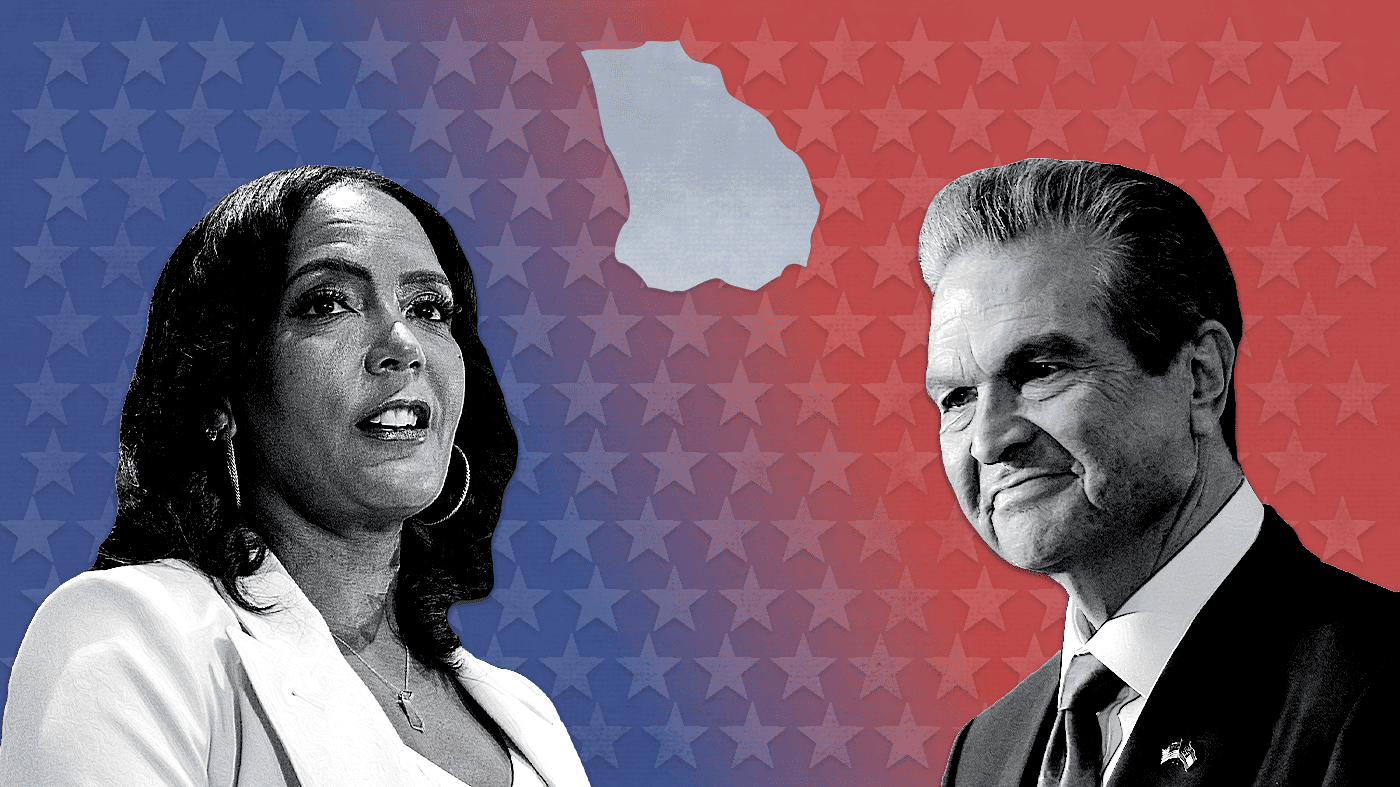
Georgia voters head to the polls Tuesday to select their next governor, a race that will determine who succeeds two-term Republican Gov. Brian Kemp, who is term-limited and cannot seek reelection. The contest pits Republican businessman Rick Jackson against Democrat Keisha Lance Bottoms, the former Atlanta mayor who served in the Biden administration.
Jackson emerged from a contentious Republican primary runoff, defeating state Lt. Gov. Burt Jones by just over 5 percentage points. Jones had the backing of both former President Donald Trump and Governor Kemp, making Jackson's victory a notable upset. Georgia Secretary of State Brad Raffensperger, who drew national attention for resisting Trump's efforts to overturn the 2020 election results, also ran in the primary but failed to advance to the runoff.
Bottoms secured the Democratic nomination with 56 percent of the vote in a crowded primary that included former Lt. Gov. Geoff Duncan, who switched parties after becoming a vocal critic of Trump. Her campaign has focused on expanding access to healthcare, improving education funding, and protecting voting rights, while Jackson has emphasized economic growth, public safety, and limiting government regulation.
The race is seen as a bellwether for the national political climate heading into the midterm elections. With Kemp's tenure ending, the outcome will shape Georgia's policy direction on issues ranging from abortion access to election administration. Political analysts note that the state has become increasingly competitive, with narrow margins in recent presidential and Senate races.
Polls close at 7 p.m. EST, and results are expected to begin trickling in shortly after. Election officials have prepared for a smooth process, though some voters have expressed concerns about long lines and potential delays. For real-time updates, check our hour-by-hour guide to election night results.
Both candidates made their final pitches to voters on Monday, with Jackson holding rallies in rural areas and Bottoms focusing on urban and suburban turnout. Jackson has sought to tie Bottoms to the Biden administration's policies, while Bottoms has highlighted her record as Atlanta's mayor and her ability to work across party lines.
As the results come in, attention will turn to key counties like Cobb, Gwinnett, and Fulton, which often determine statewide outcomes. The race is too close to call in pre-election polls, with both campaigns expressing confidence in their ground games. For more on what to watch, see our list of bellwether districts.
Voting rights groups have been monitoring the election for any irregularities, and legal battles over absentee ballots and polling place changes could emerge if the margin is tight. The state's new voting laws have been a point of contention, with Democrats arguing they suppress turnout and Republicans saying they ensure integrity. For context on the broader legal landscape, see this report on potential post-election legal challenges.
Whichever candidate prevails, the new governor will face significant challenges, including budget negotiations, infrastructure needs, and the ongoing debate over election security. The winner will also become a key figure in national politics, potentially positioning themselves for higher office. Stay with The World Signal for complete coverage of the Georgia governor's race and all of Tuesday's midterm results.