As states across the country ramp up civics requirements, a new survey suggests that the biggest challenge to meaningful civic education may not be curriculum or teachers, but the students themselves.
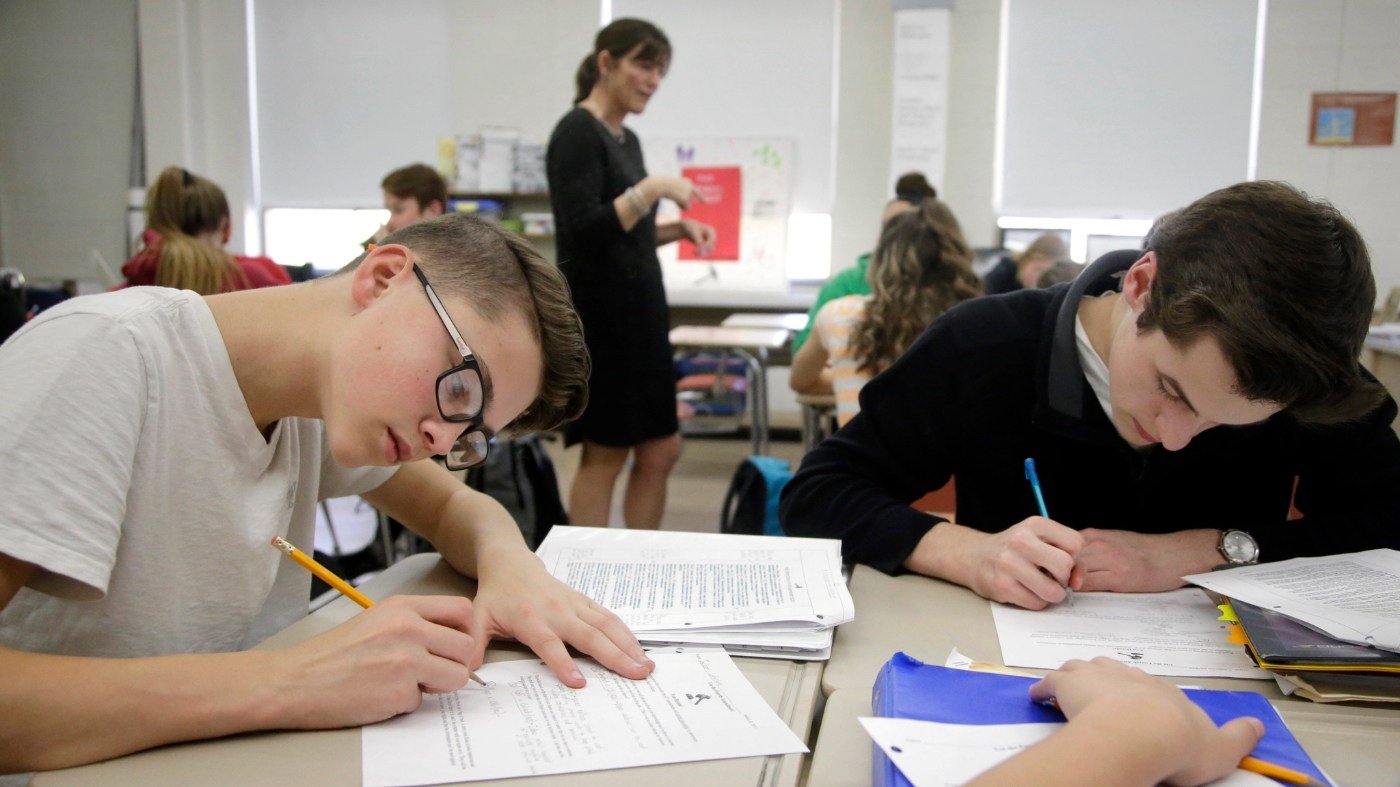
Iowa, Kentucky, Alaska, and Mississippi have all recently passed laws strengthening civics education, and the District of Columbia has integrated civil discourse into its social studies standards. But a survey by the Sandra Day O'Connor Institute finds that many students are staying silent in these classes, worried about what their peers will think.
The survey, which polled recent high school graduates from 25 states and Washington, D.C., found that 58% had self-censored on a political or civic topic because of concerns about how others might react. Notably, 73% said they generally felt comfortable sharing their views, yet 51% of that group had still self-censored at least once, indicating that the silence is often situational.
The most striking finding was that among students who self-censored, 91% cited classmates as a concern, while only 41% cited the teacher. This flips the usual narrative that focuses on adult influences like teachers or administrators.
This peer-driven reluctance isn't limited to high school. Harvard's Fall 2025 Youth Poll found that 47% of young Americans aged 18-29 avoid political conversations for fear of others' reactions. This trend has implications for civic engagement, as an opinion never voiced is rarely tested or refined.
Teachers still play a crucial role in shaping classroom dynamics. The survey found that 53% of students had seen a teacher avoid or shut down a political discussion, and nearly 80% of civics teachers admitted to self-censoring to avoid controversy. These findings suggest that both students and teachers are navigating a minefield of social pressures.
Research cited in the report indicates that students' perceptions of their peers' opinions can be more influential than teacher behavior, and that students often misjudge what their classmates actually believe. This opens the door for classroom interventions, such as anonymous surveys to correct misperceptions about peer norms, or having students argue assigned positions to practice civil discourse.
The report also recommends establishing clear expectations against recording or sharing classmates' remarks on social media, as 26% of self-censoring students worried about being posted about. Training teachers to manage peer dynamics is also suggested.
Ultimately, a civics test can prove a student knows the three branches of government, but it cannot prove they will defend an unpopular view in a room full of peers. The survey suggests that this willingness cannot be taken for granted, and that addressing peer pressure may be the next frontier in civic education.