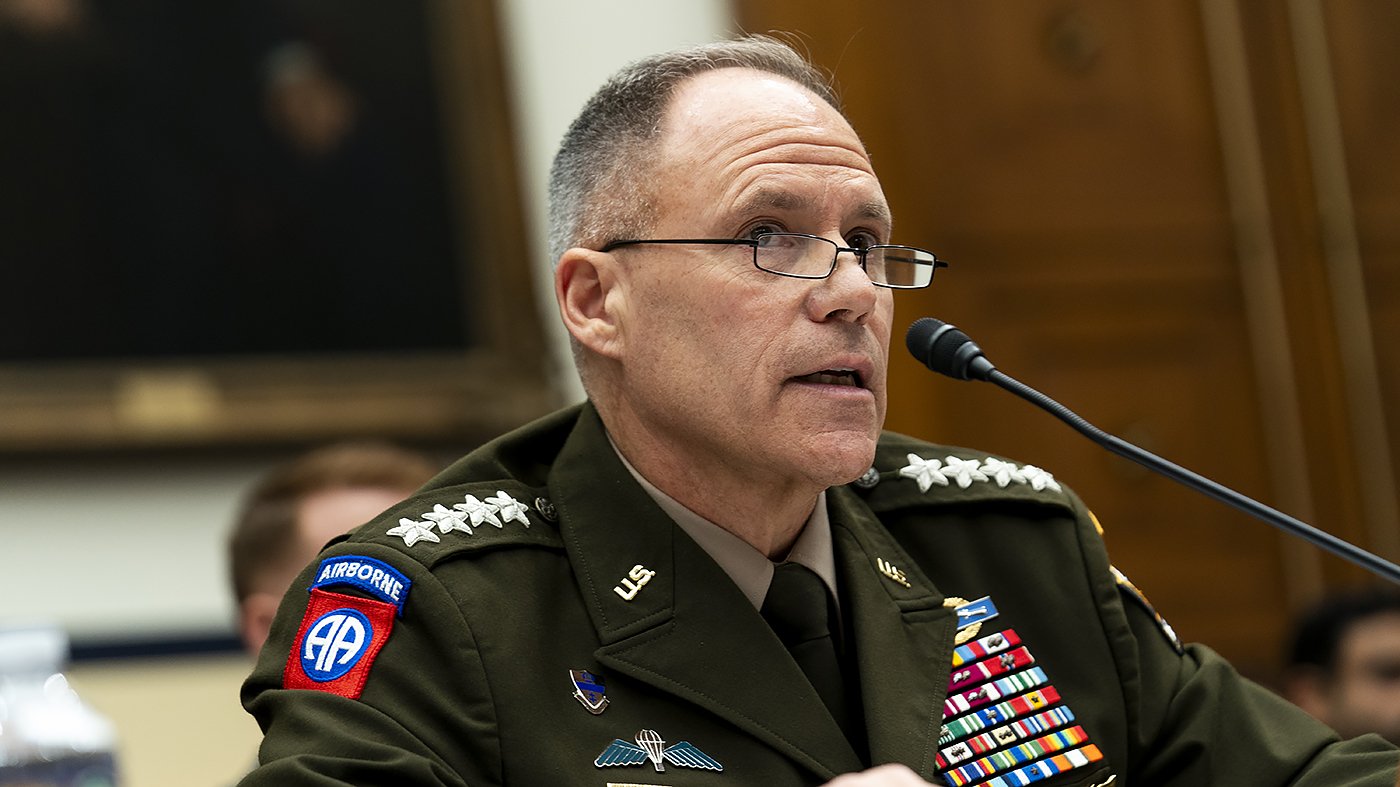
Defense Secretary Pete Hegseth's pick to lead the Army as its top uniformed officer is encountering serious headwinds in the Senate, where bipartisan objections threaten to derail the nomination. Gen. Christopher LaNeve, who has served as acting Army chief of staff since April, would need unanimous Republican support to clear the Senate Armed Services Committee, but multiple GOP members have voiced reservations.
Committee Chairman Roger Wicker (R-Miss.) acknowledged on Thursday that he is "aware of some" Republican opposition to LaNeve, though he declined to identify the holdouts. Sen. Tommy Tuberville (R-Ala.), a committee member, said he has heard the criticisms but remains inclined to defer to Hegseth. "They said he doesn't have enough four-star experience. Well, hell, you don't get it unless you're a four-star," Tuberville told The Hill. "I'm gonna go with what the secretary of War wants."
Sen. Joni Ernst (R-Iowa), a key vote during Hegseth's own contentious confirmation and a former Army Reserve officer, has expressed objections to LaNeve's nomination, according to a Wall Street Journal report. The nature of her concerns was not detailed, but they add to a growing list of GOP hesitations.
Democrats are also wary. Sen. Richard Blumenthal (D-Conn.) said he is "very concerned" that Hegseth "seemed to have reached for someone who was less qualified than previous chiefs of staff, apparently for political reasons, which should have no place in this choice." Sen. Mark Kelly (D-Ariz.) said he has not reviewed LaNeve's record closely but understands GOP colleagues have "issues" with it.
At the heart of the resistance is LaNeve's relatively brief tenure as a four-star general. Historically, Army chiefs of staff have served at least 18 months in a four-star billet before assuming the top post. LaNeve has held that rank for only about six months, having been confirmed as vice chief of staff in February. His rapid ascent has raised eyebrows among current and former defense officials, with one anonymous source telling The Hill, "It looks wrong, sounds wrong, feels wrong."
The Pentagon is standing behind its nominee. Chief spokesperson Sean Parnell said in a statement that the department and Hegseth "stand behind" LaNeve's leadership and will continue working with the White House and Senate to confirm President Trump's pick. LaNeve, a Pittsburgh native and infantry officer commissioned in 1990, previously commanded the 82nd Airborne Division and the Eighth Army in South Korea.
The nomination comes after Hegseth ousted Gen. Randy George in early April, a move that stunned many in military and congressional circles. Army Secretary Dan Driscoll, a close ally of Vice President Vance, publicly praised George but defended the civilian leadership's prerogative to choose its own commanders. "There is no person that has more respect for Gen. George... he was an amazing, transformational leader," Driscoll said in April. "That being said, the civilian leadership... get to pick the leaders that they want."
Questions have also swirled around the early retirement of Gen. James Mingus, who stepped down as vice chief of staff in October without explanation. LaNeve's predecessor in that role, Mingus's departure, and LaNeve's subsequent promotion have fueled perceptions of political maneuvering. The same anonymous source characterized the circumstances as "questionable."
LaNeve first caught Trump's attention at the inauguration ball in January, where he delivered a brief, complimentary address and invited the president to visit troops in Korea. Hegseth has called LaNeve "a generational leader" who will help restore the Army's warrior ethos and modernize for future conflicts.
With the Senate Armed Services Committee set to consider the nomination, the path forward remains uncertain. LaNeve's confirmation would mark an unusually swift rise to lead the military's largest branch at a time when the Army is grappling with drone warfare, modernization, and deployments across the Middle East. But without unanimous GOP support, his fate in the committee—and the full Senate—hangs in the balance.