A tanker came under projectile attack in the Persian Gulf off Qatar's coast, the British military reported Thursday, while Iranian state media claimed that two oil tankers and a towboat had been damaged by mines in the Strait of Hormuz.
The United Kingdom Maritime Trade Operations Center (UKMTO) said the vessel was hit by two projectiles on Wednesday about 50 nautical miles north of Madinat ash Shamal, a Qatari city. The agency did not identify the ship or its flag, and no group has claimed responsibility. The extent of the damage and any environmental impact remain unknown, UKMTO said, adding that the crew's status was unconfirmed.
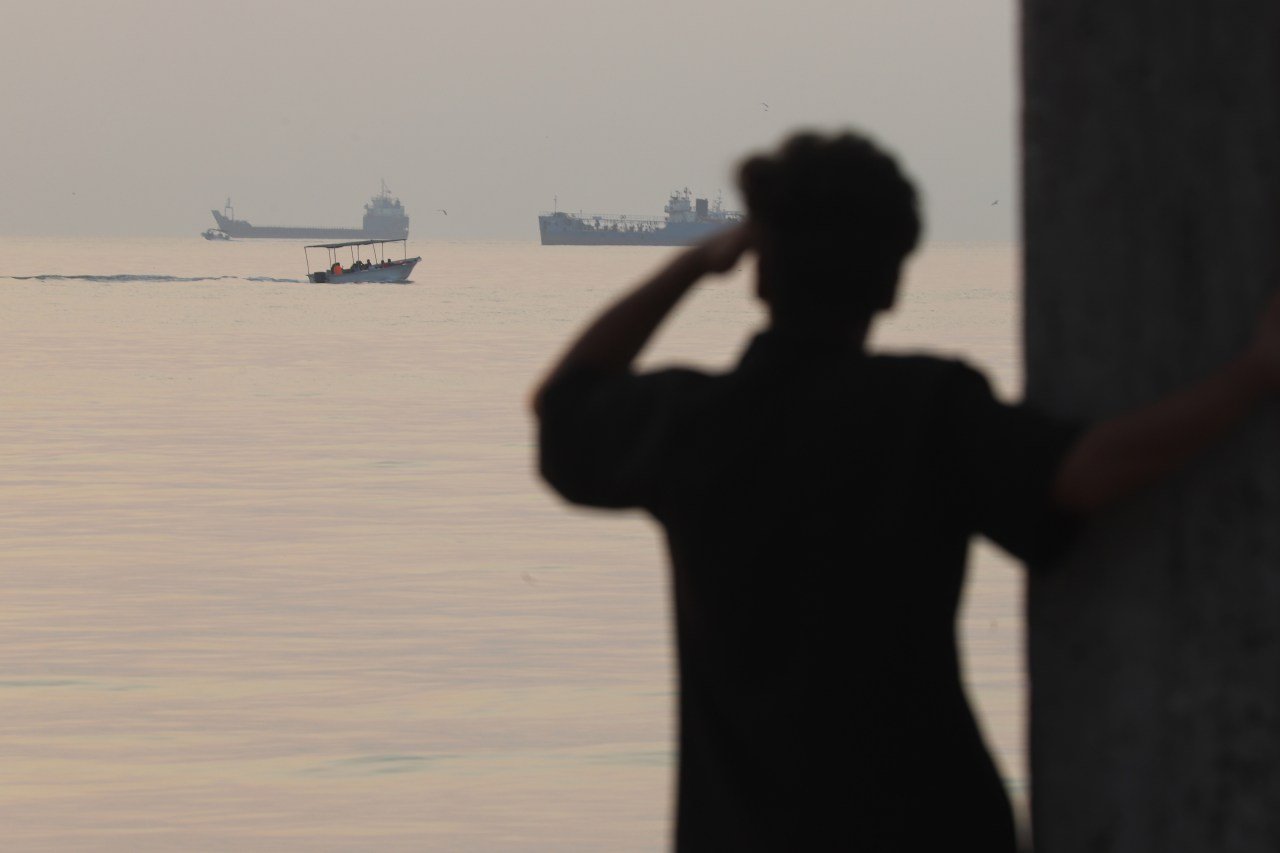
The attack comes amid heightened tensions in the region, following the U.S.-Israel war with Iran that began in February. The Strait of Hormuz, through which roughly 20% of the world's oil passed in peacetime, has been largely closed to shipping since the conflict erupted. The UKMTO noted last month that it was "struggling to accurately report" the true number of attacks because most ships now refuse to report incidents.
In a separate development, Iran's state TV reported that two oil tankers and a towboat caught fire after hitting mines in the Strait of Hormuz. The claim, attributed to the Revolutionary Guard, could not be independently verified, and no details were given on casualties or the vessels' flags. The Guard also said it had seized two U.S. drones in the strait's airspace, a recurring assertion.
Meanwhile, South Korea's military has proposed expanding the operational area of its anti-piracy naval unit near Somalia to include waters south of Oman, citing increased pirate activity linked to Middle East conflicts. Defense Ministry spokesperson Chung Binna said Thursday that the expansion would not involve Seoul in the U.S. war with Iran, and that South Korea would not directly participate in freedom-of-navigation operations near the Strait of Hormuz unless "allowable circumstances" were created, such as an end to the war or a ceasefire agreement.
The proposed expansion would extend the Cheonghae unit's reach to waters near the port of Duqm, more than 650 kilometers from the strait, and would add patrol aircraft and an explosive ordnance disposal team. The plan requires approval from President Lee Jae Myung and the legislature.
In Jordan, an assailant killed a security officer near the Sri Lankan Embassy in Amman on Thursday in what authorities called a "cowardly terrorist attack." The Public Security Directorate said the officer was attacked with a sharp object. The attacker, who was arrested, had been planning the assault, according to a preliminary investigation. State-run Al-Mamlaka TV reported that the assailant tried to grab the officer's weapon and was subdued by a second officer, who was injured. The attack follows a shooting at a church funeral in southern Jordan that killed nine people.
On the diplomatic front, the foreign ministers of Iran and Oman discussed ways to resume navigation through the Strait of Hormuz. Omani Foreign Minister Badr al-Busaidi and his Iranian counterpart, Abbas Araghchi, reviewed efforts to reach "practical, political, and technical understandings" to reopen the waterway, according to Oman's Foreign Ministry. The two had met in Tehran in August to discuss a framework for managing ship traffic.
In Israel, President Isaac Herzog continued consultations with political parties on who should be tasked with forming a coalition government. The ultra-Orthodox United Torah Judaism party declined to recommend either Prime Minister Benjamin Netanyahu or his rival Gadi Eisenkot, a move that could boost Eisenkot's chances. The party's main concern is ensuring ultra-Orthodox men are not conscripted into the military.