Three recent developments should sharpen Washington's focus on the Ukraine war. First, Russia's conflict has literally hit home, with Ukraine's innovative tactics transforming what's possible on the battlefield. Second, Kyiv has shattered the myth of inevitable Russian victory, reclaiming territory and disrupting Moscow's military logistics with new capabilities.
But the third shift is more subtle, with long-term consequences that will outlast today's headlines. Kyiv has opened a new front where few Western leaders have ventured: the cognitive warfare previously dominated by Moscow. Ukrainian President Volodymyr Zelensky wrote directly to his Russian counterpart, demanding a face-to-face meeting and an immediate ceasefire.
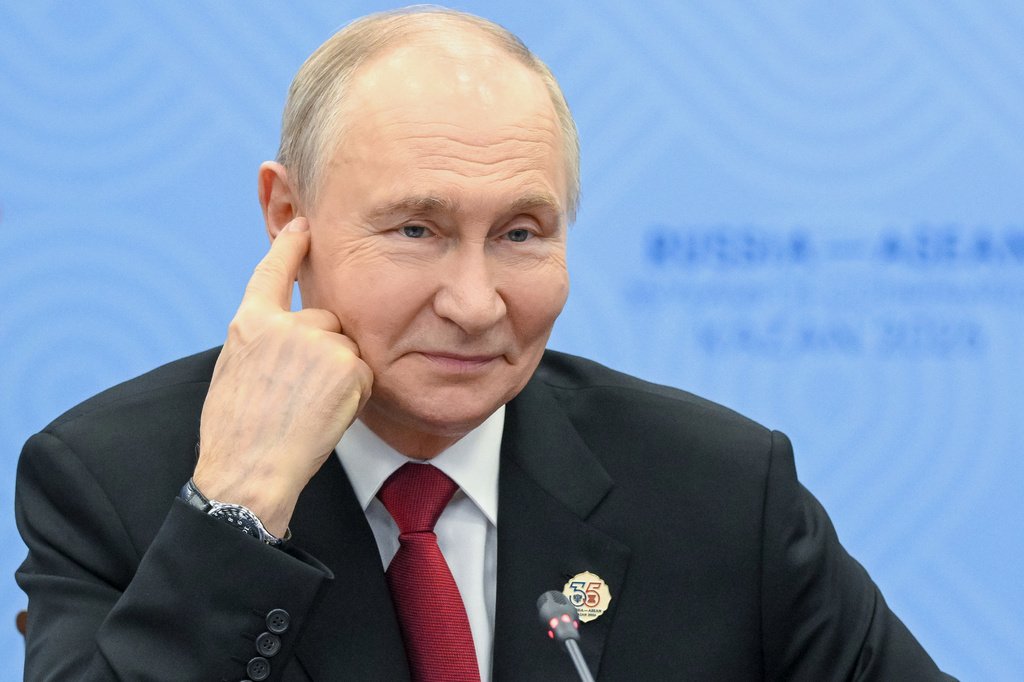
This letter, framed as diplomacy and nominally addressed to Vladimir Putin, was clearly intended for a broader audience. It was a strategic masterstroke: Ukraine is now setting the agenda, and the Kremlin must respond. At the St. Petersburg International Economic Forum on June 5, an event meant to project Russian confidence and stability, Putin found himself responding to a public challenge from the leader of a country Moscow denies exists.
Authoritarian systems rely on an appearance of total control. Russia can absorb staggering troop losses—1.3 million killed or wounded—and burn through equipment while impoverishing its regions for imperial ambition. Human life has never been Moscow's measure of power. What is intolerable is a visible weakness at the center.
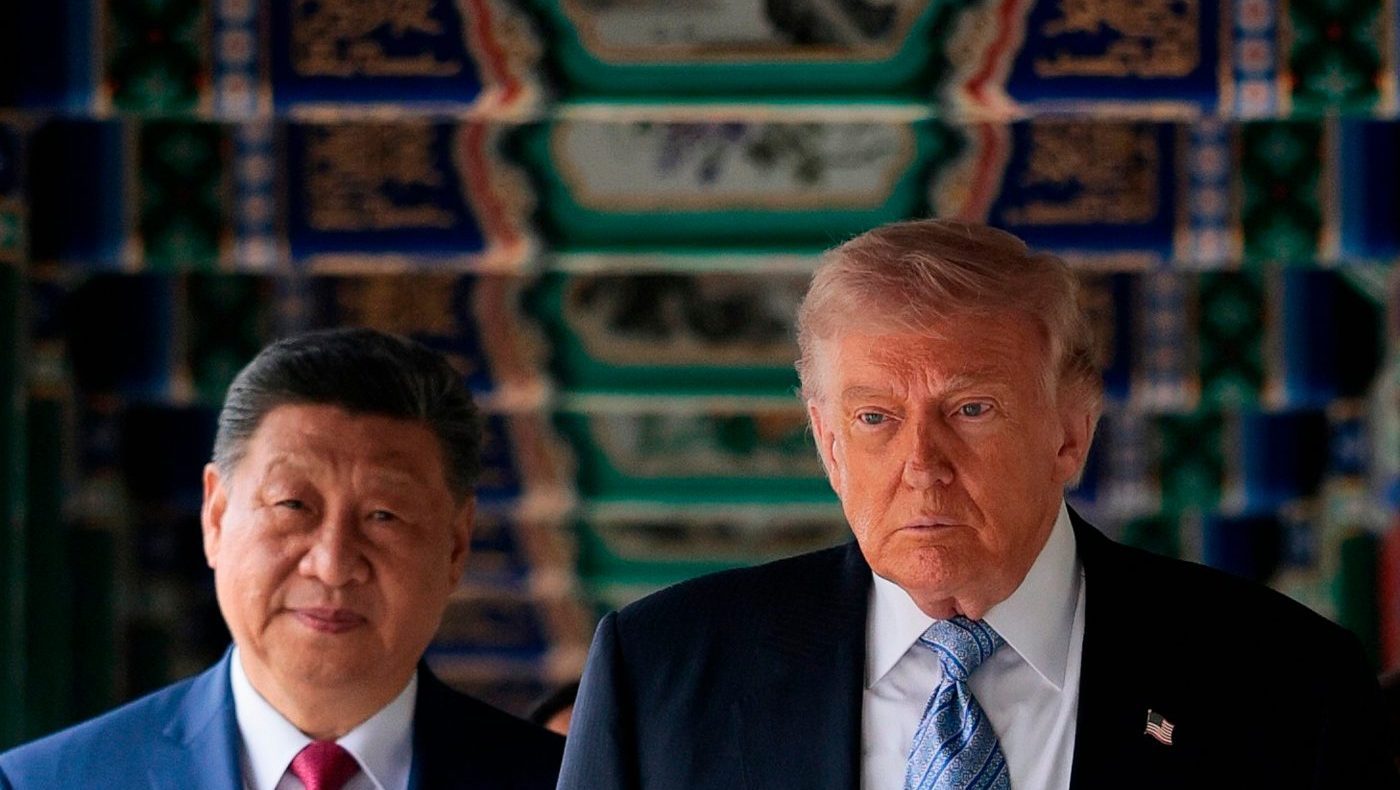
Zelensky understood this. His note didn't just propose talks; it punctured the 'dear leader' facade and targeted the autocrat's deepest fears. 'You cannot fail to notice it,' Zelensky wrote. 'After 26 years in power, age is beginning to take its toll. And with time, the fatigue with you will only grow.' For Putin, that line must have cut deep. Last September, caught on a hot mic in Beijing, he discussed radical life extension with Xi Jinping, including living to 150 through organ transplants. Zelensky aimed at the one force no tyrant commands: time.
Then came the sharper passage: 'You will have to fight much harder for your own existence—not Russia's, but your own. And this is not a threat from me or from Ukraine. It is a fact of Russian history that you know well: When Russia grows tired, change comes.' Facing thousands of delegates, Putin referred to Zelensky several times as 'the letter's author,' as if saying the Ukrainian president's name would concede too much. Putin tried to laugh it off, speaking of his age, but his words no longer mattered. He took the bait.
Zelensky's letter recalibrates the GPS for Washington. Phillips O'Brien's sharp verdict on President Biden's Ukraine policy, back in November 2024, was that he treated Russia's war as 'a crisis to be managed, not a war to be won.' Trump now treats it as a deal to be struck. Both approaches miss that Moscow is not seeking peace; it's doubling down on revanchism, global disruption, and war crimes in Ukraine. Washington keeps conceding the psychological initiative to Moscow, surrendering what George Orwell called 'reality control.'
No surprise, then, that America keeps swinging between panic and hope, ricocheting from one Kremlin-made crisis to the next. Moscow chooses the time, place, and circumstance. Washington reacts, having talked itself into caution before Moscow even finishes the provocation. Russia invades Georgia and gets a 'reset.' It seizes Crimea and gets 'deep concerns' plus sanctions calibrated not to provoke. Moscow intervenes in Syria, rescues Bashar Assad's regime, and becomes a Middle East power broker—America reacts by contemplating the meaning of 'red line.' Russia partners with Iran, and the White House now must account for Moscow's interests in the Persian Gulf.
Small wonder the same failed instinct reappears in Ukraine: find a salvific territorial 'agreement' and call it peace. With a border that would stretch around the equator more than once, Russia scarcely needs more land, except to vaporize the humanity on it. America's interest is not a quick settlement that rewards aggression and licenses the next war. America's interest is a durable peace that secures for a nation of 40 million the right to exist, its sovereignty, restoration of borders, and a clear lesson Moscow has avoided for generations: conquest does not pay.
It's the least we can do for having stripped Ukraine of its nuclear and much of its conventional arsenal decades ago. In 2013, before Russia first invaded Ukraine, Putin said the quiet part out loud in a New York Times op-ed: 'If you have the bomb, no one will touch you.' By chasing stability or another deal, America risks allowing the disappearance of a nation and establishing a grisly legacy. The better lesson comes from Ukraine, which is bringing the war back to the aggressor militarily, politically, and psychologically. Controlling the narrative and never ceding the initiative—that's the path forward.
Read more about how Putin's Russia faces collapse as Ukraine strikes deep inside homeland and the broader cracks in Putin's regime as war dissent and economic strain mount.