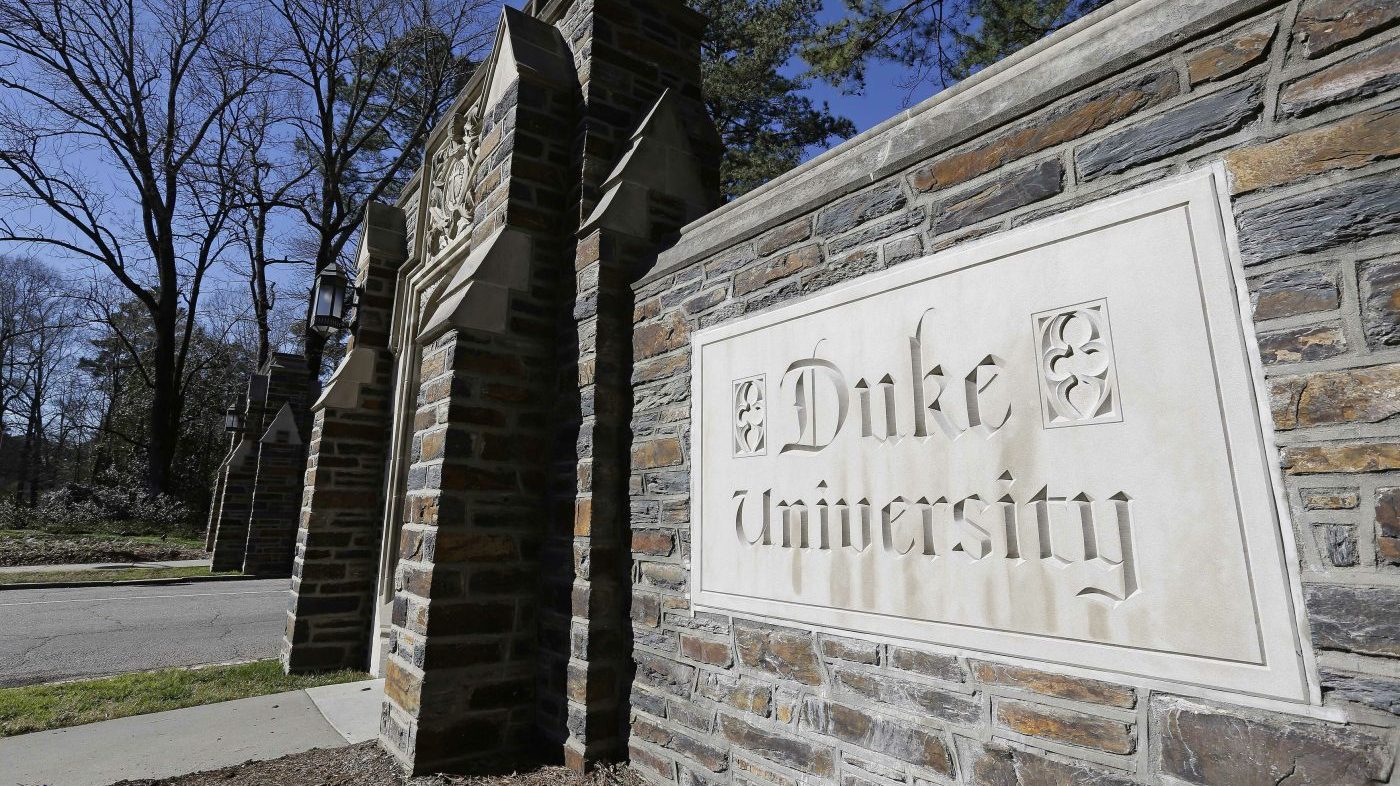
The Justice Department has concluded that Duke University's law school violated federal law by considering race in its admissions process for three consecutive years, according to a findings letter released Thursday. The Civil Rights Division determined that Duke Law used racial diversity as a factor in admitting students to the classes of 2023, 2024, and 2025, running afoul of the Supreme Court's 2023 ruling that sharply curtailed race-based admissions.
Assistant Attorney General Harmeet K. Dhillon made clear the department's stance, stating, "Duke Law School doesn't get a free pass to discriminate against white and Asian students simply because it thinks it has good intentions. Using 'diversity' essay questions to identify preferred races for admission is still illegal discrimination based on race."
The DOJ intends to seek a voluntary settlement with the university to align its practices with federal law. If talks fail, the department is ready to file a lawsuit. Duke responded in a statement, saying, "Today, the Department of Justice's Civil Rights Division issued a letter of findings related to Duke Law's admissions practices. We are reviewing the letter and its conclusions carefully. Duke is committed to complying with the law and will continue to do so in a manner that is consistent with our academic mission."
The investigation's findings highlight stark disparities in admissions outcomes. For the 2025 cycle, Black applicants were about 3.5 times more likely to be admitted than similarly qualified Asian applicants with comparable academic credentials. In both 2024 and 2025, the median LSAT scores of denied white and Asian applicants were higher than those of admitted Black applicants.
Beyond the statistical evidence, the DOJ alleges that Duke Law deliberately revised its policies and mission statement after the Supreme Court ruling to preserve race-based outcomes. Admissions reviewers were reportedly instructed to flag essays discussing diversity, while also noting characteristics like first-generation college status and Pell Grant eligibility—factors that could serve as proxies for race.
The department further alleged that these practices allowed admissions officials to pursue racial diversity goals despite the school's official policy barring reviewers from seeing an applicant's race. Internal emails cited in the letter show Duke Law sought to maintain race-conscious admissions. One 2023 email from an admissions official expressed concern that people might think the school "didn't work harder" if the incoming class was less diverse. Other communications described diversity, equity, and inclusion as one of the school's "most important values" and outlined plans to "work really hard" to recruit "a racially diverse class."
This case is part of a broader federal crackdown on race-conscious admissions. Similar actions have been taken against other institutions, and the DOJ has also pursued discrimination claims in hiring at major companies. The outcome of the Duke negotiations could set a precedent for how universities navigate the post-affirmative action landscape.
Legal experts say the evidence against Duke is compelling, particularly the LSAT data and internal communications. The university's commitment to diversity, while laudable, must now be balanced against the legal requirement of race-neutral admissions. As the DOJ and Duke head toward potential litigation, the case will be closely watched by higher education institutions nationwide.