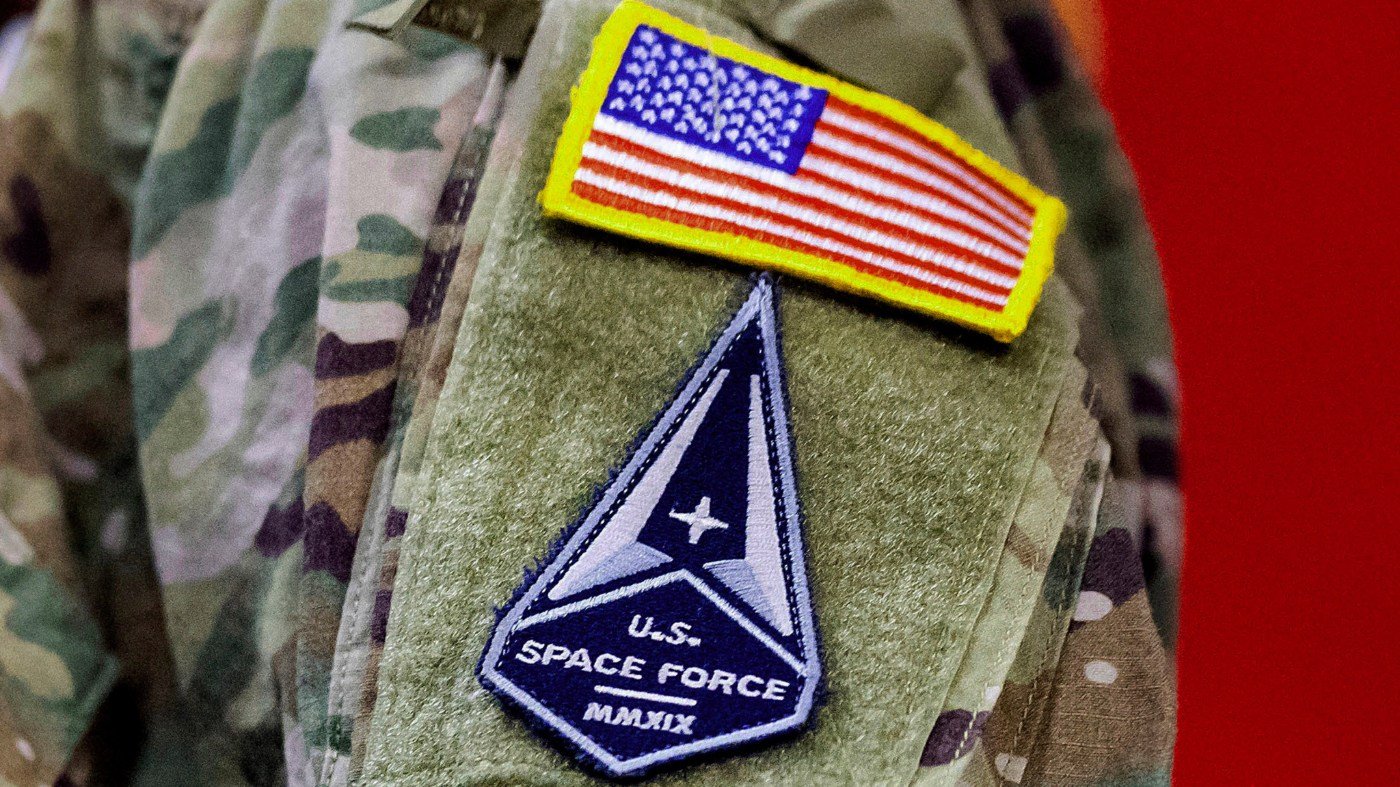
President Trump has again stirred controversy with two social media posts related to America's space ambitions. The first showcased proposed uniforms for the U.S. Space Force, but the design drew immediate comparisons to the attire worn by the villainous crew of the Death Star in the Star Wars franchise. The imagery, which many mocked online, raises concerns about whether science fiction is an appropriate template for a serious military branch tasked with defending U.S. interests in space.
The second post featured a graphic of the moon with Earth in the background, captioned “The Moon is Ours,” alongside an American flag. That declaration has been widely interpreted as a claim of sovereignty over the moon, which would directly conflict with the 1967 Outer Space Treaty. The treaty, ratified by the United States and more than 100 other nations, prohibits national appropriation of celestial bodies.

Trump’s space legacy is otherwise notable. He is often grouped with John F. Kennedy and Ronald Reagan as presidents who significantly advanced American space exploration. Under his leadership, NASA’s Artemis program has revived lunar ambitions, and he appointed two administrators—Jim Bridenstine in his first term and Jared Isaacman in his second—who have pushed the agency forward.
However, the uniform proposal has become a public relations headache. Critics argue it undermines the Space Force’s credibility as a modern military service. The Star Trek franchise, by contrast, offers a more aspirational model. Elon Musk, founder of SpaceX, famously posted “Star Fleet begins” when the Space Force was established, hinting at a more optimistic vision for the service’s future.
As for the moon claim, it echoes a proposal from former House Speaker Newt Gingrich, who suggested during his 2012 presidential campaign that the moon could eventually become a U.S. state. That idea was ridiculed at the time by Mitt Romney, the eventual Republican nominee, and went nowhere. Now, with the Artemis program gaining momentum, the question of lunar sovereignty has resurfaced.
The Artemis Accords, which NASA has used to build an international coalition for lunar exploration, explicitly reject territorial claims. The U.S. State Department recently announced the Space Catalyst Partnership, a new initiative to deepen cooperation between Artemis signatories and private companies. The program aims to promote civil and commercial space cooperation through diplomatic outreach, industry engagement, and targeted foreign assistance.
If the United States were seen as pursuing an imperialist land grab on the moon, it could alienate its allies in the accords and jeopardize partnerships with companies like SpaceX. The accords offer a more nuanced framework for governing celestial bodies, emphasizing shared interests and peaceful use.
Unlike the Apollo era, when the U.S. raced the Soviet Union largely alone, the Artemis program brings together a broad coalition of nations, excluding only rogue states like China and Russia. While Washington still provides the bulk of funding and technology, it has earned goodwill by offering others a seat at the table. That approach stands in stark contrast to China’s more unilateral ambitions, allowing America to maintain the moral high ground.
Mark R. Whittington, a space policy analyst and author of several books on lunar exploration, notes that the administration’s messaging must be careful. “The moon is not a territory to be claimed,” he said. “It’s a shared frontier.”