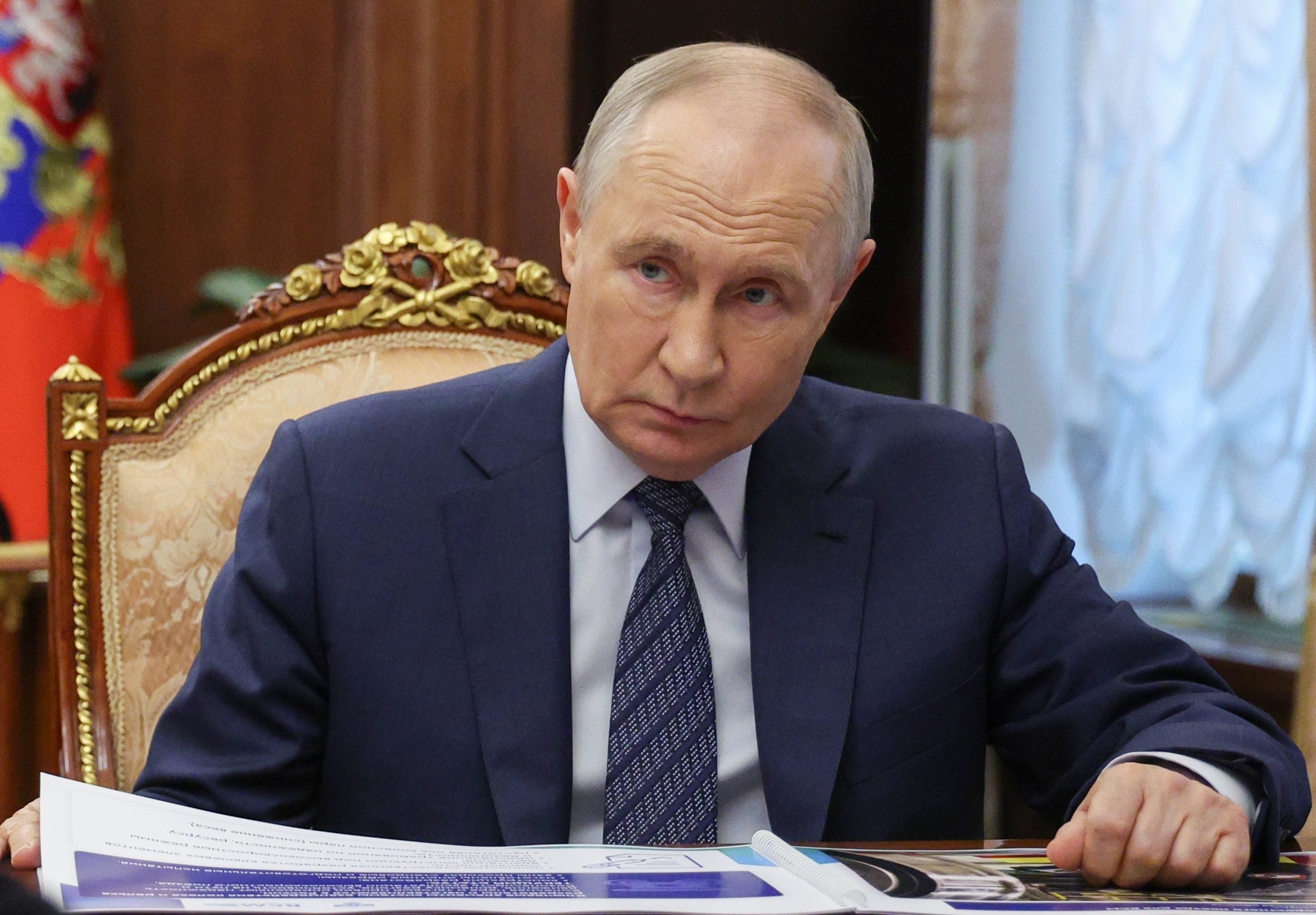
Over four years into Vladimir Putin's war in Ukraine, the Kremlin's narrative of inevitable victory is fraying. Both elite circles and ordinary citizens are finding it harder to ignore the mounting disaster—a conflict that has yielded few gains but catastrophic costs: an expanded NATO, over a million casualties, lost energy dominance in Europe, the flight of up to a million young professionals, and a shattered economy.
For now, fear of repression keeps most Russians quiet. But that silence is breaking. A growing number are publicly denouncing the war—and even Putin himself—without facing death or imprisonment. In Russia's tightly controlled system, such dissent is only possible because elements of the security services are permitting it. That shift is a stark warning for the president.
Economic and Military Pressure Points
Ukraine's drone campaign has inflicted severe damage on Russia's energy infrastructure. Since May 1, Kyiv has struck 10 of Russia's largest refineries, forcing six to halt or reduce operations. With over 150 attacks to date, a Moscow summer of gas shortages and long lines is no longer unthinkable. Export capacity has also plummeted: crude shipments dropped 40 percent from 5.2 million barrels per day earlier this year to 3.5 million in late March and early April, draining state finances and forcing the Kremlin to sell off roughly 60 percent of its gold reserves.
The economic strain has prompted unusually blunt warnings from loyalists. Gennady Zyuganov, head of the Communist Party, recently cautioned that conditions are ripe for a 1917-style revolution. Lesser figures now routinely flag the fragility of Russia's ability to fund the war, a sentiment echoed by growing dependence on China for economic lifelines.
Logistics Under Fire
Russia's supply lines are increasingly compromised. Moscow relies on a single major road and rail line to supply troops in Crimea and southeastern Ukraine. Ukraine's new FP-2 drones—carrying 230 pounds of explosives with a 120-mile range—have made those routes perilous. Moving trains have been derailed, the road is littered with destroyed vehicles, and convoys now travel only at night. In Sevastopol, gas rationing has already begun.
The cumulative effect raises the specter of a political cascade, reminiscent of the 2010-2011 Arab Spring, when a single act of protest toppled longtime autocrats. But Putin understands his vulnerability. He has tightened personal security, intensified repression, and shut down parts of the internet to control information, as seen in recent drone strikes on Chernobyl that Kyiv condemned as a 'vile' attack.
No one can predict the exact tipping point. But the trendlines are unmistakable: for Russia and its president, the war's trajectory is increasingly unsustainable.