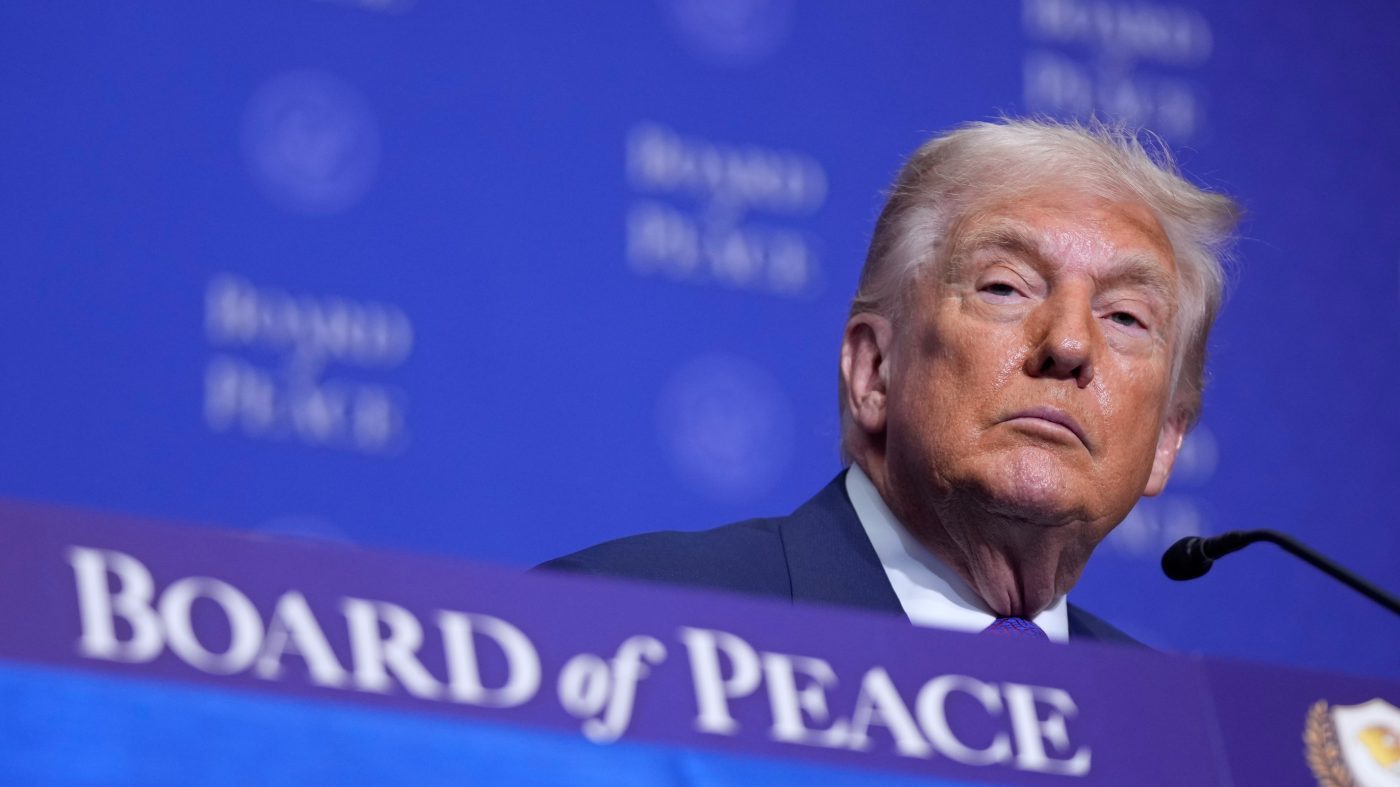
The Board of Peace, established last year to broker peace and reconstruction in Gaza, has published a detailed 15-point roadmap to disarm Hamas and demilitarize the territory. The plan, announced by President Trump on Thursday, is designed to be implemented in "carefully structured phases," according to U.S. and Board of Peace officials who briefed reporters on the terms Thursday night. However, Israel has yet to endorse the plan, with officials describing the Israeli government as "skeptical."
The roadmap was posted Friday morning on the board's official X account, laying out a sequence of steps that both Israel and Hamas must take to move toward a lasting ceasefire and political settlement. The first point reaffirms both parties' commitment to the U.S.-brokered peace plan endorsed by the UN Security Council in November. The document states that the process aims to "end the cycle of destruction, secure the complete Israeli withdrawal from Gaza Strip, restore normal life, enable Palestinian governance, reconstruction, security, recovery and economic development," and open a credible path to self-determination and statehood.
The first phase, titled "principles," requires Israel to complete all remaining commitments under the Sharm Sheikh Protocol, including the cessation of military operations, though Israeli forces will not withdraw until later. Hamas, for its part, agrees to hand over civilian governance and security functions to the National Committee for the Administration of Gaza (NCAG), a transitional body supervised by the Board of Peace. The plan also calls on Palestinian militant groups to stop all military operations.
An International Verification Committee (IVC), also established by the board, will certify that each phase is fulfilled before moving to the next. The second phase, "security," mandates that Hamas and other armed groups fully disarm, surrendering all weapons and control of tunnels to the NCAG. Israel would then begin a phased withdrawal, to be completed during the third phase. The timeline for disarmament and withdrawal will be negotiated after both sides formally commit to the roadmap.
The NCAG is to consolidate governance and security under the principle of "One Authority, One Law, One Weapon," with full independence and a three-year implementation timeline. Senior Hamas official Basem Naim announced on X that Hamas "agreed to the roadmap" and urged mediators "to compel" the Israeli government to do the same, adding that the "ball is now in the enemy's court."
This new agreement builds on Trump's earlier 20-point plan signed last year to end hostilities in Gaza. The disarmament of Hamas has long been a sticking point, with both sides accusing each other of violating prior agreements. According to the Gaza health ministry, more than 1,000 Palestinians have been killed since the ceasefire began, underscoring the fragility of the current situation.
The full plan, as released by the Board of Peace, includes five initial principles. The first reiterates the commitment to the UN-backed framework. The second requires Israel to complete its Sharm Sheikh Protocol obligations and Hamas to cease all military operations, with the timeline for phase two prepared within 14 days of approval. The third principle ties progress to verified completion of each phase, overseen by the IVC. The fourth states that Hamas and other factions will hand over all civilian governance and security functions to the NCAG, which will operate independently. The fifth principle, though not fully detailed in the public release, is expected to outline the NCAG's assumption of responsibilities in Gaza.
Meanwhile, the Trump administration faces multiple challenges, including declining approval ratings amid the Iran conflict and rising fuel costs, which could complicate diplomatic efforts. The administration's focus on Gaza comes as GOP midterm prospects worsen, adding political pressure to deliver a foreign policy win. The plan's success hinges on Israeli cooperation, which remains uncertain. As one official put it, "Israel hasn't signed on yet, and that's the elephant in the room."
For now, the roadmap offers a structured path forward, but its implementation will test the resolve of all parties. The IVC's role in verifying compliance will be critical, as will the international community's willingness to enforce the terms. With casualties still mounting, the urgency for a breakthrough is palpable.