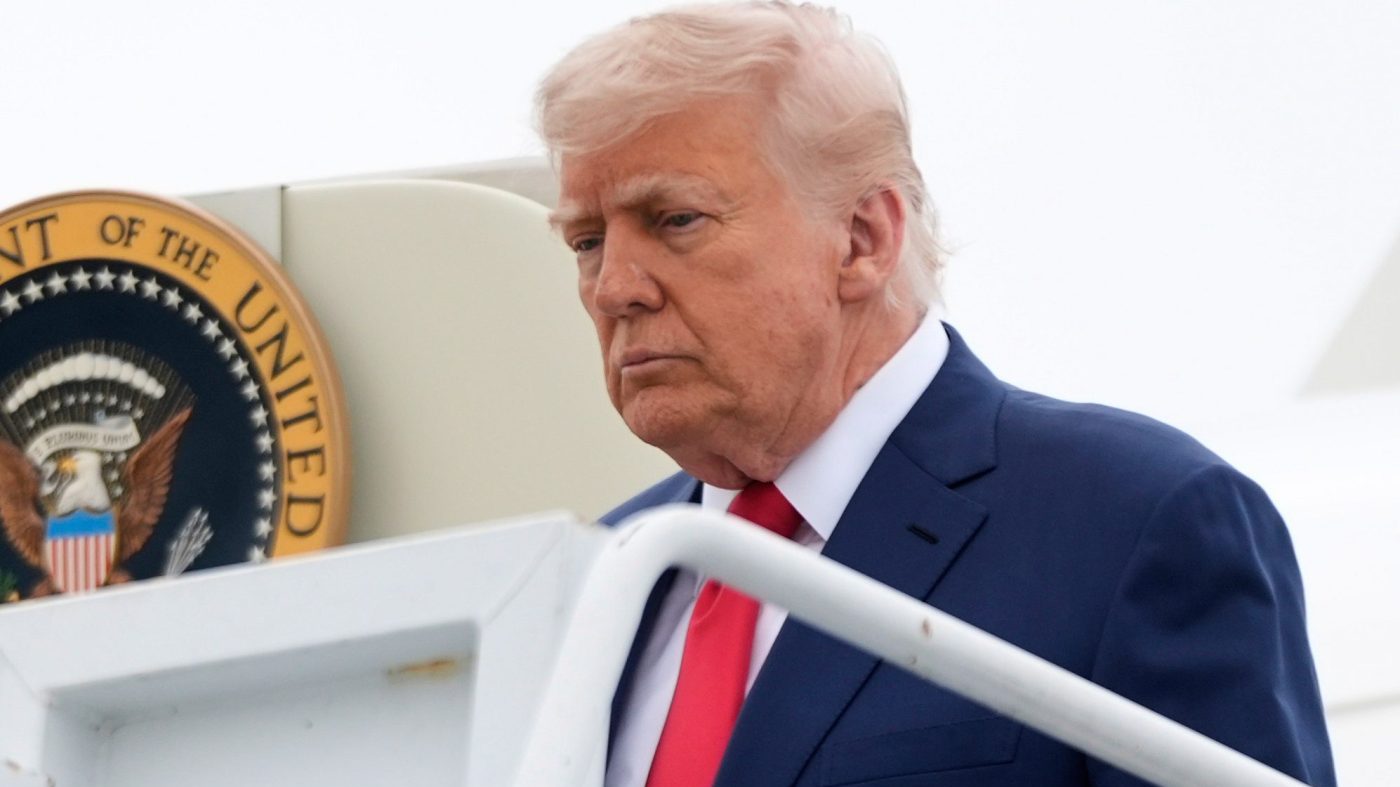
President Trump's approval rating has fallen to its lowest point of his second term, according to political forecaster Nate Silver, who points to the ongoing military engagement in Iran and surging fuel costs as the primary drivers.
“Timing lines up remarkably well with gas prices and the resumption of hostilities in Iran,” Silver wrote on X on Thursday. The renewed fighting has disrupted shipping through the Strait of Hormuz, a critical passage for about 20% of global oil, pushing energy prices upward.

With the conflict nearing its sixth month, the average U.S. gasoline price hit roughly $4.11 per gallon on Friday, up from about $3.15 a year ago, according to AAA. The economic strain is fueling public discontent and raising affordability concerns ahead of the midterm elections.
Two separate surveys released earlier this week underscore the president's weakening standing. A Quinnipiac University poll, out Tuesday, found 58% of voters disapproving of Trump's job performance versus 32% approving—his worst rating from that pollster across both terms. An AP-NORC poll released Wednesday similarly put his approval at 33%, a four-point drop from the previous survey and the lowest in their tracking since he returned to the White House.
As of Friday morning, Trump's overall approval average stood at 40.6%, with 57.5% disapproving, according to Decision Desk HQ's polling aggregate. The numbers reflect growing voter frustration with his handling of the Middle East crisis.
The Quinnipiac survey showed 60% of voters oppose the war, the highest opposition recorded since the conflict began on Feb. 28, and nearly three-quarters oppose deploying U.S. troops to Iran. Meanwhile, the AP-NORC poll found 64% of Americans believe the war has not been worthwhile—a sentiment shared by 87% of Democrats, 37% of Republicans, and 68% of independents.
The political fallout is already reverberating on Capitol Hill, where some Republicans are quietly distancing themselves from the president's agenda. A quiet GOP revolt over Trump's anti-weaponization fund signals growing unease within the party. Meanwhile, Democrats hold an eight-point advantage in the latest midterm polling, a lead that could widen if the war and inflation continue to weigh on voters' minds.
The administration has floated proposals to ease the pain at the pump, including reopening a shuttered refinery in St. Croix, but critics argue such moves are too little, too late. With the midterms approaching, Trump's sinking approval could spell trouble for Republican candidates, as GOP midterm woes deepen amid internal party fights.
As the war grinds on and prices remain high, the president faces an uphill battle to regain public confidence. The latest numbers suggest that without a shift in course, his approval may continue to slide.