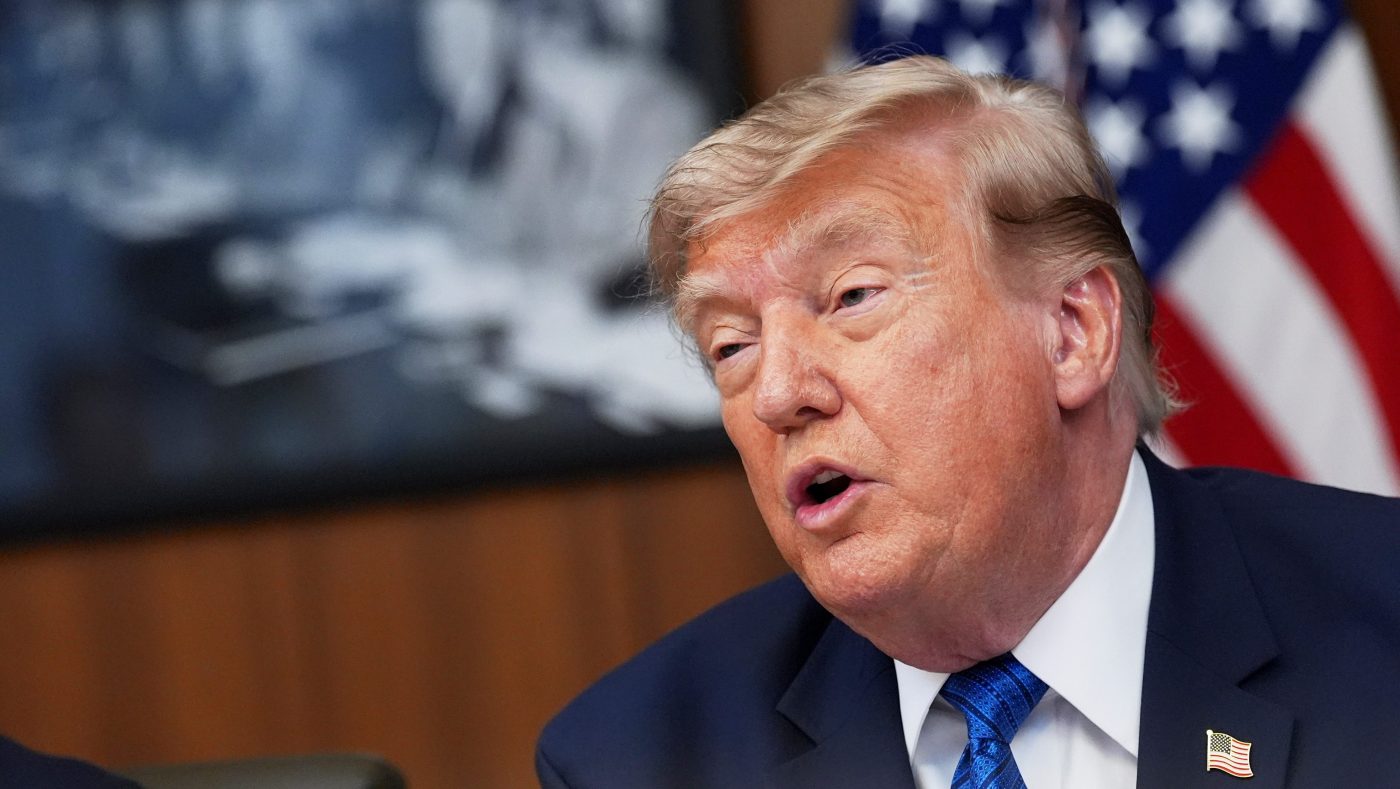
President Trump on Friday declared that Israel is on board with the US-brokered agreement for Hamas to disarm in Gaza, even as Israeli officials have voiced doubts about the militant group's willingness to follow through.
Speaking to reporters after a Cabinet meeting at Camp David, Trump said, "We do have an understanding with Israel. Israel is very happy about it. Israel helped us. They've been very good." His remarks came a day after the White House announced the framework, which would see Hamas surrender its weapons in exchange for a halt to Israeli military operations and a full Israeli withdrawal from the enclave.
Trump framed the accord as a historic breakthrough, noting that "most people said that would be a deal that would be undoable." He acknowledged the fragility of the situation, adding, "Will it go through its ups and downs? It's a very complex situation over there. The people are very complex [and] difficult. In many cases, wonderful. In many cases, not so wonderful."
The president called the agreement "a big step for the Middle East" and insisted that "people are really impressed by it and they're really surprised by it." He also credited Israel's role in facilitating the deal, a claim that has not been publicly confirmed by Prime Minister Benjamin Netanyahu's office, which has remained silent on the matter.
Behind the scenes, however, US officials have indicated that Israel is far from convinced. A senior US official told reporters on Thursday that "they're very skeptical that Hamas will disarm," but noted that the deal is structured to minimize reliance on trust. "This isn't really a trust deal. This is really, you know, it's a conditions-based deal. And as things happen, that everyone has to follow the obligations they've taken," the official explained.
The agreement, announced by Trump on Thursday, has been met with cautious optimism from some quarters, but the lack of a formal Israeli endorsement has raised questions about its viability. Earlier reporting highlighted the skepticism surrounding the plan, and the latest comments from the administration do little to dispel those concerns.
The development comes amid broader regional tensions, including the ongoing conflict with Iran and its proxies. The Cabinet gathering at Camp David was originally focused on Iran and Ukraine, but the Gaza deal dominated the president's public remarks.
Analysts note that even if Hamas formally agrees to disarm, implementation will be fraught with challenges, including verifying compliance and ensuring that other armed factions in Gaza follow suit. The deal's success may hinge on whether Israel and Hamas can move beyond mutual suspicion to meet the conditions outlined in the framework.
As the situation evolves, the international community will be watching closely to see whether this "great breakthrough" translates into lasting stability or becomes another stalled initiative in the long-running Israeli-Palestinian conflict.