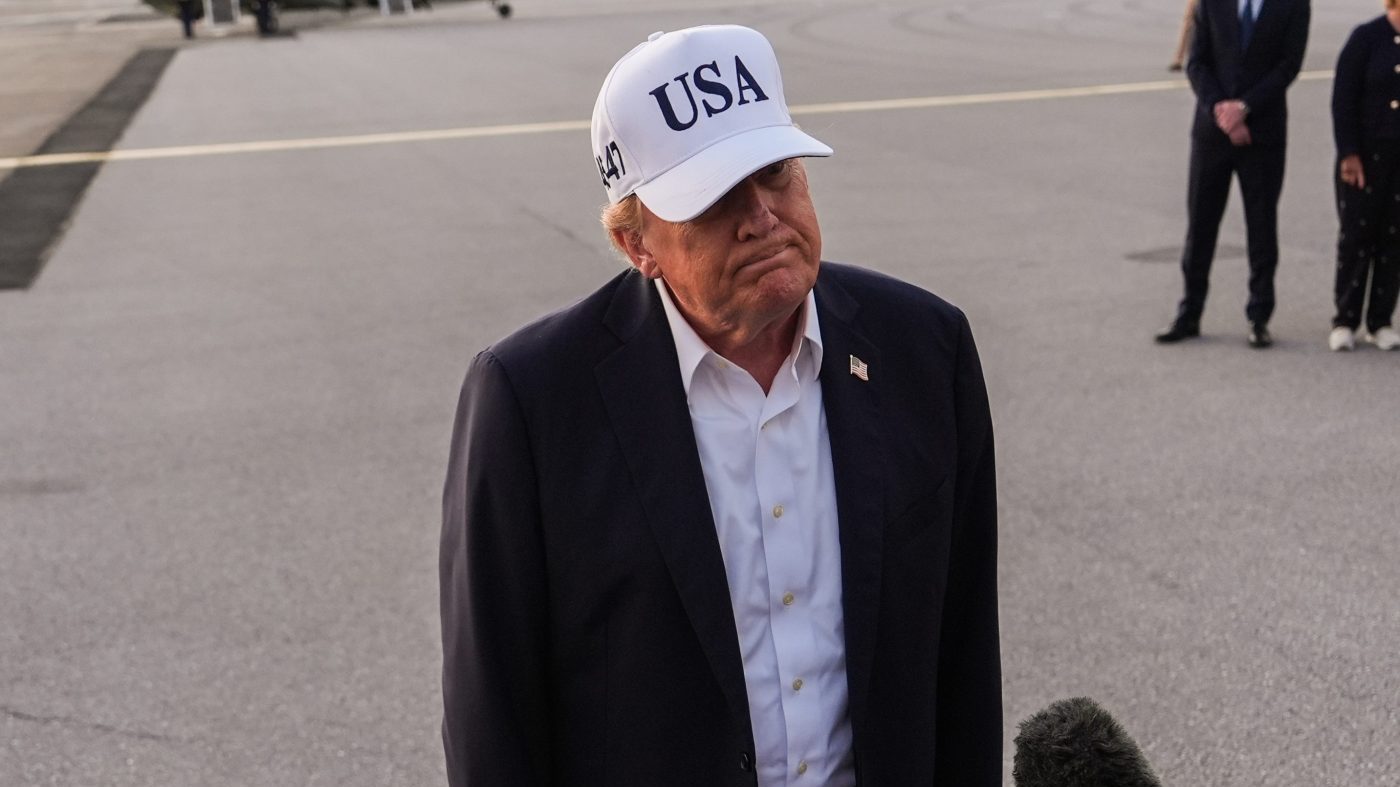
President Trump on Sunday expressed his backing for Flock Safety's AI-driven surveillance cameras, a tool that has sparked debate across the political spectrum. During a brief exchange with reporters aboard Air Force One, Trump was asked whether he would support the technology, which many police departments credit with aiding criminal investigations.
“No, I sort of like them because of that, because of law enforcement. But some people don't. They think it's an infringement,” Trump said. He later added, “I like them.”
The president's remarks come as Flock's network of license plate readers, video cameras, and audio sensors has become a focal point in the broader discussion over artificial intelligence in policing. The system logs not only license plates but also vehicle characteristics such as make, model, color, and even bumper stickers, feeding a shared database that local agencies can access across jurisdictions.
While law enforcement officials tout the technology's role in solving crimes, privacy advocates and some lawmakers have raised alarms about the potential for mass surveillance. The backlash has found support on both sides of the aisle, with critics arguing that federal dollars should not subsidize what they see as an encroachment on civil liberties.
Earlier this month, Rep. Thomas Massie (R-Ky.) introduced the Flock-Off Act, which would prohibit the use of federal funds to purchase, install, maintain, or upgrade automated license plate readers (ALPRs) and biometric surveillance cameras for local law enforcement. Massie, who has frequently clashed with the president, framed the bill as a stand against government overreach.
“Federal taxpayers should not be forced to fund the surveillance state,” Massie wrote on X, the social media platform, in announcing the legislation.
The divide over Flock mirrors broader tensions within the GOP regarding the balance between public safety and privacy, especially as Trump has resisted calls for AI regulation, arguing it could hamper American competitiveness. His endorsement of Flock aligns with that stance, positioning him firmly on the side of law enforcement and technological expansion.
However, the issue is likely to complicate Republican messaging heading into the midterms, as some conservative voters and civil liberties groups question the expansion of government surveillance. The GOP's midterm strategy remains closely tied to Trump, but this latest stance could open new fault lines.
Trump's comments also signal that he sees little distinction between AI used for commercial or national security purposes and that deployed in local policing. In his view, the benefits for crime-solving outweigh the concerns. “I like them,” he reiterated, underscoring his willingness to back the technology despite the controversy.