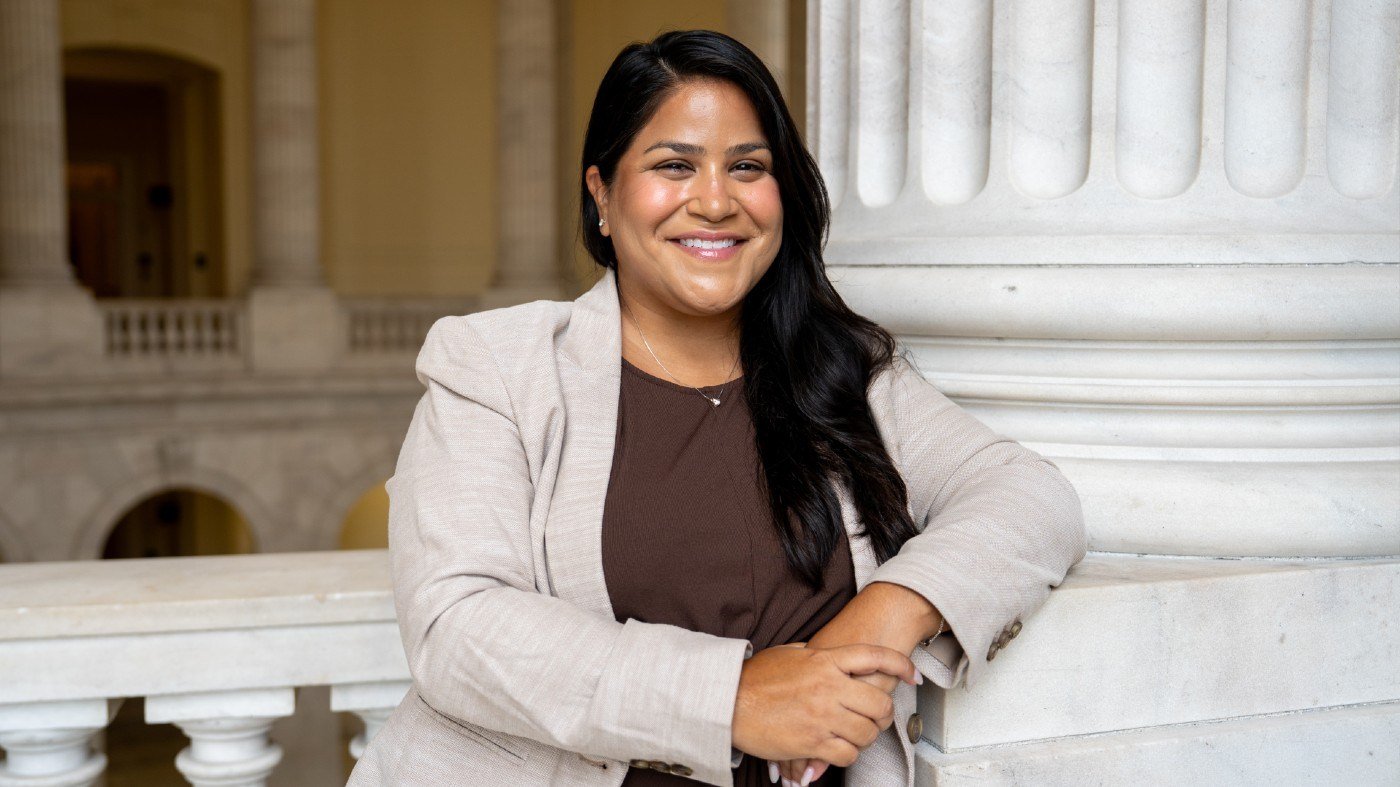
Nelly Decker, the communications director for Democrats on the House Judiciary Committee, has built a reputation as one of Capitol Hill's most effective behind-the-scenes operators. Though she deliberately avoids the spotlight—she jokes about being nearly un-Googleable—her influence has been felt in some of Congress's most contentious battles.
Decker, 39, followed Rep. Jamie Raskin (D-Md.) from the House Oversight and Government Reform Committee to the Judiciary panel, where she now leads a communications shop that is widely regarded as one of the most agile in Congress. Her work has been central to shaping the Democratic response to Republican investigations, including the impeachment inquiry into former President Biden.

In an interview with The Hill, Decker described her approach as "dousing myself with conservative media" to stay ahead of the narrative. When it came to the Biden impeachment, she said her team "debunked every single thing they threw at the wall." That investigation ultimately ended without a floor vote, a result Decker credits to her team's efforts.
"My work is so notable behind the scenes that essentially we killed impeachment—the terrible impeachment—that a specific chair won't stop saying our ranking member's name, even when he departed that committee," Decker said, referring to Oversight Committee Chair James Comer (R-Ky.).
Raskin, known for his verbose legal analyses and lengthy floor speeches, praised Decker's "magnificent understanding" of the media landscape and her "exquisite sense of timing" in deploying press releases and events. He highlighted her ability to master the substance of complex policy, noting that "there are some excellent comms people out there who are not necessarily masters of the content of what they're communicating about, but she always makes sure that she totally understands the bill."
Decker's style contrasts with Raskin's academic approach. "We meet in the middle," she said, explaining that Raskin provides "the education" while their social media feeds lean toward "a lot of quick explainers." That rapid-response capability is what prompted Raskin to bring her to Judiciary, where they anticipated battles over constitutional attacks from President Trump.
Decker's role has become even more critical as Democrats prepare for a potential majority. If they retake the House, she would be at the center of messaging on everything from oversight of the Trump administration to legislative priorities. Her experience in both majority and minority settings, she said, has kept her "fighting spirit" alive for what she calls "Trump 2.0."
Her work has drawn comparisons to other key Democratic staffers, such as Stephenson, House Minority Leader Jeffries' communications chief, who navigates a similarly relentless news cycle. And with Democrats eyeing a return to power, Decker's strategic acumen will likely be tested in the coming months, especially as Jeffries has left the door open to impeaching Trump should the party win back the House.
Beyond impeachment, Decker's portfolio could expand to include issues like AI oversight, which former President Obama has privately urged Jeffries to prioritize. Her ability to translate complex policy into sharp messaging will be crucial in the run-up to the 2026 midterms.
For now, Decker remains content to work behind the scenes, letting her results speak for themselves. As Raskin put it, "I find her a commanding presence and totally unassuming at the same time."