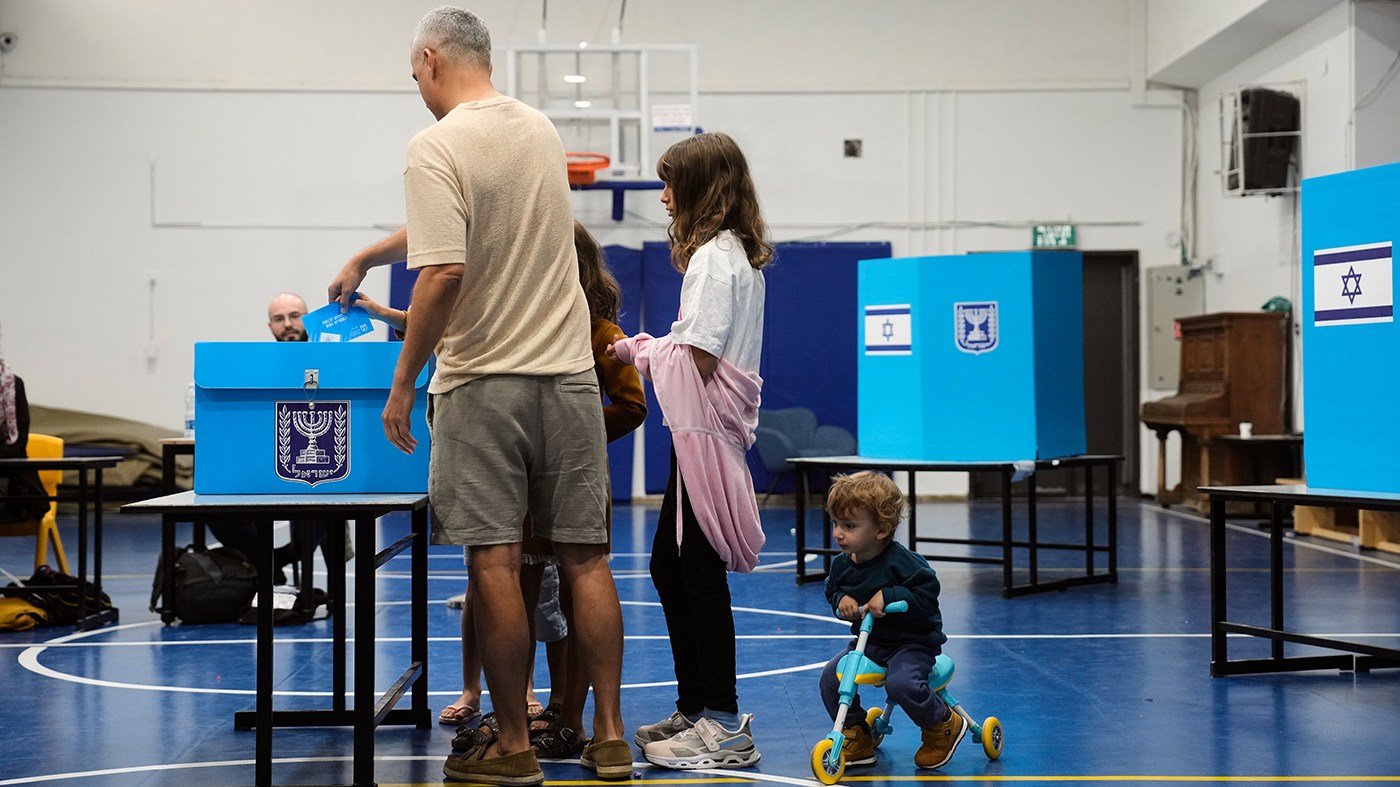
Democrats on Capitol Hill are reacting with a mixture of hope and apprehension to Israel's inconclusive election results, which have left the country's political future uncertain and could reshape US-Israel relations.
The party is encouraged by record voter turnout, the erosion of Prime Minister Benjamin Netanyahu's conservative bloc, and the emergence of retired Gen. Gadi Eisenkot as a potential kingmaker. Eisenkot, who has vowed to curb settler violence in the West Bank, is viewed by many Democrats as a more moderate partner than Netanyahu.
"I hope it bodes well for a coalition, a governing coalition, who reject some of what I find are the most grievous errors of Netanyahu's time," said Rep. Madeleine Dean (D-Pa.), a senior member of the House Foreign Affairs Committee.
However, the fragmented vote, with no party securing the 61 seats needed to govern, has sparked worries about prolonged instability. Rep. Brad Schneider (D-Ill.), a vocal Israel ally, noted the deep divisions the election exposed. "One of the signs is that there's anything but unity in Israel, and so where do they go from here?" he said. "Only time will tell."
Schneider praised Eisenkot's commitment to addressing settler violence, calling it "a threat to peace" and saying Eisenkot is more determined to "squash it." But progressive Democrats are wary that Eisenkot, like Netanyahu, opposes Palestinian statehood—a position many see as essential for any durable peace. House Minority Leader Hakeem Jeffries has repeatedly backed a two-state solution and is expected to push that agenda if Democrats take the House.
The party is also rallying behind legislation to sanction individuals involved in West Bank violence, a bill co-sponsored by 175 House Democrats. Dean, a co-sponsor, said the party should "absolutely" pass it if they control the House. "America needs to lead," she said. "We have to have some moral courage and authority to say, 'No more.'"
The election, the first since the Oct. 7, 2023, Hamas attack that killed 1,200 and took 250 hostages, saw Netanyahu's coalition drop from nearly 70 seats to 53, while Eisenkot's bloc secured 48 and Arab parties won a record 19. Democrats see this as a rebuke to Netanyahu's extreme government.
"That was the Israeli people saying, 'We want something different,'" Schneider said. "No one in Israel wants to sacrifice their security—that's true whether they're Jewish or Muslim."
Coalition negotiations are now underway, with possible scenarios including a unity government between Netanyahu and Eisenkot, or an alliance between Eisenkot's bloc and Arab parties. If talks fail, another election looms. The outcome will shape Washington's approach, particularly on settler violence and broader peace efforts.
Dean is hopeful that the increased Arab representation will influence the next government. "What I do hope is, in these weeks and months coming up, more of the Arab voices and seats are heard and will change, will temper, whoever emerges as the leader," she said. As the political landscape shifts, Democrats are watching closely, aware that the next Israeli government's actions will determine the tone of US-Israel ties.