The image is all too familiar: a gaunt figure emerges from a plane, greeted by tearful relatives and onlookers who can scarcely believe the person is alive. Relief and disbelief flicker across the face of the freed captive. These rare moments of liberation are the result of relentless campaigns by families, activists, governments, and civil society groups. Yet as we mark these victories, we must not lose sight of the grim reality behind each release: autocratic regimes that consolidate power by using human beings as bargaining chips and arbitrarily denying liberty.
The United States has a moral and strategic imperative to continue pressing for the release of political prisoners, to deploy punitive measures that deter such abuses, and—crucially—to recognize that any government that systematically jails its own citizens for exercising basic rights is not a reliable long-term partner. While Washington must engage with a range of nations to protect American interests, it should also acknowledge that a regime's brutality toward its own people undermines the foundation of a trustworthy alliance. Democracies that share our values are inherently stronger and more sustainable partners.
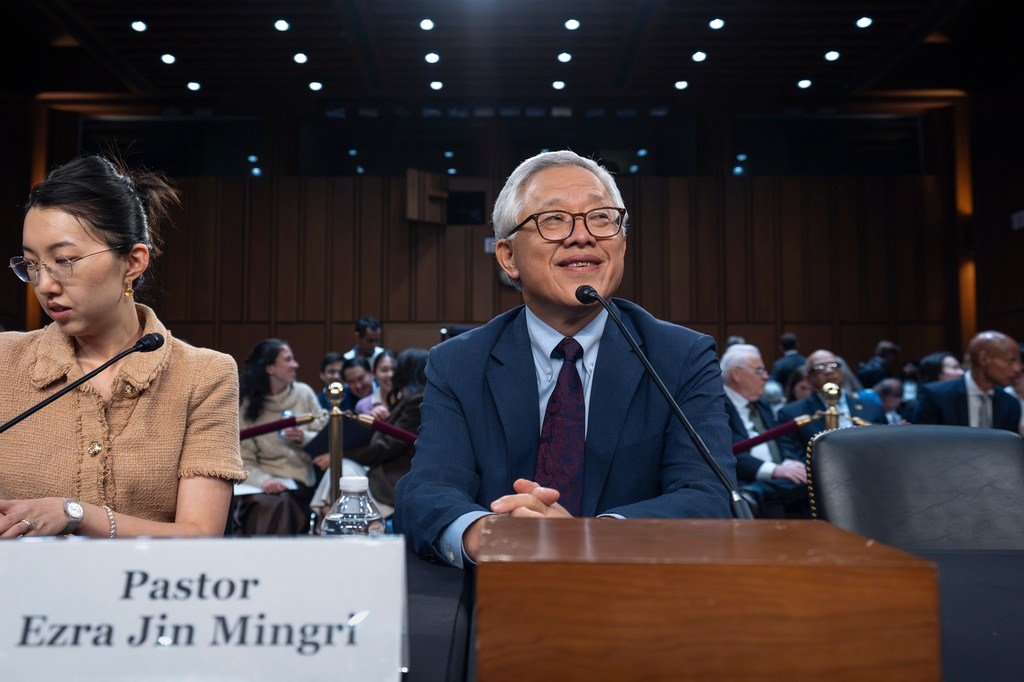
Recent releases have given us reason to celebrate: journalist Jason Rezian freed from Iran, pastor Ezra Jin from China, reporter Evan Gershkovich from Russia, activist Maryam Akbari Monfared from Iran, artist Luis Manuel Otero Alcantara from Cuba, and pastor Evan Mawarire from Zimbabwe. Each return is a testament to the power of advocacy. But as the George W. Bush Institute notes, these are not acts of charity—they are the correction of profound injustices. Behind each freed individual lies a broader pattern: autocratic leaders, often loosely coordinated, who imprison countless people for their faith, their writing, or their demands for justice.
The mechanisms of repression are chilling. From senior officials to prison guards, entire state apparatuses are directed to isolate, harass, and abuse political prisoners—denying them medical care, adequate food, and even fresh air, and subjecting them to torture. These arrests are deliberate, designed not only to silence the individual but to intimidate entire communities. The fundamental freedoms of worship, speech, and assembly—cherished in the United States—are precisely what these regimes fear most.
Moreover, these regimes often follow high-profile releases with a “replenishment” of prisoners, arresting other activists or colleagues of the freed person. Harassment continues long after release, and many are forced into permanent exile. Since Jin’s release in July, at least seven Christian house churches have been raided, 150 pastors remain imprisoned, and eight Christians seized with Jin are still behind bars. In Cuba, at least a dozen more people have been jailed since Otero Alcantara’s release, with Prisoners Defenders estimating 1,339 political prisoners as of August—a number that has steadily climbed.
The Biden administration and Congress should expand their efforts to call for the release of political prisoners, particularly in China, Russia, Iran, and North Korea—authoritarian states increasingly aligned in their interests. Naming individuals is powerful: Wang Yi, Jimmy Lai, and Dr. Gulshan Abbas in China; Lev Schosberg in Russia; Narges Mohammadi in Iran. Such advocacy sends a clear signal that the United States stands for liberty and will not ignore repression. It also bolsters democracy defenders, showing they are not alone.
Beyond individual cases, Washington must use the tools at its disposal, including sanctions under the Global Magnitsky Act, to impose real costs on those responsible for imprisoning activists. Finally, the administration and Congress should calibrate relations with any nation that employs political imprisonment to silence dissent. As democratic movements surge globally, the United States must lead by example.
Each reunion is a cause for joy, but we must honor the sacrifices of those freed by confronting the systemic evil of political imprisonment. Autocrats must understand that their dehumanizing practices will not be normalized. The United States has both the moral authority and the political leverage to make a difference—if it chooses to use it.