The Supreme Court on Monday refused to revive President Trump's mail-in voting initiative for the upcoming midterm elections, leaving in place a lower court's injunction that deemed the plan unlawful. The decision, issued over the dissents of two conservative justices, marks the third time the administration has sought emergency relief from the high court in this dispute—and the first time it has failed.
The unsigned order stated that the government is unlikely to succeed on the merits of its challenge to the preliminary injunction issued by U.S. District Judge Indira Talwani, an Obama appointee in Boston. The ruling did not detail the justices' individual votes, but Justice Brett Kavanaugh, one of Trump's appointees, publicly indicated he sided with the majority. In a concurrence, Kavanaugh acknowledged that the plan might be legal but argued that applying it for the 2026 elections would be "arbitrary and capricious" under the Administrative Procedure Act, because state and local election officials lack sufficient time to implement it before the vote.
Justices Clarence Thomas and Samuel Alito dissented. Alito, joined by Thomas, argued that many of the plaintiffs lacked standing and that the remaining claims were a "Hail Mary pass" that rarely succeeds. No other justice disclosed their vote.
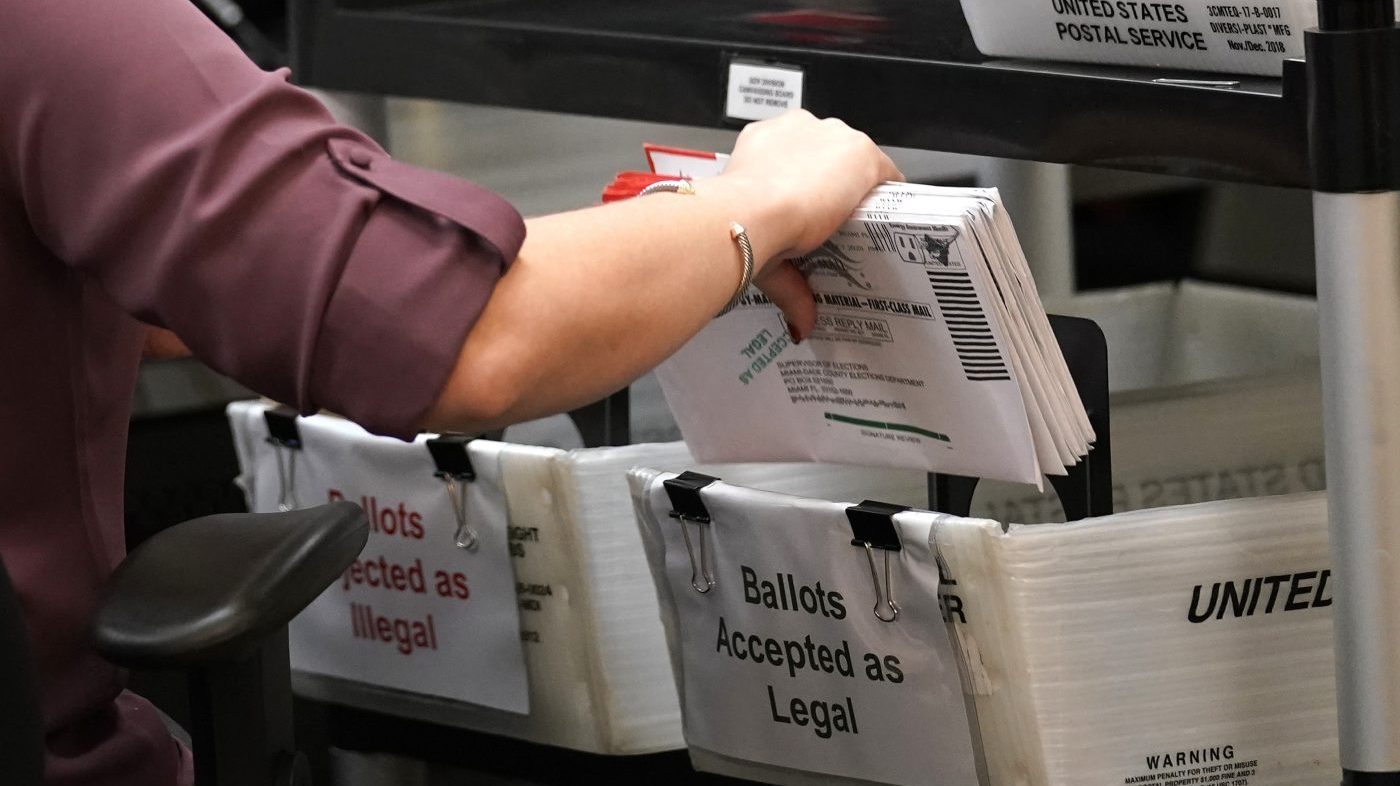
The plan, which stemmed from a March executive order, would have required states to submit voter lists to the Postal Service for mailing ballots, and would have restricted delivery to ballots meeting new design specifications, including an official logo and barcode. Supporters framed it as an election integrity measure, but critics—including a coalition of blue states—warned of chaos, saying compliance would be impossible before November and could disenfranchise millions of mail voters.
This is the latest in a series of emergency appeals that have thrust the Supreme Court into the middle of the midterm election season. Last week, the justices lifted an order that had blocked Missouri from using a newly passed Republican-drawn congressional map. The court is also weighing a separate case over the use of an overhauled immigration data system to vet voter rolls.
The decision represents a rare setback for Trump on the emergency docket, where the administration has frequently prevailed after lower courts blocked key parts of its agenda. The legal battle began after Trump signed the executive order targeting mail voting, which he has repeatedly claimed—without evidence—is rife with fraud. Election officials have documented only isolated instances of fraud, not the systemic abuse the president has alleged.
In court filings, Solicitor General D. John Sauer defended the plan as modest and within the Postal Service's authority to regulate sensitive mail, calling the judge's block "baseless." He warned that every day the injunction remains in place, more ballots are being sent without the protections the rule provides.
The case has bounced back to the Supreme Court three times, each after Talwani issued a block. In the first round, the justices ruled that the blue states likely lacked standing to challenge the executive order itself. In August, the Postal Service announced its final implementation plan, which Talwani quickly halted. After the administration returned to the high court, she replaced that temporary block with a longer one, prompting a third emergency appeal.
As the Supreme Court kept Talwani's injunction intact, a separate federal judge—Trump appointee Carl Nichols in Washington, D.C.—issued a nationwide block on Sunday in response to other challenges. That ruling has not yet reached the justices. The ongoing litigation underscores the high stakes of mail-in voting in a polarized electoral environment, with new postal rules potentially disrupting mail voting in key states.
The decision comes as Congress and the administration clash over broader election administration issues, including artificial intelligence risks in the run-up to the midterms. For now, the Supreme Court's stance signals that the judiciary is wary of last-minute changes that could undermine the credibility of the electoral process.