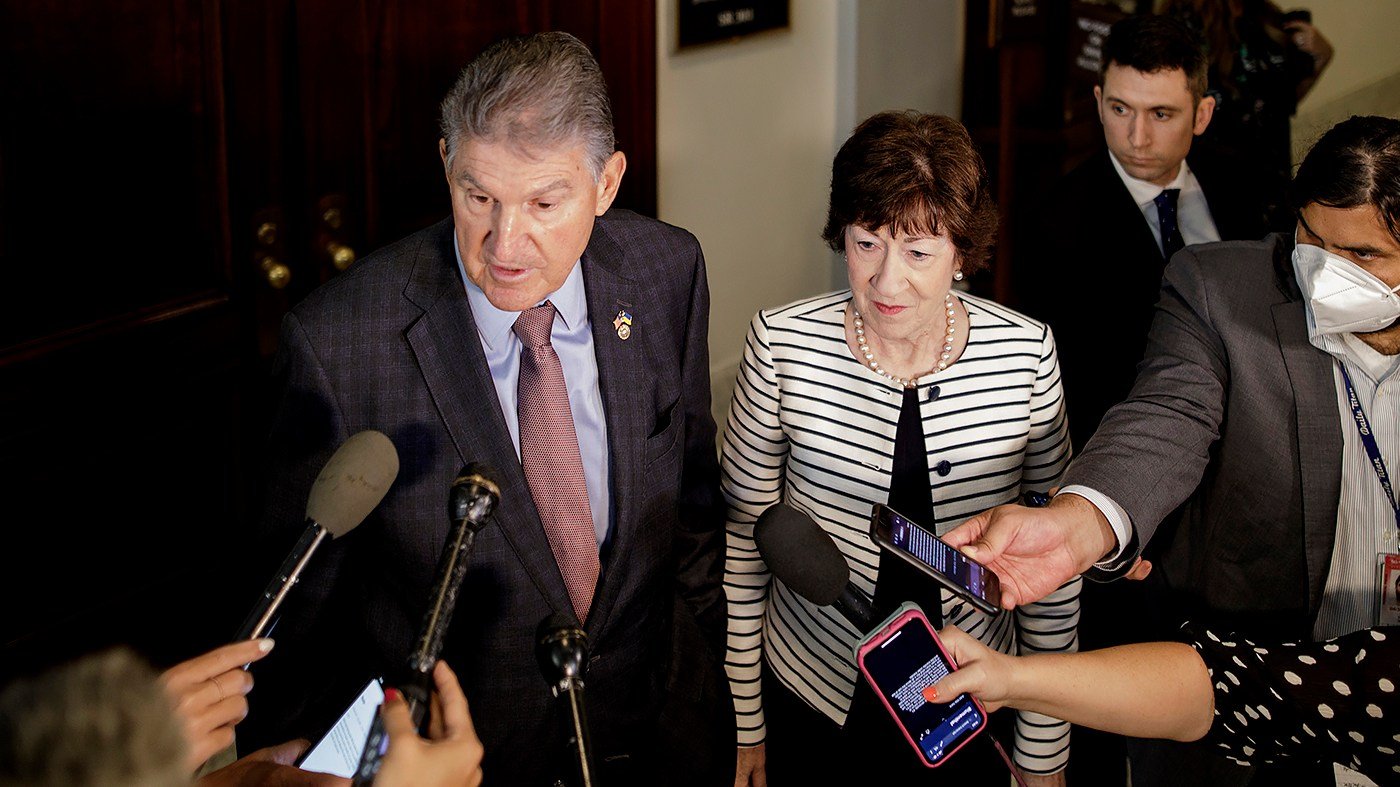
Former West Virginia Senator Joe Manchin, who left the Democratic Party in 2024 to become an independent, has thrown his support behind Republican Senator Susan Collins in her re-election bid in Maine. Manchin, a longtime centrist, described Collins as the “soul of the Senate,” a nod to their years of bipartisan collaboration.
In a CNBC appearance on Monday, Manchin said, “You lose the Susan Collins’s of the Senate, you’re losing the soul of the Senate—basically, a person you can talk to, who wants to do the right thing all of the time. Now, everybody says, oh, she doesn’t do this, doesn’t speak up. Susan is always in there, always in the trenches.” His endorsement comes as Collins faces a challenge from Troy Jackson, a progressive Democrat who backs Medicare for All and the abolition of U.S. Immigration and Customs Enforcement.
Manchin and Collins have a history of working across the aisle, most notably on the 2021 bipartisan infrastructure package and the 2022 gun safety law that created a red-flag program. “Joe is a dear friend and trusted colleague with whom I have always worked closely to solve problems and deliver results for the people of Maine and America,” Collins said in a statement. “From helping end government shutdowns and negotiating the Electoral Count Act to delivering COVID relief and historic investments in our nation’s infrastructure, we have shown what is possible when Republicans and Democrats work together to find common ground and get things done. I am honored to have his support.”
Manchin’s endorsement is no surprise given his outspoken opposition to socialist candidates. In a recent interview on CBS’s “Face the Nation,” Manchin told host Margaret Brennan there is “no way” he would back a socialist. When pressed about whether he could support “good ideas,” Manchin replied, “I’ll support the good ideas, but how could you support some of the crazy stuff they’re for? Have you seen their platform?”
Jackson does not identify as a democratic socialist, but he has received backing from Democratic Socialists of America, much like his predecessor in the primary, Graham Platner, who dropped out of the race. This has become a flashpoint in the campaign, echoing broader tensions within the Democratic Party over its leftward drift. The rise of democratic socialists has tested the party’s outreach to key constituencies, and Manchin’s move underscores the rift.
Manchin’s decision to back Collins also highlights the shifting political landscape in the Senate, where centrists like him are increasingly rare. He frequently clashed with progressive Senator Bernie Sanders over the size of President Biden’s Build Back Better agenda, warning that excessive spending would fuel inflation. His endorsement of a Republican is a clear signal that he prioritizes bipartisanship over party loyalty.
Collins, a four-term incumbent, is facing one of the toughest races of her career. Her support for key Republican priorities has drawn criticism from progressives, but she has also broken with her party on issues like abortion and same-sex marriage. Manchin’s endorsement could help her appeal to moderate voters in Maine, a state that has trended Democratic in recent presidential elections.
The race in Maine is one of several competitive Senate contests that could determine control of the chamber. With Democrats holding a narrow majority, every seat matters. Manchin’s endorsement of a Republican is a rare instance of a former Democrat crossing the aisle, and it may influence other centrist voters who are wary of the party’s progressive wing. As the campaign heats up, both sides are likely to use Manchin’s words to rally their bases.