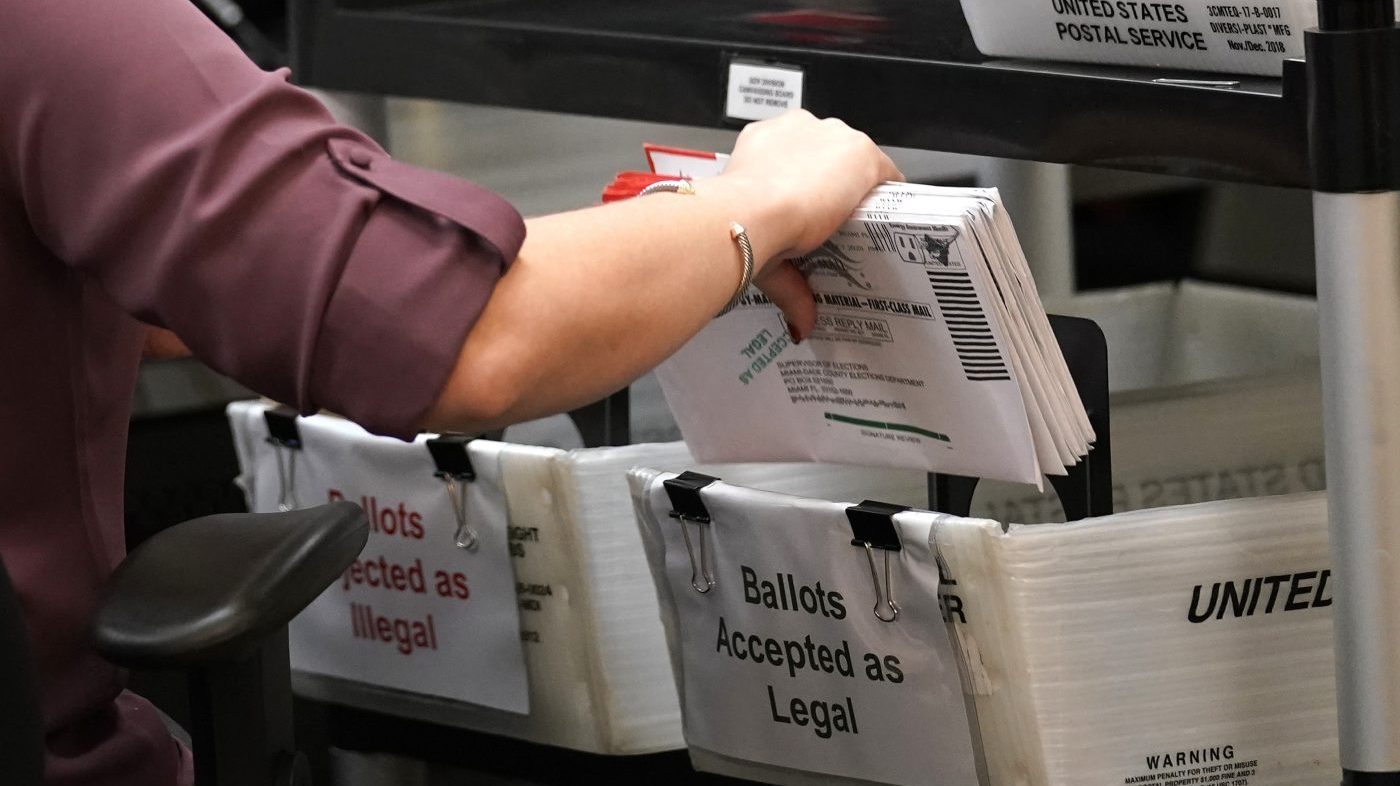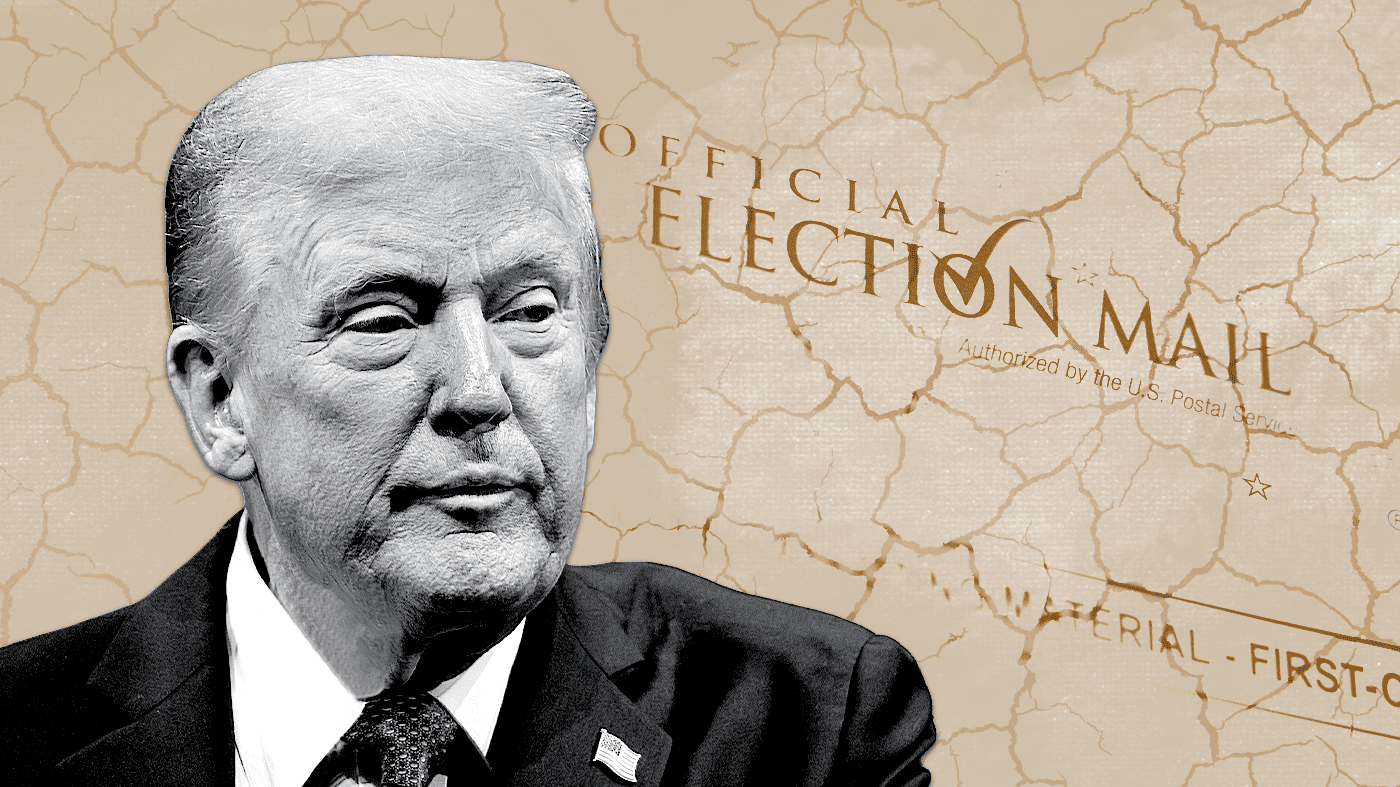
The Trump administration has filed its third emergency appeal to the Supreme Court, seeking to overturn a lower court's injunction against new U.S. Postal Service regulations that impose strict formatting and data-submission requirements on mail-in ballots. The rules, which the administration frames as anti-fraud measures, have drawn sharp criticism from voting rights advocates and state election officials, who warn they could cause ballots to be delayed or discarded ahead of the November midterms.
Plaintiffs argue the regulations violate the Constitution's assignment of election administration to states and Congress, leaving no role for the executive branch. But beyond the constitutional questions, the move represents a striking departure from a nearly 60-year bipartisan consensus that the postal service should remain insulated from partisan politics.
A Feature, Not a Bug
The potential to interfere with voters' ability to cast ballots by mail is not a bug but a feature of a system designed to restrict a practice that Democrats have used more often than Republicans in recent elections. President Trump has long been vocal about his opposition to mail-in voting, calling it a threat to Republican electoral prospects. In 2020, he declared that "Republicans should fight very hard when it comes to statewide mail-in voting" because it "doesn't work out well for Republicans." In February, he went further, suggesting that "the Republicans ought to nationalize the voting."
The administration now describes the postal regulations as election-integrity measures, but it has provided no evidence of the widespread fraud they purportedly address. Internal USPS officials warned before the rule was finalized that even a single barcode scan failure in a bulk mailing would cause the entire batch to be rejected and returned—a zero-tolerance approach that guarantees disruption at scale.
Disruption by Design
The rules would likely upend voting in eight states where elections are conducted almost entirely by mail, including Washington and Oregon. Seven of those states lean Democratic. Washington, which automatically mails ballots to more than 5 million registered voters, says compliance could require destroying and replacing more than 5 million envelopes already printed for November, forcing a rushed rework just weeks before ballots go out.
Even states that rely heavily but not exclusively on mail-in voting would feel the impact. In Maricopa County, Arizona—which mails over 2 million ballots in its initial run—a single misprinted barcode could delay delivery to every voter in the county. The Postmaster General has also admitted that USPS will withhold delivery from any state that refuses to hand over its voter manifest, giving opponents of mail-in voting two independent levers to stop ballots before they reach voters.
An Institution Under Siege
The postal service is more than a delivery system; it is a civic institution with roots older than the Constitution. Established in 1775 under Benjamin Franklin, the first Postmaster General, it was designed to serve as a neutral common carrier, facilitating democratic debate and the distribution of independent newspapers and correspondence without royal or partisan interference. Historian Stephen Allen Kochersperger notes that "the country may not even have come into existence but for the postal service," as it helped spread ideas of independence.
In 1970, Congress passed the Postal Reorganization Act with overwhelming bipartisan support, driven by concerns that partisan politics had infected the postal service. The act created an independent public corporation with a bipartisan Board of Governors—no more than five of nine members may belong to the same party—and gave that board, not the president, the power to appoint and remove the postmaster general. President Nixon, upon signing the bill, echoed the consensus: "There is no Republican way or Democratic way to deliver the mail. There is only the right way."
By asking the Supreme Court to lift the Boston court's injunction, the administration seeks to invert that legacy, turning an independent carrier into an instrument of executive election policing for partisan gain. The move has drawn comparisons to other executive overreaches that test the limits of federalism. With the midterms approaching, the stakes are high, and the Court's decision could reshape how Americans vote.
As Republicans debate their midterm strategy, with some all-in on Trump, the postal rules highlight a broader fight over election administration. Meanwhile, Democrats are already signaling they may pursue impeachment if they retake the House. The Supreme Court's ruling on this emergency appeal will be a critical test of whether the postal service remains a neutral arbiter or becomes a partisan gatekeeper.