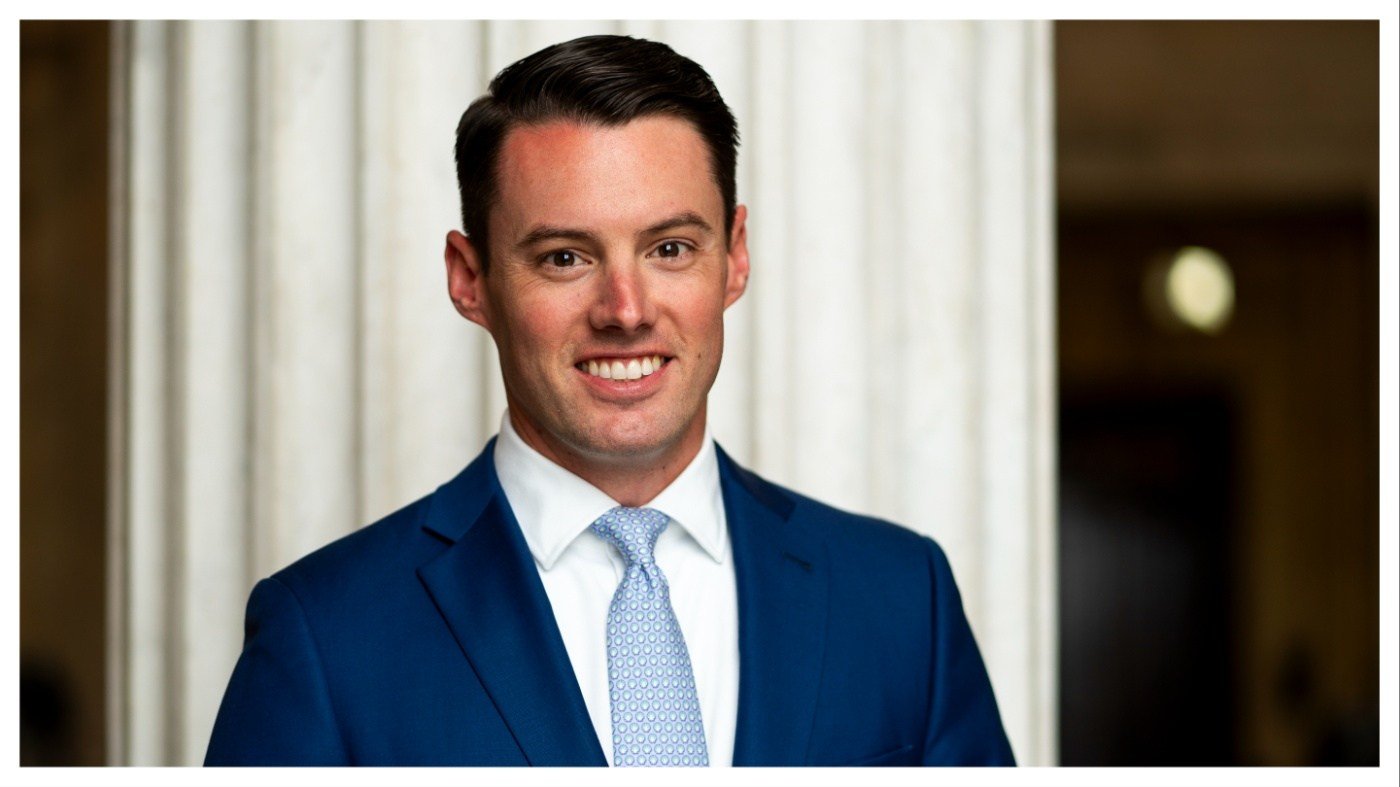
McKinley Lewis has spent nearly a decade inside Sen. Rick Scott's orbit, emerging as one of the youngest committee staff directors in the Senate and a key architect of the Florida Republican's push to reshape federal policy on seniors and fiscal discipline.
Lewis, 34, currently serves as staff director of the Senate Special Committee on Aging, which Scott chairs, and as deputy chief of staff for strategic initiatives in Scott's personal office. The dual role places him at the center of Scott's efforts to turn a once-sleepy panel into a messaging powerhouse for conservative ideas on entitlement reform, drug pricing, and election integrity.
Since Republicans took the majority in the 119th Congress, Scott and Lewis have orchestrated 35 hearings, featuring witnesses as varied as businessman Kevin O'Leary, former NFL quarterback Matt Hasselbeck, and tech mogul Mark Cuban. The committee has also produced five major policy reports and is championing the Clear Labels Act, a bill aimed at forcing clearer disclosure of inactive ingredients in generic drugs—a move Scott argues will help seniors avoid harmful additives.
Lewis's rise to this influential perch began in 2016, when he joined Scott's gubernatorial staff as deputy communications director. Weeks later, the Pulse nightclub massacre in Orlando thrust him into crisis management. Lewis, then the staffer closest to the scene, rented a car and drove through the night to join Scott. For a week, the two operated from a mobile command unit for 12-hour days, coordinating the state's response to what was then the deadliest mass shooting in U.S. history.
That experience forged a bond that carried Lewis into Scott's Senate operation after the 2018 election. But a family consideration nearly derailed his ascent: his wife, an Air Force medical officer, was stationed at Eglin Air Force Base in the Florida panhandle. Lewis chose to remain in Florida for two years, working remotely while his family stayed put.
In late 2020, his mother-in-law agreed to relocate to Fort Walton Beach to help care for his two young daughters, freeing Lewis to commute to Washington and take what he calls his "dream job" as Scott's top communications adviser. He later transitioned to his current policy-focused roles.
Scott, who has built a national profile as a deficit hawk and election reform advocate, remains laser-focused on Florida's 4.5 million seniors—a constituency that gives the Aging Committee unusual political weight. Lewis has helped translate that into a steady stream of oversight and legislative activity, including hearings on the debate over aging politicians and the impact of legal immigration cuts on senior care staffing.
The committee's aggressive schedule has drawn attention beyond the Capitol. Scott has used the panel to press for cheaper TV ads for GOP committees, a cause he links to broader campaign finance reform. Lewis, for his part, has become known as a steady hand who can translate Scott's hard-charging style into legislative output.
His trajectory mirrors that of other young Hill operatives who have risen through crisis and loyalty. As Scott mulls another presidential run, Lewis is likely to remain a central figure in the senator's inner circle, shaping policy that could ripple far beyond Florida.