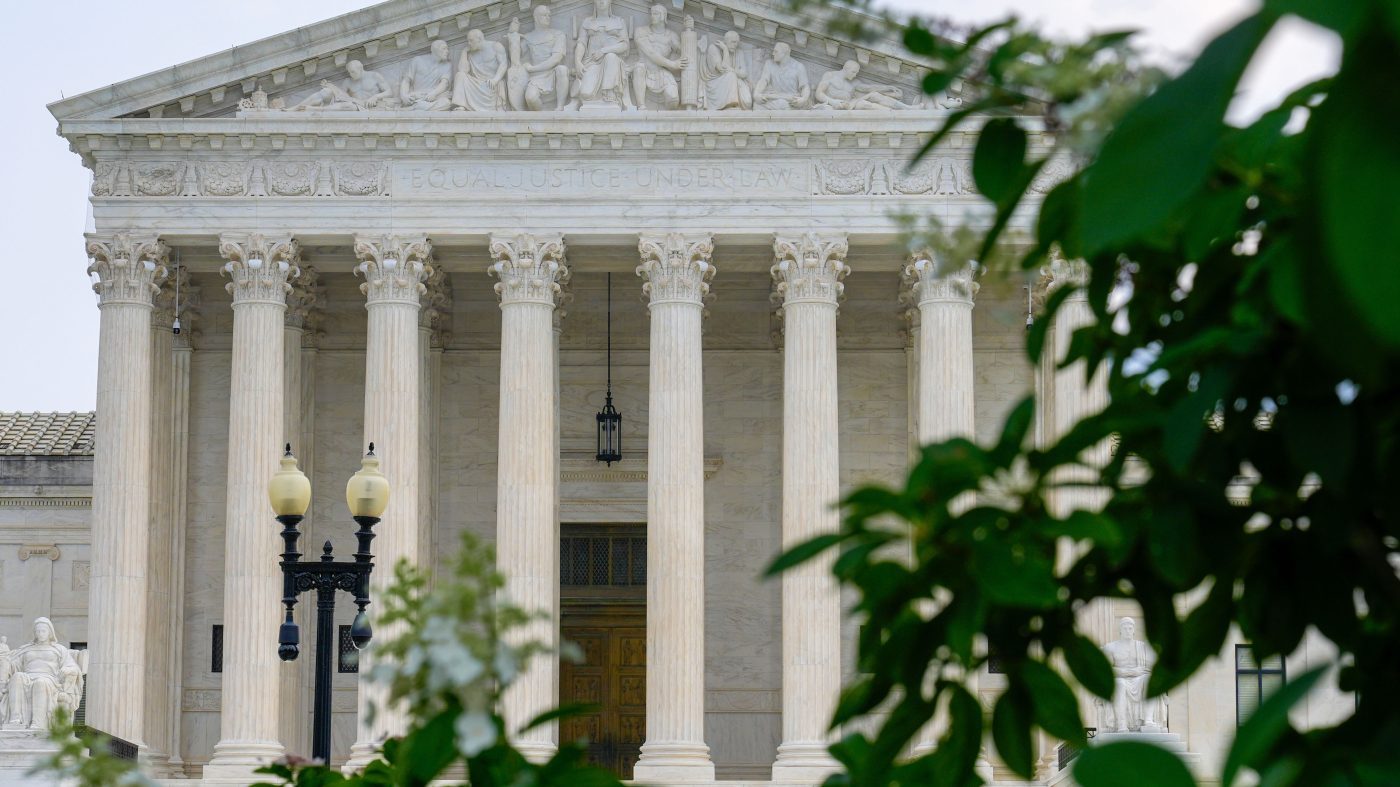
The Supreme Court on Friday cleared the way for Republican party committees to take advantage of discounted television advertising rates in the run-up to the November elections, a move that drew sharp Democratic opposition and a public dissent from Justice Ketanji Brown Jackson.
In an emergency application, the GOP's Senate and House campaign arms—bolstered by a financial edge and support from the Trump administration—urged the justices to intervene after a lower court ruling had blocked them from accessing the preferential rates. The court's majority, in an unsigned order, said the federal courts lacked authority to step in at this stage, effectively allowing the committees to proceed with the cheaper ads for now.
The dispute centers on a Federal Communications Commission (FCC) notice that interpreted federal law to allow political parties and joint fundraising committees to qualify for the lowest advertising rates broadcast stations must offer in the 60 days before a general election. While candidates are universally entitled to those rates, the question of whether party committees can also claim them has become a legal battleground.
Democrats had sued to block the Republican committees from using the discounted rates, and the U.S. Court of Appeals for the 4th Circuit ruled in their favor in a 2-1 decision, holding that the FCC's notice was not a legally binding rule and exceeded the agency's authority.
In their filings to the Supreme Court, Republicans argued that the lower courts had improperly inserted themselves into an administrative matter, describing the FCC notice as a mere “staff-level guidance document.” They warned that allowing such challenges would “open the floodgates” to litigation over routine agency staff decisions, a point echoed by the Trump administration's solicitor general, D. John Sauer.
Sauer wrote that the notice does not favor one side over the other, noting it “offers the same benefit to all sides” in the political marketplace. He contended that the challengers' claim of injury—that the notice makes it cheaper for opponents to run ads—does not justify judicial intervention.
Democrats countered that the lower courts acted properly, insisting that the text of the relevant statutes clearly supports their position. “On both reviewability and the merits, Applicants and the United States want to talk about everything except the text of the directly pertinent statutes,” they wrote. “That is because on both questions, the text directly supports Candidates.”
The court's order was issued without a recorded vote, but Justice Jackson publicly dissented, signaling her disagreement with the majority's procedural stance. The ruling is a temporary victory for Republicans, who can now use the discounted rates in the final weeks of the campaign season, but the underlying legal question remains unresolved and could return to the courts after the election.
This decision comes amid a broader legal landscape where campaign finance and election rules are being contested. In a related development, the Supreme Court recently allowed a Trump administration order on mail voting to proceed, sparking further litigation. Meanwhile, state courts have been active on redistricting issues, and Missouri's high court sent a GOP-drawn map to voters.
The practical impact of Friday's ruling is significant: Party committees can now negotiate lower ad rates, stretching their campaign dollars further. For Republicans, who have a cash-on-hand advantage, this could amplify their advertising firepower in key races. Democrats, meanwhile, are likely to press the issue in the lower courts or seek legislative remedies.
Legal experts say the emergency nature of the case and the court's refusal to engage on the merits leave the door open for a future challenge. The FCC's notice, if ultimately deemed invalid, could force stations to reimburse the difference in ad costs, a complex financial and administrative headache.
For now, the ruling tilts the playing field in favor of the GOP as the campaign season enters its final stretch. With control of Congress at stake, the ability to run more ads at lower cost could prove pivotal in tight races.