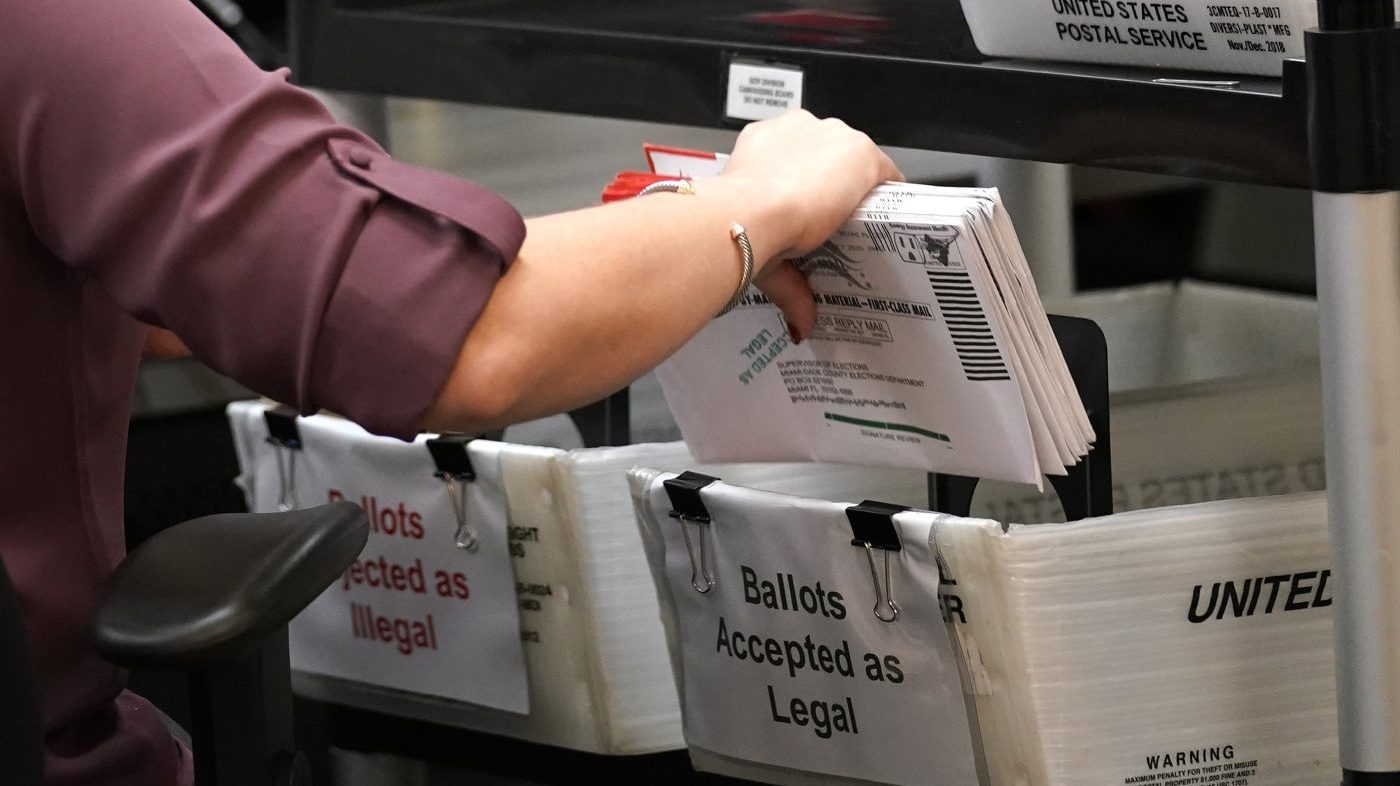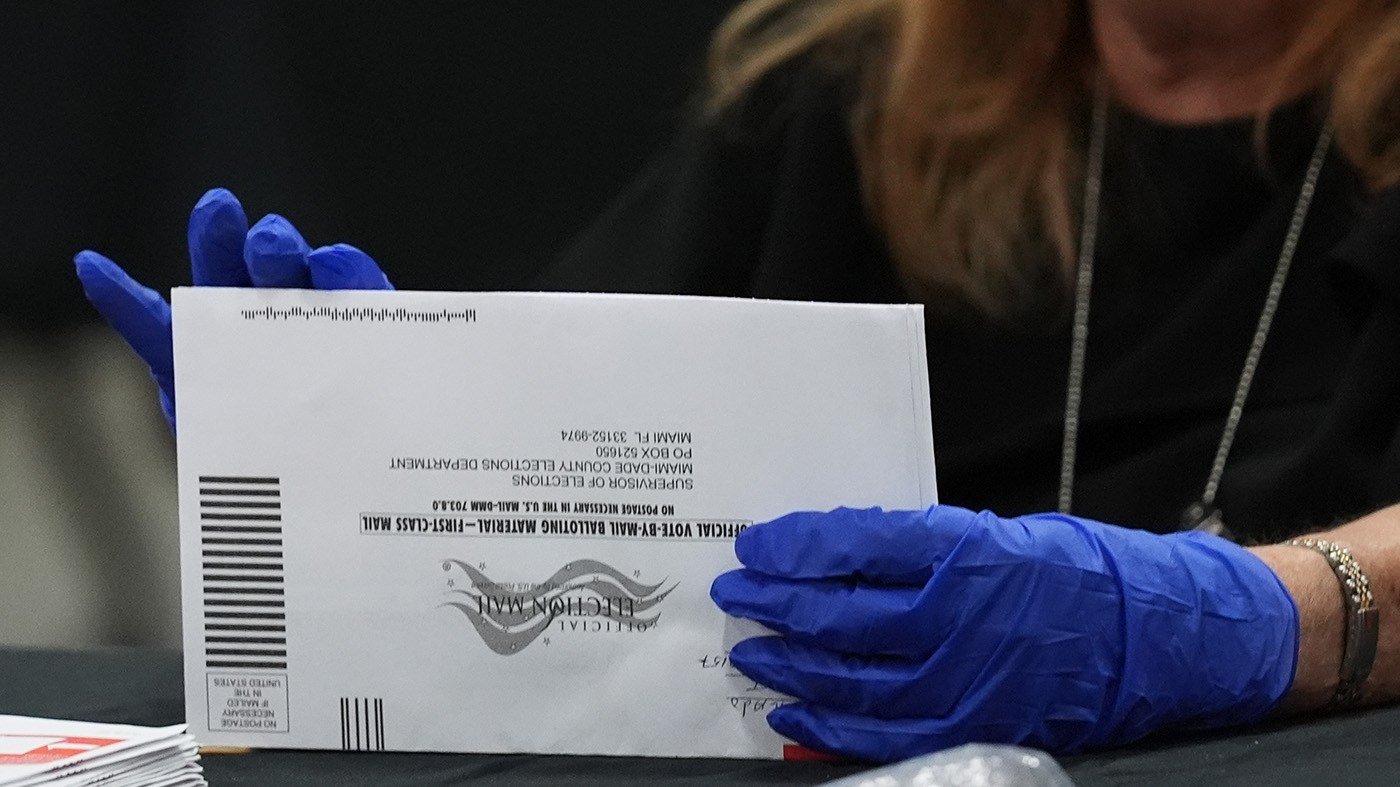
The Supreme Court has once again sided with President Trump in a contentious election-related case, this time clearing the way for his executive order aimed at reshaping mail-in voting. The decision, which lifts a lower court's injunction, has intensified concerns about the integrity and accessibility of the upcoming midterm elections.
In a brief order, the Court's conservative majority ruled that the administration is likely to suffer "irreparable harm" if the lower court's block remained in place. The case, brought by 23 Democratic-led states, challenged the executive order that directs the Department of Homeland Security to compile state citizenship lists and requires the U.S. Postal Service to refuse mail-in ballots to individuals not on those lists.
Justice Elena Kagan, often seen as an institutionalist, has previously dismissed claims that the Court is biased toward Trump, citing cases where the administration lost, such as on tariffs and birthright citizenship. However, recent rulings, including this one, have added to a growing list of Trump victories, leaving critics questioning the Court's impartiality.
The executive order, signed by Trump, mandates that states provide the Postal Service with curated lists of voters eligible to receive mail-in ballots. The Postal Service would then be barred from delivering ballots to anyone not on those lists. This federal intervention into election procedures, traditionally a state domain, has sparked a legal firestorm.
In a dissent, Justice Ketanji Brown Jackson accused the majority of "taking its eye off the ball," describing the situation as a "Kafkaesque nightmare." She argued that the Court's decision allows election-related legal challenges to be brought "too early," undermining the ability to contest the order's legality before it takes effect.
Justice Sonia Sotomayor, joined by Kagan, also dissented, accusing the government of trying to "have it both ways." She noted the administration's contradictory positions: claiming the executive order might not be implemented while simultaneously asserting immediate harm if it were blocked.
The majority, however, emphasized that the ruling was not a final judgment on the order's constitutionality. It said the lower courts acted prematurely, as the Postal Service's implementation plan has not yet been finalized. But a whistleblower has alleged that the agency is moving forward with a "secretive, rushed" effort to comply, potentially leading to a "catastrophic failure" in mail ballot delivery.
This case is the latest flashpoint in the ongoing battle over voting by mail, a practice used by nearly one in three Americans in the 2024 election. Trump himself has voted by mail, but has increasingly criticized the practice, making it a central issue in his political messaging.
The ruling has drawn sharp criticism from voting rights groups and legal scholars. Stephen Vladeck, a prominent legal analyst, warned that if the Court uses the "Purcell principle"—which cautions against changing election rules close to an election—to allow an illegal order to stand, it would be "as indefensible and anti-democratic a ruling as the court has handed down in a very long time."
As the 2026 midterms loom, the impact of this decision remains uncertain. The Court's action paves the way for the executive order to take effect, but legal challenges continue. The outcome could have significant implications for voter access and the integrity of federal elections. For more on related voting disputes, see this analysis of mail-in voting clashes. The Court's decision also echoes concerns raised in Missouri's redistricting battle, where state courts have played a pivotal role. Meanwhile, the administration's aggressive moves on voting policy are part of a broader pattern of executive action, as seen in Trump's recent tariff break.