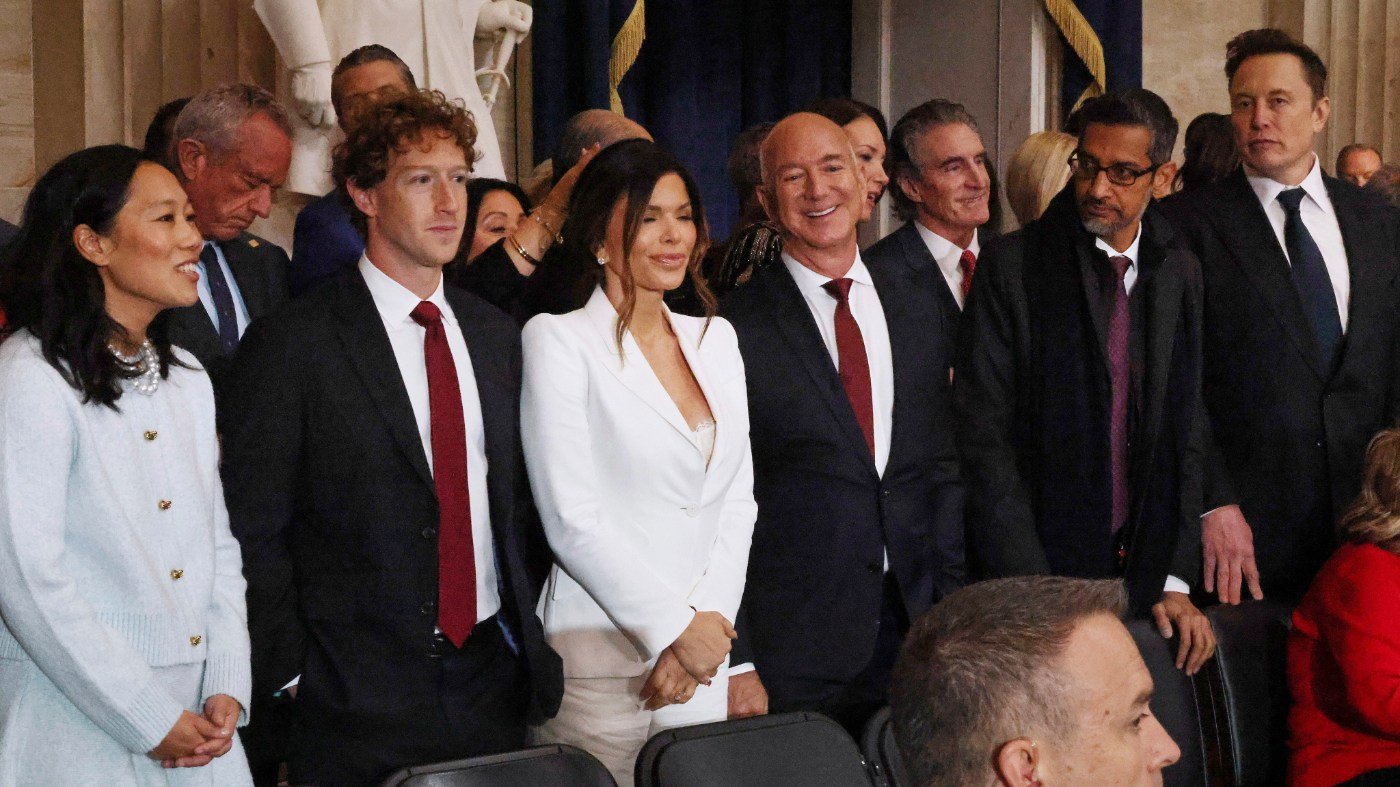
A new poll reveals a striking shift in public perception: Americans now tend to assume that top technology executives are Republicans, a far cry from the industry's long-standing liberal reputation. The survey, conducted by PF Global for Politico, asked respondents about eight current or former tech leaders, and for all but one, a plurality or majority identified them as GOP.
The findings underscore how the tech industry's aggressive courtship of President Trump over the past two years has left a lasting impression on the electorate. After enduring Trump's criticisms during his first term, most major tech CEOs spent months seeking his approval ahead of his second term—through inaugural donations, visits to Mar-a-Lago, and internal policy shifts. In return, Trump has largely embraced them and advocated for a hands-off regulatory approach, a stance that has shaped public perceptions.
Elon Musk, the Tesla and SpaceX chief and a major Republican donor, tops the list: 59% of respondents view him as Republican, while only 14% say Democrat. Musk's political involvement has been notable, with recent reports revealing he is the largest known campaign donor of the 2026 cycle, having contributed at least $276 million to GOP-aligned PACs and campaigns.
Meta CEO Mark Zuckerberg is next, with 40% viewing him as Republican versus 27% Democrat. Once at odds with Trump, Zuckerberg has become a close ally in the president's second term, frequently consulting with him on tech policy. Meanwhile, former Microsoft chief Bill Gates—a major donor to Kamala Harris's 2024 campaign—is the only executive more likely to be seen as a Democrat, though narrowly: 35% say Democrat, 31% Republican.
The poll also tested a fictional CEO named "Marshall Ancoates," and even he was assumed to be Republican by 22% of respondents, versus 18% Democrat. Among Trump voters, the gap widened to 30% Republican versus 19% Democrat, while Harris voters were split evenly at 24% each. This suggests that the association between tech leadership and the GOP has become a default assumption for many Americans.
Other executives surveyed include Tim Cook, with 29% Republican and 27% Democrat; Dario Amodei of Anthropic, 28% Republican; Sam Altman of OpenAI, 32% Republican; Jensen Huang of Nvidia, 28% Republican; and Sundar Pichai of Google, 28% Republican. Notably, even executives who have clashed with the administration, like Amodei, are still perceived as Republican, indicating a broader trend.
Respondents also linked tech workers to their bosses' politics. A majority (52%) said Tesla employees are Republicans, while 33% and 28% said the same for OpenAI and Anthropic staffers, respectively. When asked about midterm spending, both Trump and Harris voters agreed that the AI and tech industry is the biggest spender on Republican campaigns.
This perception shift could have long-term consequences for the industry's reputation, especially as voters head into the midterms. The poll, conducted October 10–12 among 2,000 U.S. adults, has a margin of error of 2.2 percentage points overall. For more on the political climate, see our coverage of record pessimism ahead of the midterms and the public's stance on election betting.