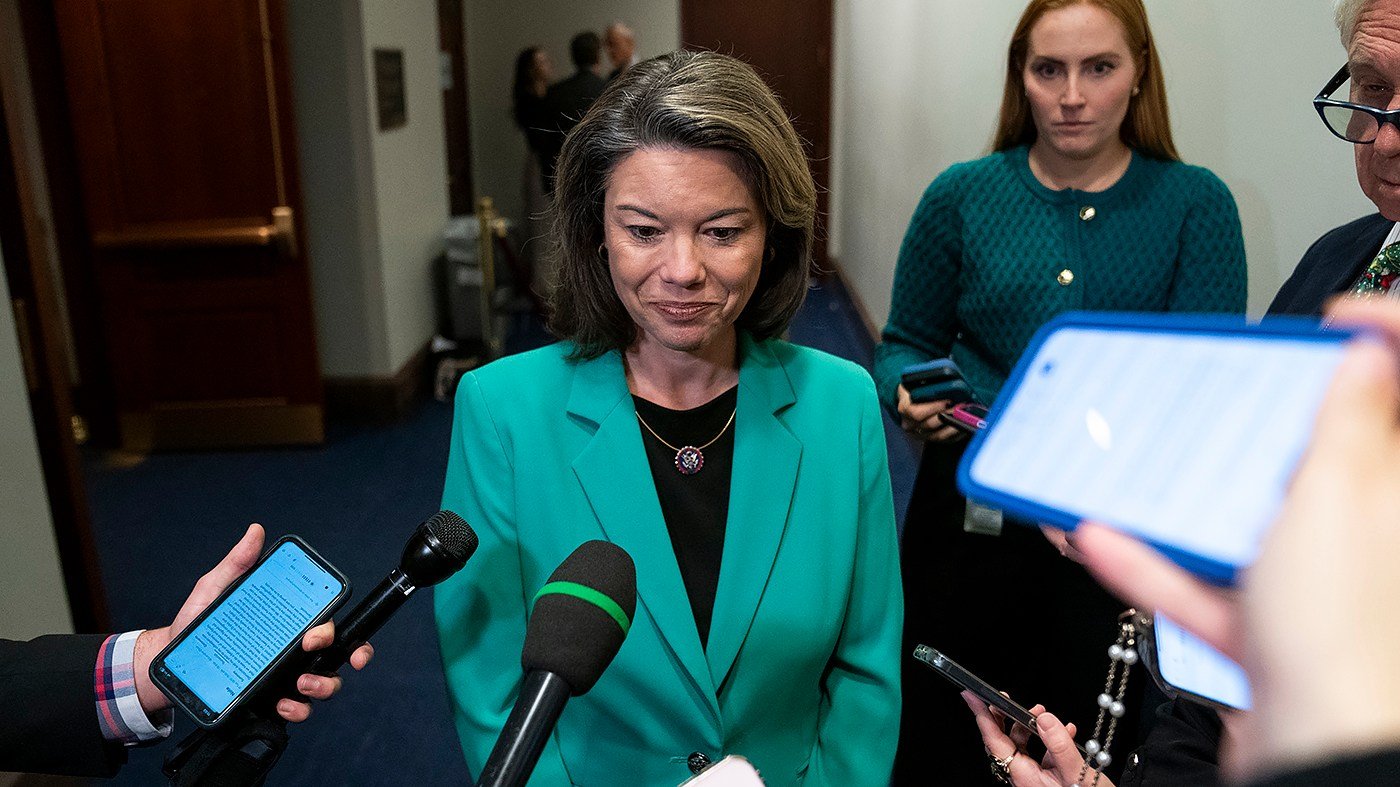
Rep. Angie Craig (D-Minn.) on Saturday publicly rebuked her fellow Democrats for their ties to controversial left-wing streamer Hasan Piker, arguing that the party should not tolerate the same kind of inflammatory rhetoric it condemns on the right.
In a post on X, Craig wrote: “As Democrats, we constantly criticize the far-right for their incendiary and discriminatory politics, but we need to hold ourselves to the same standard. Hasan Piker’s rhetoric is polarizing and dangerous, and embracing him as a party is a mistake.” She added that she was “disappointed” that the Minnesota Democratic-Farmer-Labor Party (DFL) was hosting an event with Piker in her home state.
Piker fired back on X, accusing Craig of joining “the chorus of right wing neo-nazis to attack their left flank” and blaming the party’s “constant desperation to appease the right” for its political troubles. Piker, a Twitch streamer known for his left-wing commentary, has repeatedly criticized the Democratic Party establishment.
The exchange highlights a growing rift within Democratic ranks over the party’s relationship with influential progressive voices. Piker has amassed a large following and has associated with several prominent Democrats, including Rep. Ilhan Omar (D-Minn.), Michigan Senate candidate Abdul El-Sayed, Rep. Rashida Tlaib (D-Mich.), and Rep. Ro Khanna (D-Calif.). His connections have drawn scrutiny from more moderate Democrats, such as Sen. John Fetterman (Pa.) and Rep. Jared Moskowitz (Fla.).
Piker’s controversial remarks include a 2019 statement that “America deserved 9/11” because of its military interventions abroad. He has since said he could have phrased his comments about the Sept. 11, 2001, attacks better. That history has made him a lightning rod in American politics, particularly as Democrats seek to navigate divisions between their progressive and moderate wings ahead of the midterms.
Craig’s criticism comes as Democrats are working to unify their message and avoid intraparty fights that could distract from their broader electoral goals. The party is already facing a challenging landscape, with GOP turnout fears growing and Democrats eyeing congressional majorities. Internal disputes over figures like Piker could complicate those efforts, especially in swing districts where moderate voters may be turned off by association with controversial streamers.
The Minnesota DFL’s decision to host an event with Piker underscores the broader debate over which voices the party should elevate. While some Democrats see Piker as a way to engage young voters, others worry that his rhetoric alienates the very voters Democrats need to win back. Craig’s public rebuke signals that at least some in the party are willing to draw a line.
As the 2026 midterms approach, Democrats are also grappling with potential Senate wins that could complicate 2028 hopes and a push by House Democrats to curb Trump’s executive power through appropriations. The Piker controversy adds another layer to the party’s internal debates, forcing Democrats to confront questions about their ideological boundaries and the company they keep.
For now, Craig’s comments have ignited a fresh round of finger-pointing between the party’s factions, with Piker’s allies accusing moderates of capitulating to right-wing framing and moderates insisting that Democrats must practice what they preach. How the party resolves that tension could shape its messaging—and its fortunes—in the months ahead.