The Maryland Supreme Court on Thursday evening reversed a lower court's decision and reinstated a Democratic-led redistricting referendum for the November ballot, though with revised wording. The ruling marks a significant win for state Democrats as they aim to flip all eight of Maryland's U.S. House seats in the upcoming midterms.
The proposed constitutional amendment would grant the Maryland General Assembly the authority to ask the state's highest court to review congressional redistricting plans under its original jurisdiction. If approved by voters, it would clarify that the strict redistricting standards—established by a 2022 court decision that invalidated a previous map—apply only to state legislative districts, not to congressional boundaries.

Democrats, who hold supermajorities in both chambers of the General Assembly, passed the measure last month, and Governor Wes Moore (D) signed it into law shortly thereafter. The Supreme Court's majority opinion noted that the question received the support of more than three-fifths of all elected members in both houses, satisfying the state's constitutional threshold for ballot placement.
The justices also agreed with two circuit court rulings that found the original ballot language misleading. As a result, they ordered the question to be rewritten for clarity, ensuring voters understand the amendment's implications. The revised language will appear on the ballot this fall.
Governor Moore hailed the decision as a "massive victory" in a statement released Thursday evening. "The Court has rightfully reversed the lower court decisions, guaranteeing that this critical constitutional amendment will appear on the general election ballot this November," he said. "This affirms what I have said from the very beginning: the final decision on how we draw our maps belongs in the hands of Marylanders, not politicians."
Moore urged voters to back the measure, adding, "We are going to protect our democracy, ensure fair representation, and show the rest of the country that in Maryland, we do not surrender."
Justice Steven Gould, joined by Justice Glenn Harrell, dissented, arguing that the court should not have rewritten the question for the legislature. Gould wrote that the majority's revised language "remains misleading," noting that voters would not understand that the criteria being removed include protections from the state's Declaration of Rights—the set of fundamental safeguards against government overreach.
Maryland Republican Party Chair Nicole Beus Harris expressed "deep disappointment" in the ruling but vowed to fight the amendment at the ballot box. "Nevertheless, we are confident we can defeat this amendment at the ballot box in November," she said in a statement shared on social media.
This development comes amid broader national battles over redistricting and voting rules. In a similar vein, Missouri's Supreme Court recently blocked a GOP-drawn map, sending the issue to voters. Meanwhile, House Republicans' attempt to expand the Supreme Court failed, and the DOJ is appealing a ruling that blocks a USPS mail-in ballot rule as the midterms approach.
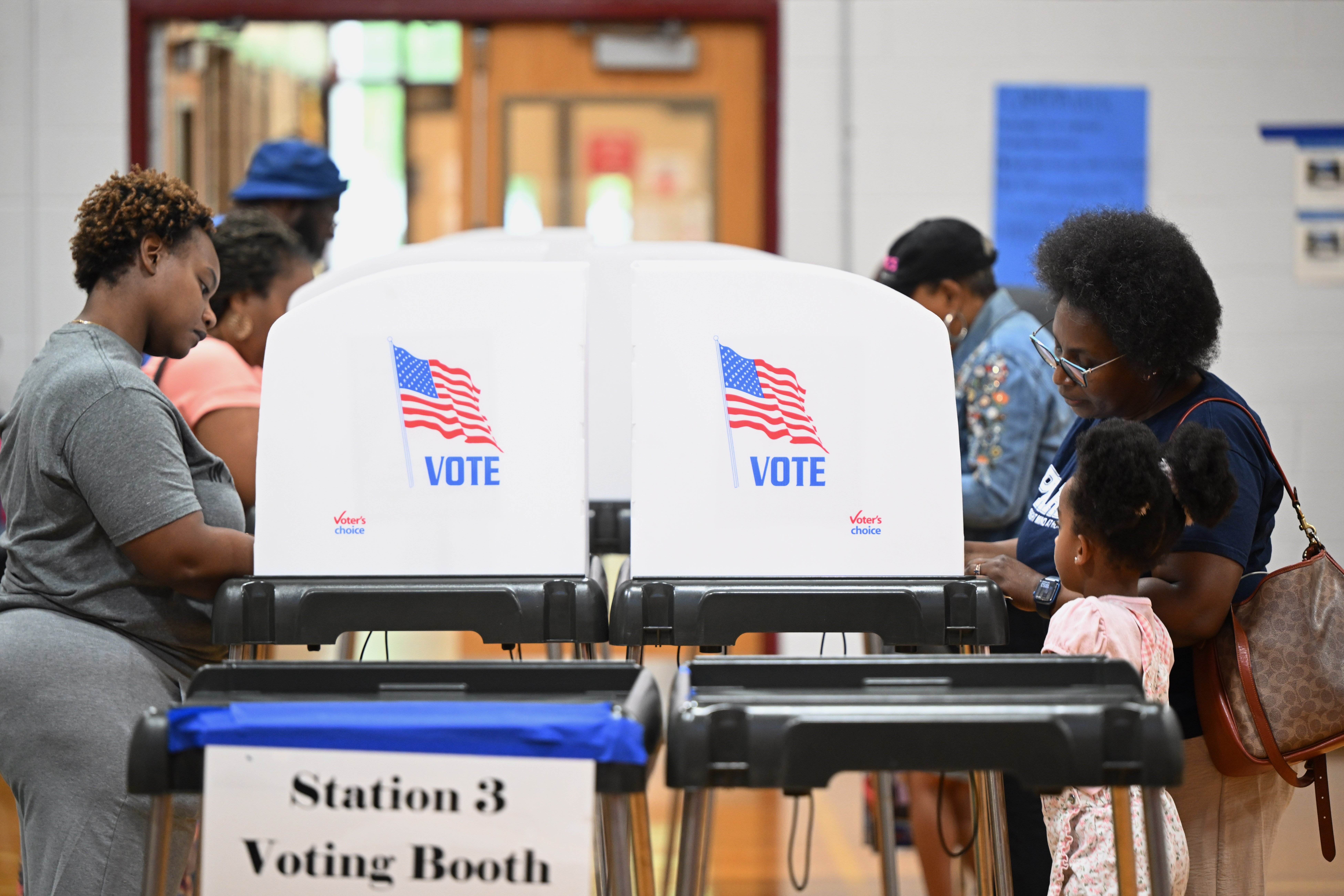
With the ballot question now set, Maryland voters will have the final say in November on whether to reshape the state's congressional map-making process—a decision that could have national implications for control of the House.