When Meta agreed earlier this year to pay up to $17.1 billion to settle lawsuits from state attorneys general over the harms its platforms caused young users, it marked a rare moment of accountability. The company also pledged to overhaul how Facebook and Instagram treat teenagers, including curbing endless scrolling, limiting nighttime notifications, and tightening age verification and parental controls.
That settlement, pending court approval, followed years of whistleblower revelations, internal research, and harrowing testimony from families. It was a long-overdue reckoning with the reality that social media was engineered to capture attention—often at the expense of children's mental health, sleep, and development. But it also exposed a painful truth: the damage was done before the safeguards arrived. Millions of kids had already grown up in an unregulated digital environment.

Now, as artificial intelligence begins to weave itself into every corner of childhood, there is a second chance to get it right. The question is whether we will seize it—or repeat the same cycle of exposure, harm, and belated regulation.
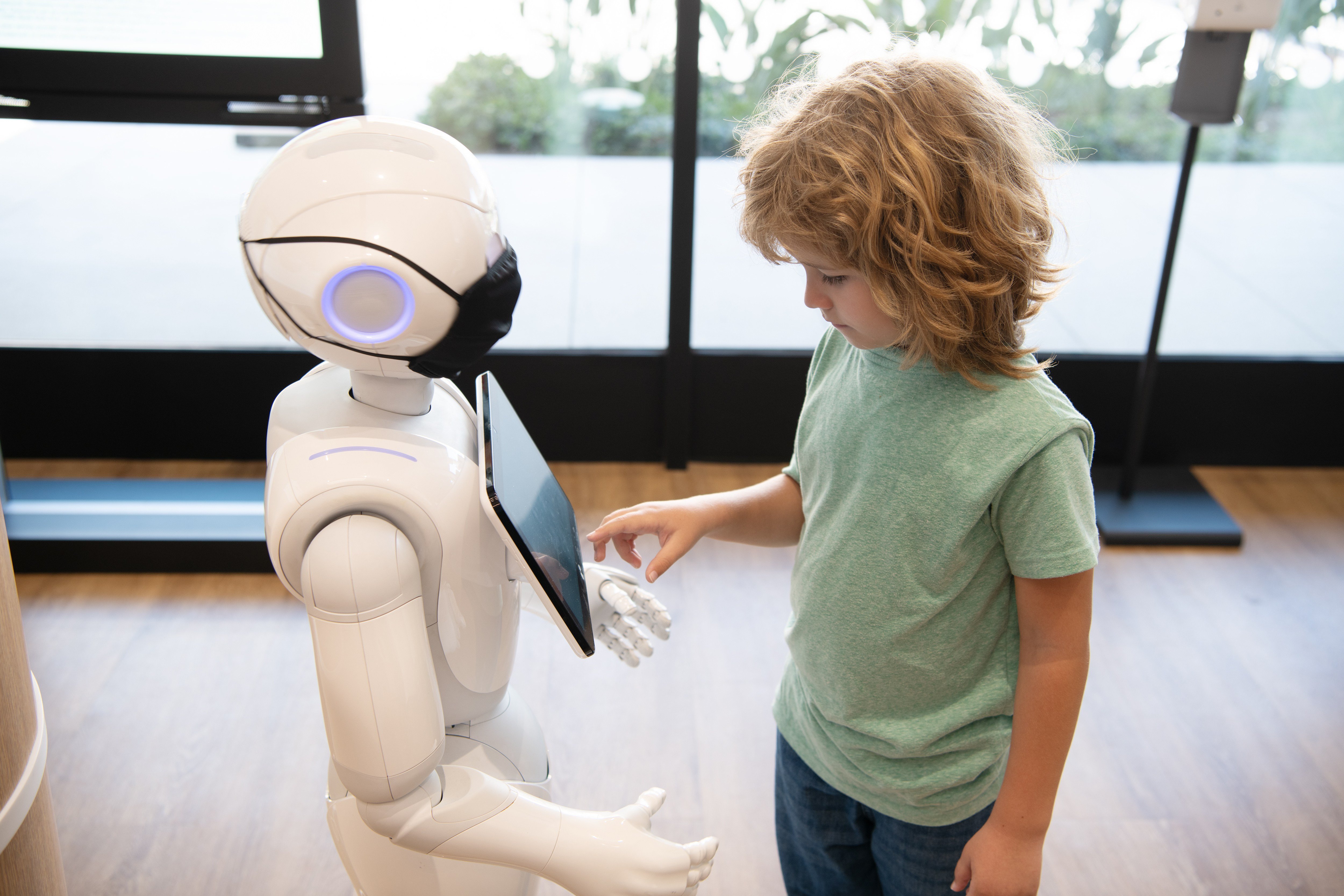
Some in the tech industry argue that AI safety is essentially an engineering problem. Jensen Huang, CEO of Nvidia, told CNN's Anderson Cooper that if an AI product is unsafe, companies should simply not release it—implying that better monitoring and technical fixes can contain the risks. But in a separate conversation with journalist Ezra Klein, Huang acknowledged a subtler threat: children are already losing foundational skills like long division and multiplication tables because they rely on AI to do the work for them.
Huang suggested this is a natural evolution—that humanity has always outsourced mental tasks when technology makes them obsolete. But the pace and scale of AI-driven change are unprecedented. We don't yet know what we lose when a child never struggles with a math problem, never tolerates the frustration of a hard task, or never has to retrieve information from memory. Those struggles are not inefficiencies; they are developmental milestones.
Childhood should not be optimized for convenience. It should be optimized for growth. When AI performs a task for a child, we must ask what is gained and what is displaced—and whether the tradeoffs differ for an 8-year-old versus a 17-year-old. This is not an abstract concern. A 2026 Pew Research Center survey found that 12 percent of U.S. teens have already used AI chatbots for emotional support or advice. For a lonely adolescent, an AI that offers unconditional, personalized attention can be dangerously compelling.
AI is not inherently harmful. It could become a powerful tutor, a creative partner, or a bridge to human connection. But the difference between a tool that helps a student work through a problem and one that simply supplies the answer is enormous. Likewise, a chatbot that encourages a distressed child to talk to a trusted adult is very different from one that becomes the child's sole confidant.
Researchers are beginning to map these risks. An international study of 272 AI experts identified dangers ranging from misinformation and overreliance to the competitive pressures that push developers to cut corners. Other studies are exploring how AI affects children's cognitive, emotional, and social development—finding that outcomes depend heavily on age, intensity of use, and what real-world interactions AI replaces.
Yet products are moving faster than the science. Before AI becomes as embedded in childhood as smartphones, we need independent, longitudinal research that follows children over time, with access to real-world data on how specific features affect learning and well-being. Developers should work with child development experts before launching products, not after harms surface. And safety evaluations must be developmentally specific—because what is safe for a 17-year-old may be profoundly damaging for a 10-year-old.
We had a chance to protect children from social media, and we largely failed. We have another chance with AI. The question is whether we will invest in the research and safeguards now—or wait for the next settlement, the next congressional hearing, the next generation of harmed kids. The choice is ours.