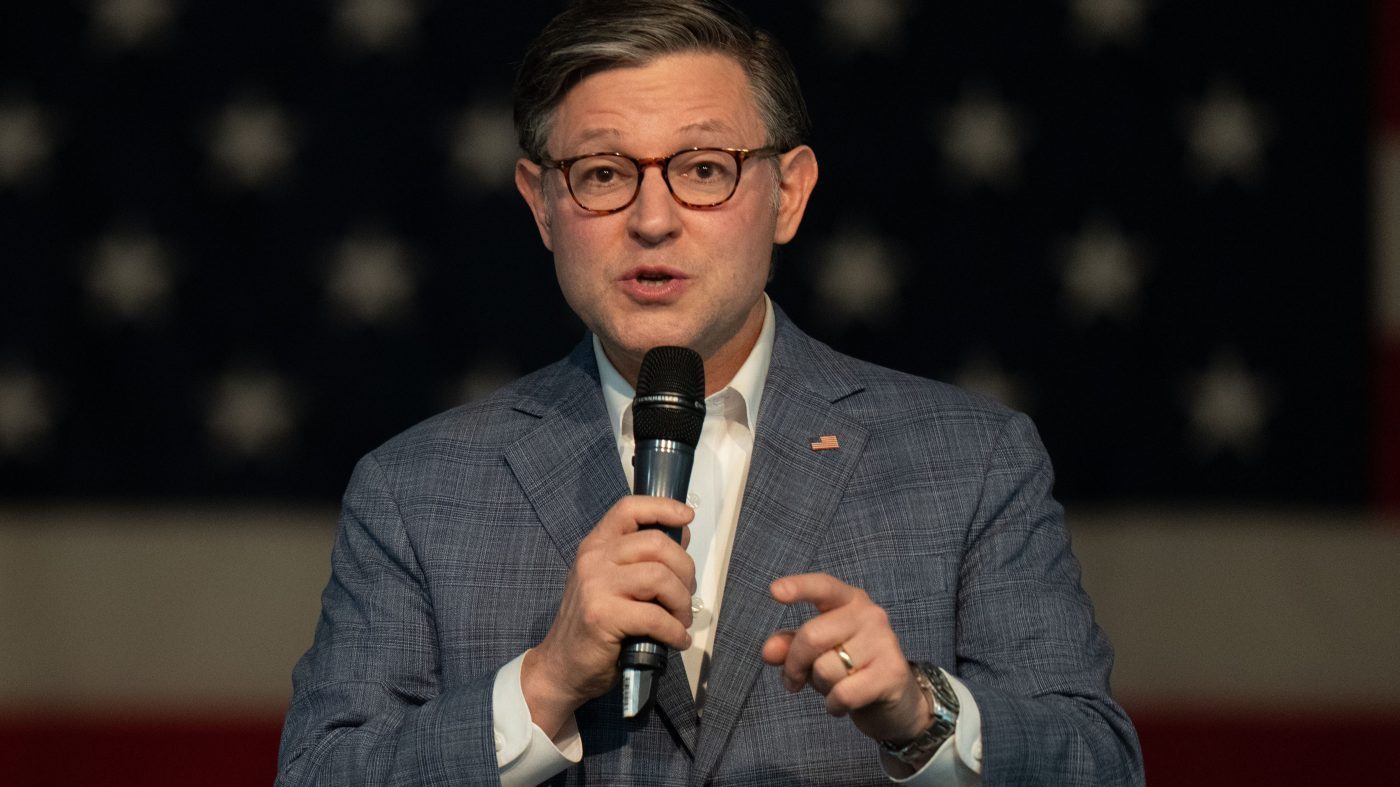
Speaker Mike Johnson (R-La.) said Sunday that he had cautioned the White House about potential “unintended consequences” from President Trump’s decision to waive sanctions on Russia, a move that has sparked bipartisan criticism on Capitol Hill.
Trump signed an executive order last week that set aside penalties mandated by a bipartisan package Congress passed with overwhelming support, a measure originally championed by the late Sen. Lindsey Graham (R-S.C.). The waiver quickly drew fire from both parties, with several Republican lawmakers openly challenging the president’s rationale.

In an interview on Fox News with Larry Kudlow, Johnson said Congress had acted decisively on the sanctions package just weeks ago, underscoring that “Putin cannot be trusted.” He added that the Russian leader “demonstrates that over and over and over.”
Johnson said he had spoken with colleagues on the intelligence and foreign affairs committees who raised concerns, though he had not yet connected directly with the president due to conflicting travel schedules. “I told the White House team that we need to talk about it, and I think carefully consider the unintended consequences that may ensue from that,” Johnson said.
The Speaker expressed confidence that Trump was weighing the issue seriously, citing the president’s twin goals of keeping America safe and reducing costs for families. “He thinks outside the box with creative ideas all the time, and he carefully evaluates those. So I think the right decision will be made here in the end,” Johnson said.
But several GOP lawmakers were quick to denounce the waiver. Sen. Thom Tillis (R-N.C.) wrote on X that the administration’s action was “unconscionable,” asking, “What part of enforcing a law passed 86-11 by the Senate does the President and his advisors not understand?” He accused the administration of “capitulating to a Russian dictator who illegally invaded Ukraine and butchers innocent civilians every single day.”
Rep. Don Bacon (R-Neb.) said on X that the president is “prolonging the war, not ending it.” The criticism echoes concerns from other Republicans who have warned that easing pressure on Moscow could undermine U.S. credibility and weaken leverage in peace negotiations. Pressure from within the GOP continues to build as the administration heads into a critical stretch.
Trump has defended the waiver, explaining in a Truth Social post that he is “in the process of negotiating Peace in the war between Russia and Ukraine, and don’t want to do anything that will drive, foolishly, Russia away from the bargaining table.” That rationale has not quieted critics, with some lawmakers questioning whether the move signals a broader shift in U.S. policy. The president’s defense has done little to ease tensions.
The sanctions waiver comes amid ongoing diplomatic efforts to end the conflict, but skeptics argue that rewarding Russian aggression could backfire. Graham’s own break with Trump on the issue highlights the deep unease within the GOP. As the debate intensifies, Johnson’s remarks suggest that even top Republican leaders are pressing for a careful review of the decision’s fallout.