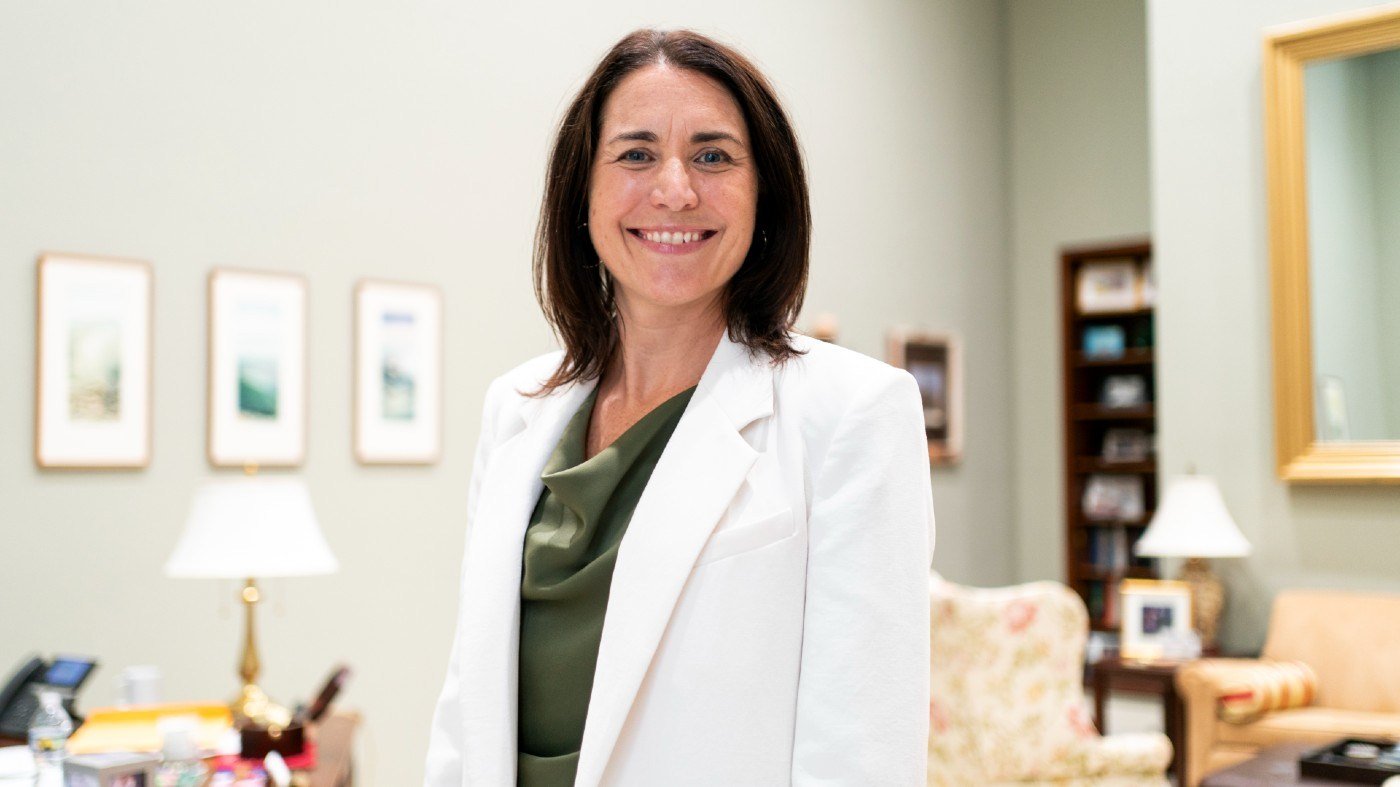
Kamela White, a Democratic clerk on the Senate Appropriations Subcommittee on Homeland Security, has spent the Trump years wrestling with a stark reality: numbers can illuminate—or obscure—the truth. For White, the challenge has been ensuring that the Department of Homeland Security (DHS) accounts for the billions it receives, even as its budget has ballooned.
White, 51, notes that under the Trump administration, DHS received more than a trillion dollars in federal funding, often with minimal oversight. "The evisceration of any sort of oversight" has been a defining feature, she says, leaving Democrats scrambling to track how the money was spent. But the dynamic shifted with the adoption of the 2026 budget, more than a year into Trump's term, as even Republican senators grew frustrated by the administration's refusal to answer questions.
"I think a lot of the lack of information sharing, the lack of answering questions, it wasn't just our questions; they weren't answering the majority's questions either," White explains. "So there's a shared frustration with the inability to get information that I think really helped us to have a lot of common ground." That bipartisan irritation, she says, has opened the door to renewed oversight efforts. "Otherwise, we're just like, 'What'd you spend that $190 billion on?' Because they didn't have to report a penny of it."
White's career spans decades in budget and policy roles. She spent years at the Office of Management and Budget and served at U.S. Customs and Border Protection. During the Obama era, she helped build predictive analytics to forecast personnel needs at the border and ports of entry, a shift that changed how Congress approached funding for the agency. "What changed was you weren't arguing over the numbers anymore," she recalls, noting that the agency realized it hadn't been "telling our story." She adds, "You have a better opportunity to build that common ground if you're able to introduce trusted data."
Under Trump, White has been part of the team scrutinizing immigration funding. Their investigations uncovered that DHS purchased 12 planes without congressional authorization and paid above-market rates for warehouses intended as detention centers. These findings underscore her belief that "by default, you are setting policy with funding."
White and her Democratic colleagues have managed to "restore some of the changes the administration put in place, and make it harder for them to either stonewall or not respond" to oversight. Yet she remains wary of the broader trend. "No oversight on money is a dangerous thing," she warns.
Her work echoes the challenges faced by other Democratic staffers navigating a shifting political landscape, such as the Senate Appropriations Committee's top Democratic lawyer, who bridges legal and policy divides. White's focus on data-driven accountability also resonates with broader debates about how numbers can be weaponized in modern political discourse.
As the 2026 budget cycle unfolds, White remains committed to ensuring that DHS spending is transparent and tied to clear outcomes. Her push for accountability is not just about dollars—it's about restoring trust in how the government allocates resources for homeland security.