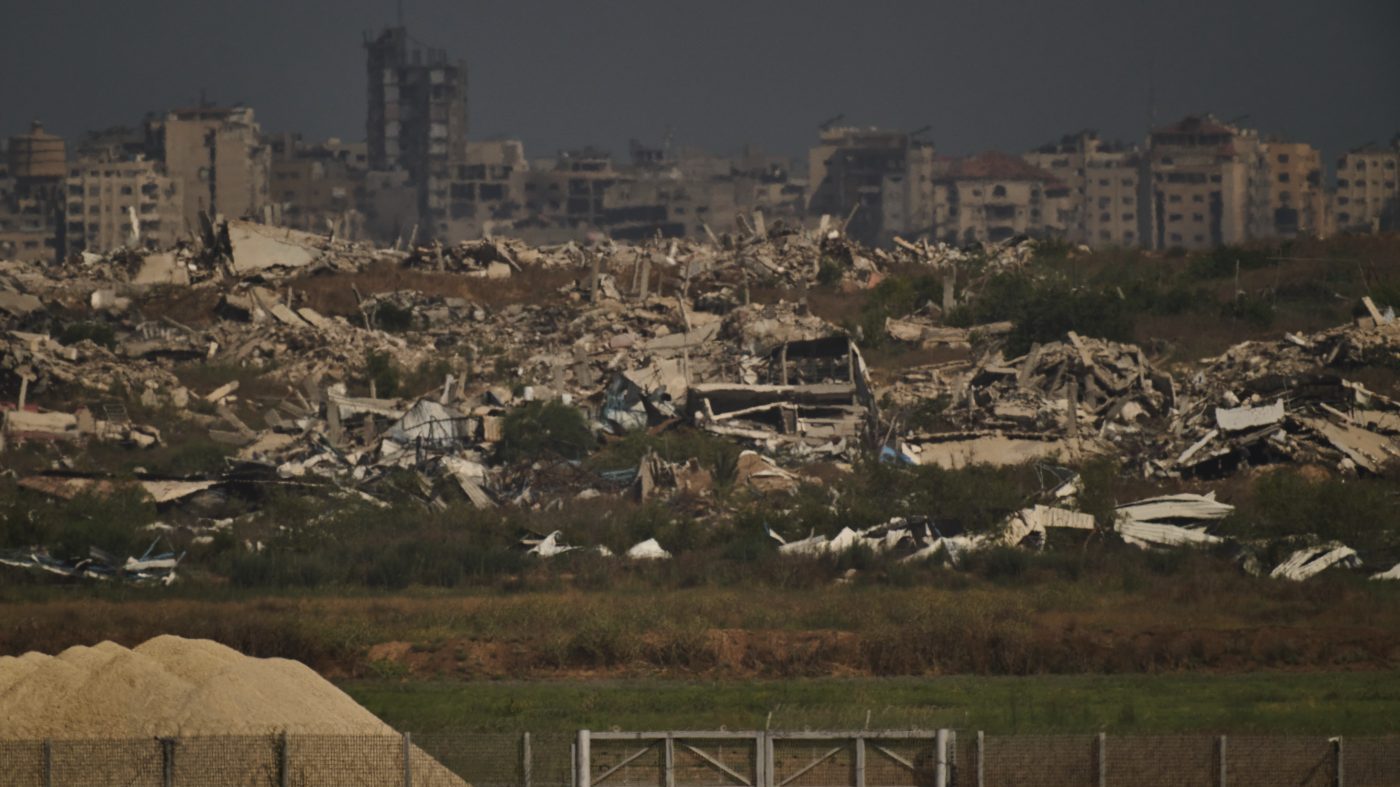
Hamas announced Friday that it has reached a disarmament agreement with negotiators, potentially clearing a major hurdle in the broader effort to end the conflict in Gaza. The announcement, made by senior Hamas official Bassem Naim on social media, signals a possible breakthrough in the fragile peace process.
Naim stated that the group has "agreed to the roadmap," adding that the "ball is now in the enemy's court," a reference to Israel. He urged mediators and guarantors to pressure the Israeli government to fulfill its obligations under the deal.
The agreement is the latest development in President Trump's 20-point plan, which was signed last year to halt hostilities between Israel and Hamas. The conflict, which began on October 7, 2023, has resulted in thousands of deaths and allegations of war crimes against both sides.
Trump unveiled the disarmament deal late Thursday, describing it as a "HISTORIC agreement for the COMPLETE DISARMAMENT of Hamas and all other armed groups in Gaza." He emphasized that the plan would be implemented in "carefully structured phases," though he did not provide specific details.
"This agreement is a critical step towards Gaza finally being governed by a new Palestinian government that will work closely with the Board of Peace to help the Palestinian people," Trump wrote on Truth Social. "At the same time, Israel will have the security it deserves, with Gaza no longer used as a base for terror attacks."
Under the framework, Israeli forces would withdraw from Gaza, and an International Stabilization Force (ISF), as outlined in the original plan and approved by Israel on Sunday, would assume responsibility for civilian security alongside a newly established Palestinian police force. The first phase involves establishing a "complete monopoly of weapons," with the ISF playing a key role.
Once that phase is verified, Hamas would transfer civilian and security functions to the National Committee for the Administration of Gaza, a body formed by the Board of Peace. Israel, once satisfied, would then begin a phased military withdrawal according to a timetable yet to be finalized.
Israel has not officially commented on or committed to the deal. A U.S. official indicated that Israel remains "skeptical" of Hamas's intentions, describing the agreement as a "conditions-based deal" rather than a "trust deal." The official stressed that implementation would be contingent on Hamas meeting specific benchmarks.
The development comes amid broader regional tensions and follows Trump's phased disarmament proposal, which has drawn both cautious optimism and skepticism. The coming weeks will be critical in determining whether the ceasefire holds and whether the disarmament process can proceed as planned.