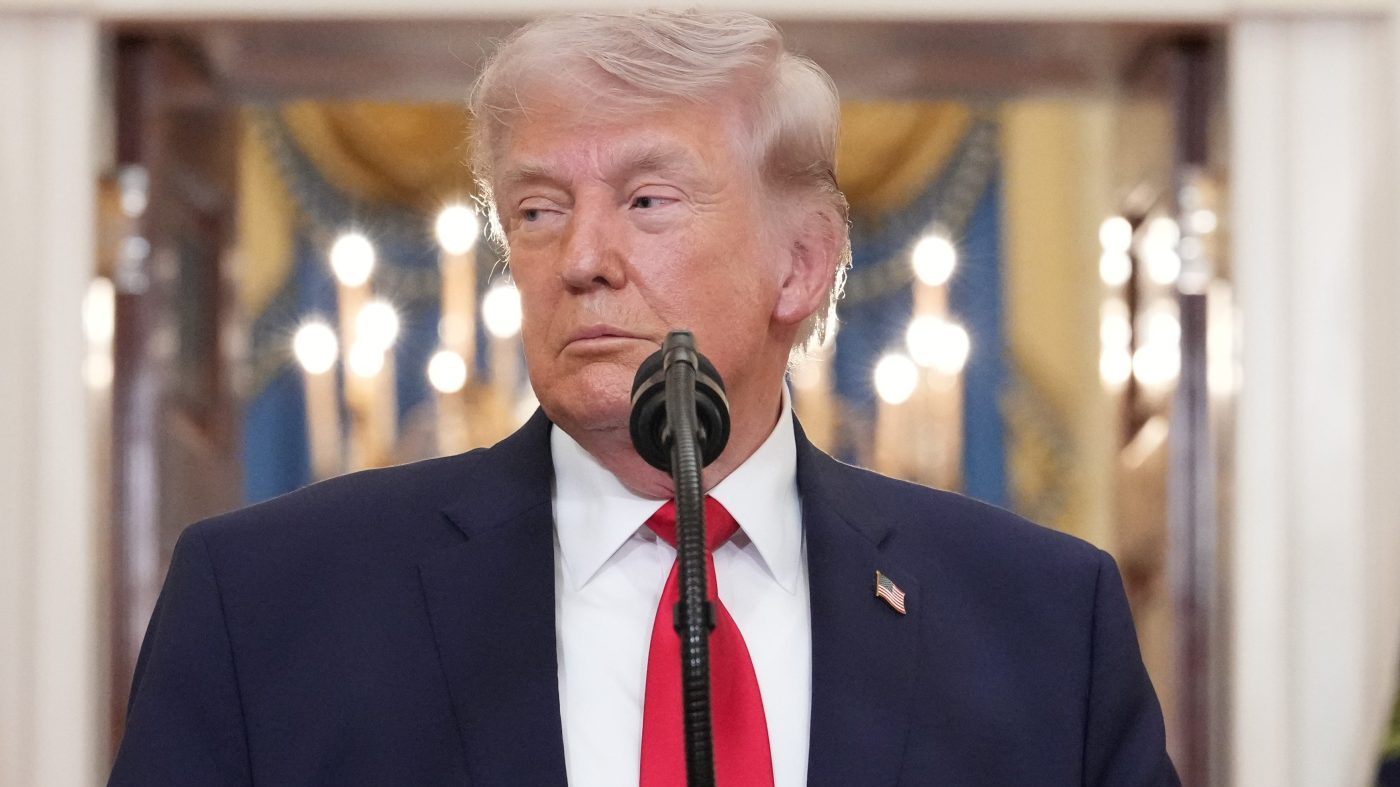
President Donald Trump has issued a stark warning to Tehran over reports it is imposing fees on commercial vessels carrying oil through the Strait of Hormuz, demanding Iran cease the practice immediately. The threat comes just one day after Trump himself floated the idea of a U.S.-led "joint venture" to establish similar tolls for securing the strategic chokepoint.
A Direct Threat and a Contradiction
"There are reports that Iran is charging fees to tankers going through the Hormuz Strait — They better not be and, if they are, they better stop now!" Trump declared in a post on his Truth Social platform on Thursday. This public ultimatum directly contradicts his remarks to ABC News on Wednesday, where he stated the United States was "thinking of doing it as a joint venture" as a method of securing the strait, which he called "a beautiful thing."
The Iranian tolling program, according to reports, would charge the cryptocurrency equivalent of one dollar for each barrel of oil on board a vessel. Retired General David Petraeus, former commander of U.S. Central Command, noted that some companies have allegedly paid sums as high as $200 million per ship. The strait is arguably the world's most important oil transit corridor, facilitating roughly one-fifth of global daily consumption.
Accusations of Ceasefire Violations
In a follow-up social media post later Thursday, the president escalated his rhetoric, accusing Iran of "doing a very poor job, dishonorable some would say, of allowing Oil to go through the Strait of Hormuz." He explicitly tied the issue to the fragile, temporary ceasefire agreement recently reached between Washington and Tehran, asserting "That is not the agreement we have!" This move signals the administration is prepared to publicly accuse Iran of violating the ceasefire terms, potentially jeopardizing the delicate diplomatic pause.
The ceasefire, announced by Trump on Tuesday evening as a two-week halt to U.S. military strikes in the region, remains unstable. It exists alongside ongoing Israeli attacks in Lebanon and Iranian strikes targeting Gulf states, underscoring the complex, multi-front nature of the conflict. The president's latest threats against Iran have already drawn sharp rebukes from congressional Democrats, with some reviving calls for impeachment or invoking the 25th Amendment in response to what they see as reckless brinkmanship.
High-Stakes Diplomacy and Regional Tensions
Israeli Prime Minister Benjamin Netanyahu authorized direct negotiations with Lebanon on Thursday, while stressing no formal peace deal exists between the long-warring nations. Meanwhile, the path for U.S.-Iran diplomacy is being set in a third country. Vice President J.D. Vance and special envoy Steve Witkoff are scheduled to meet with Iranian officials in Islamabad this weekend for talks mediated by Pakistan, which will undoubtedly be dominated by the issues of the strait and Lebanon. These high-stakes negotiations begin amid deep divisions over core security and economic interests.
The Strait of Hormuz has been a flashpoint throughout the ongoing conflict. Iranian counterstrikes against U.S. assets and regional energy infrastructure have repeatedly threatened to close the narrow passageway, triggering spikes in global energy prices. Analysts note that control of the strait remains Iran's primary strategic leverage, making any discussion of tolls or transit fees intensely political.
A Pattern of Confrontational Rhetoric
Trump's dual statements—first proposing a U.S. toll system, then threatening Iran for allegedly doing the same—highlight an erratic and confrontational approach to foreign policy. This tactic has drawn comparisons to the 'Madman Theory' employed by President Richard Nixon, aimed at projecting unpredictable volatility to intimidate adversaries. However, critics argue that such methods carry significant risk, potentially cornering both nations into escalatory cycles with limited diplomatic off-ramps.
The immediate economic stakes are profound. Any sustained disruption or imposition of costly fees on traffic through the Strait of Hormuz would send shockwaves through the global economy, reversing any modest gas price relief gained from the ceasefire and fueling inflation worldwide. The administration now faces the challenge of navigating ceasefire talks while simultaneously issuing public threats over the very issue central to those negotiations, testing the durability of the temporary peace and the patience of international energy markets.