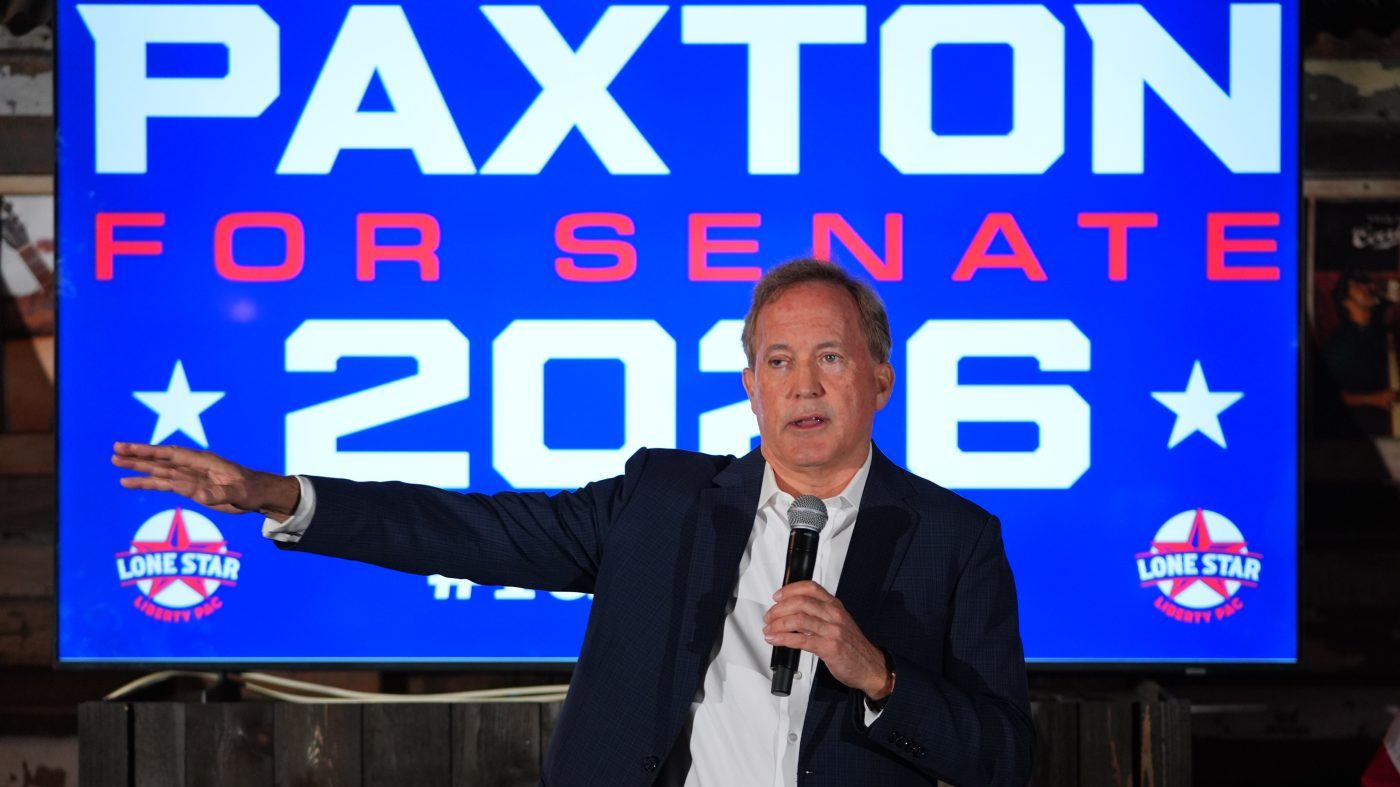
Texas Attorney General Ken Paxton is heavily favored to oust incumbent Senator John Cornyn in Tuesday's Republican Senate runoff, according to prediction market Kalshi, which gave Paxton a 95.6 percent probability of victory as of Sunday afternoon. The dramatic shift in odds follows former President Donald Trump's endorsement of Paxton, a move that has scrambled the race and deepened intra-party divisions.
Cornyn, a four-term incumbent, now holds just a 4.4 percent chance of securing the nomination, per Kalshi. The winner will face Democratic state Representative James Talarico in the general election, though Texas has not elected a Democrat to the Senate since Lloyd Bentsen in 1988, and the state hasn't backed a Democratic presidential candidate since Jimmy Carter in 1976.
Trump's endorsement came despite warnings from Senate Republicans that Paxton is a weaker general election candidate. In a statement, Trump called Paxton a "true MAGA warrior" and criticized Cornyn for being "not supportive of me when times were tough." Paxton had filed litigation supporting Trump's efforts to overturn the 2020 election, while Cornyn said in 2023 that Trump's "time has passed him by."
The race has turned intensely personal. After Trump's endorsement, Paxton called on Cornyn to run a positive campaign and focus on defeating Talarico, but Cornyn has instead escalated his attacks. At a Friday event in Corpus Christi, Cornyn warned that Paxton would be "an albatross around the neck of all of our candidates" if nominated, as reported by the Corpus Christi Caller Times. On Sunday, Cornyn refused to commit to backing Paxton against Talarico, telling NewsNation's Chris Stirewalt on "The Hill Sunday," "I expect to be the nominee of the party, so I don't expect to ever have to deal with that."
Early voting ended Friday, and a University of Houston Hobby School of Public Affairs poll conducted April 28–May 1 showed Paxton leading Cornyn 48 percent to 45 percent among 1,000 likely voters, with 7 percent undecided. Since then, Trump's endorsement appears to have shifted momentum decisively toward Paxton.
The outcome is being watched nationally as a test of Trump's continued influence over the GOP. Critics argue that Trump's primary endorsements risk saddling the party with candidates who could lose winnable general elections, a dynamic that has played out in recent cycles. In Texas, Democrats see an opportunity if Paxton becomes the nominee, given his legal troubles and polarizing profile. Trump's backing of Paxton has sparked Democratic optimism that Talarico could defy Texas's long Republican streak.
For Cornyn, a stalwart of Senate GOP leadership, a loss would mark a stunning rebuke from the party's Trump-aligned base. His refusal to commit to supporting Paxton underscores the bitterness of the contest and raises questions about party unity heading into November. Trump's primary wins risk GOP general election losses, critics warn, and the Texas runoff may become a case study in that tension.