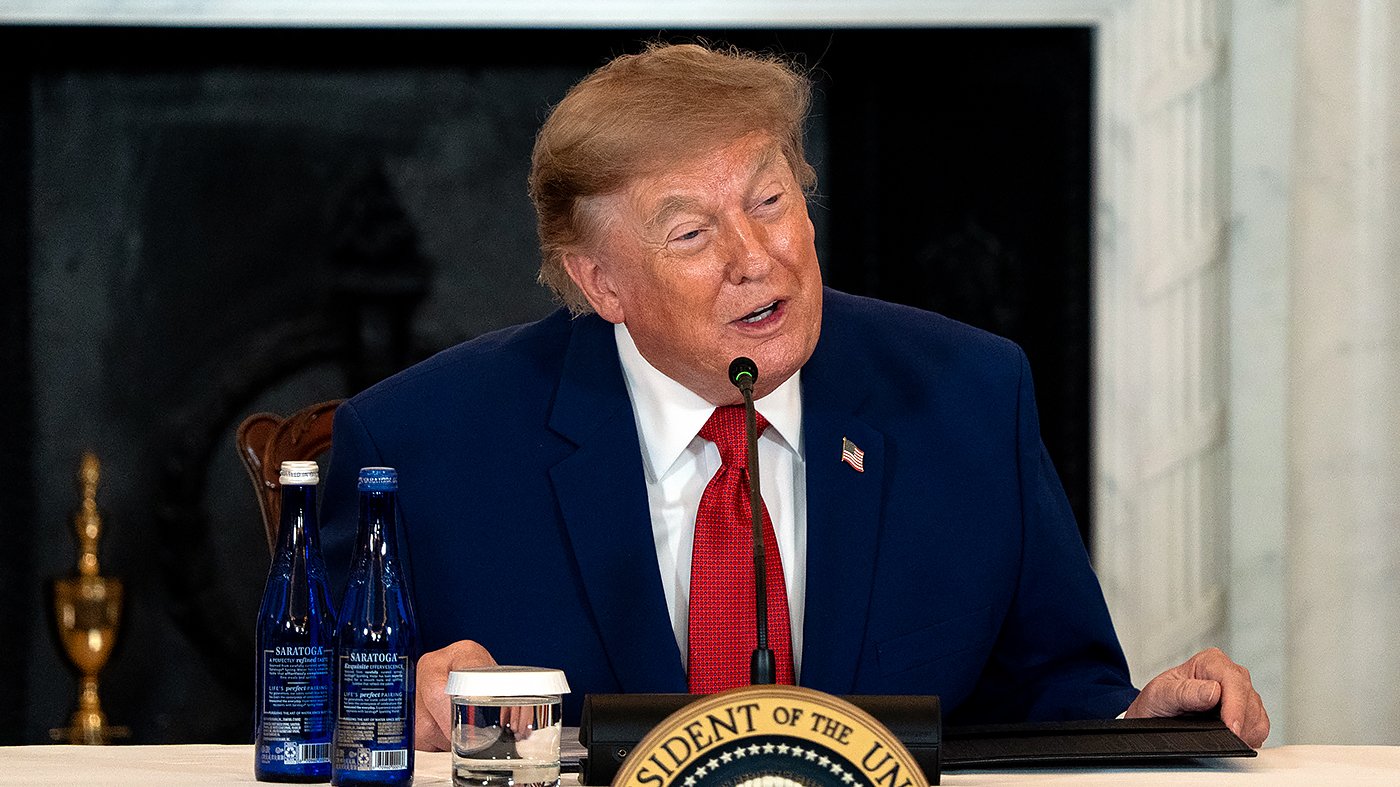
President Trump signaled a deliberate, hands-off posture toward the Iran conflict in a new interview, as the confrontation approaches its sixth month. Speaking with Axios on Sunday, Trump described his strategy as “low-keying it,” suggesting that economic pressure rather than military escalation would eventually force Tehran to capitulate.
“We are only semi-negotiating with them. We are just watching Iran with its huge inflation and the fact they have no money,” Trump said. He added that Tehran’s economy “is in very bad shape” and that the country can no longer adequately compensate its military forces. “It will work out. It always works out. It’s like a chess game,” he said, framing the standoff as a calculated waiting game.
The president’s comments come as the conflict exacts mounting costs on the U.S. and its allies. The closure of the Strait of Hormuz, a critical chokepoint for global oil shipments, has sent energy prices soaring and tested the patience of long-standing partners. According to AAA, the average price of a gallon of regular gasoline in the U.S. hit roughly $4.00 on Monday morning, compared with about $3.14 at the same time last year.
On Saturday, Iran’s top national security official, Mohammad Bagher Zolghadr, laid out Tehran’s conditions for reopening the strait. In remarks carried by state media, Zolghadr demanded an end to the U.S. naval blockade in the waterway, the lifting of sanctions, and war reparations from Washington. He also called for the complete withdrawal of U.S. military forces from Iran and a halt to attacks on Tehran’s regional allies.
The demands were presented amid ongoing talks between Iran and Oman over the strait’s future, but they underscore the wide gap between the two sides. Trump’s strategy of economic attrition, while avoiding full-scale military engagement, has drawn scrutiny from critics who argue it leaves U.S. policy adrift at a moment of acute global instability.
The conflict has also exposed weapons shortages that limit Trump’s military options, complicating any potential escalation. At the same time, the administration is juggling multiple fronts, including domestic legal battles and roadblocks to its second-term agenda, which have consumed White House attention.
With oil prices straining American households and allies increasingly uneasy, Trump’s “low-key” approach is a gamble that Iran’s economic collapse will come before the political costs of the conflict become unsustainable. Whether that bet pays off remains an open question, as Tehran shows no sign of backing down and the region braces for further fallout.