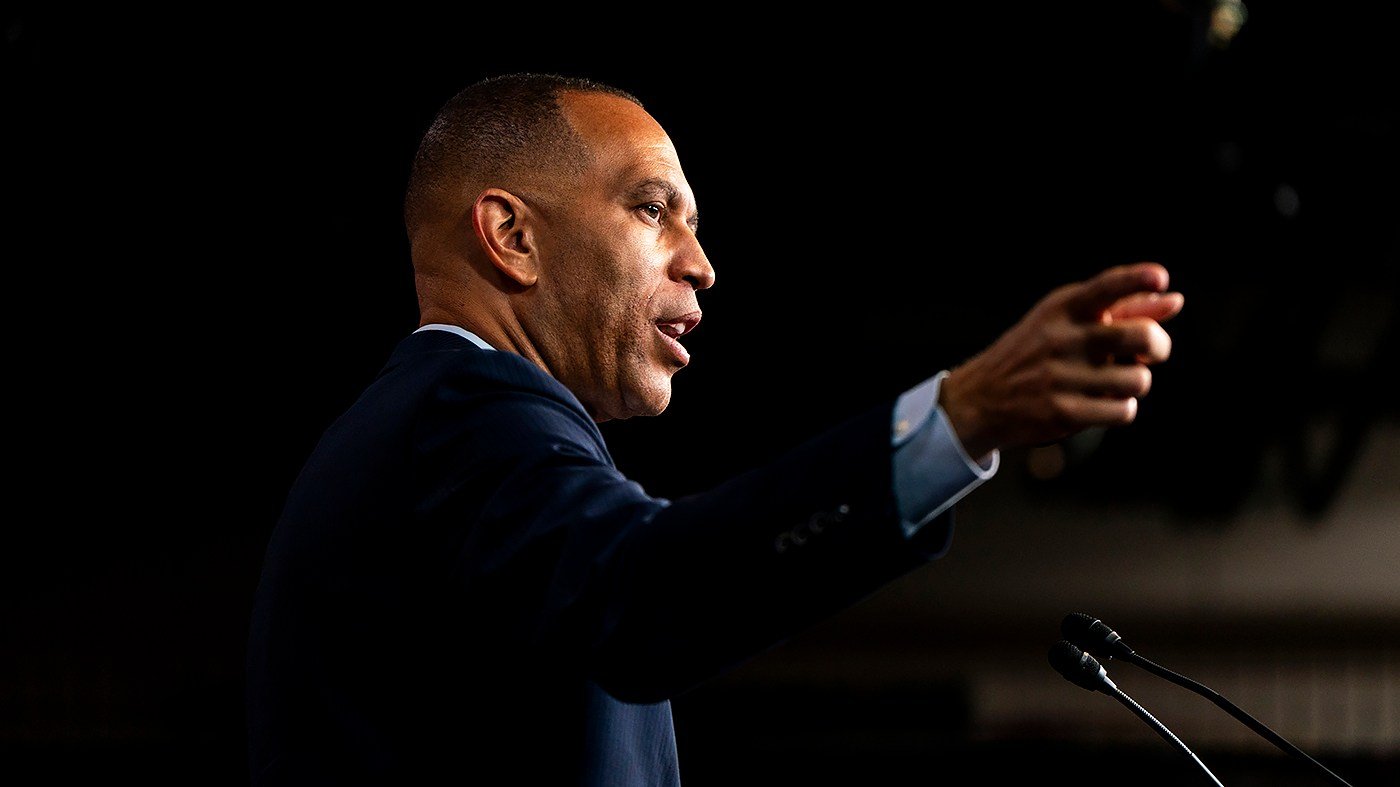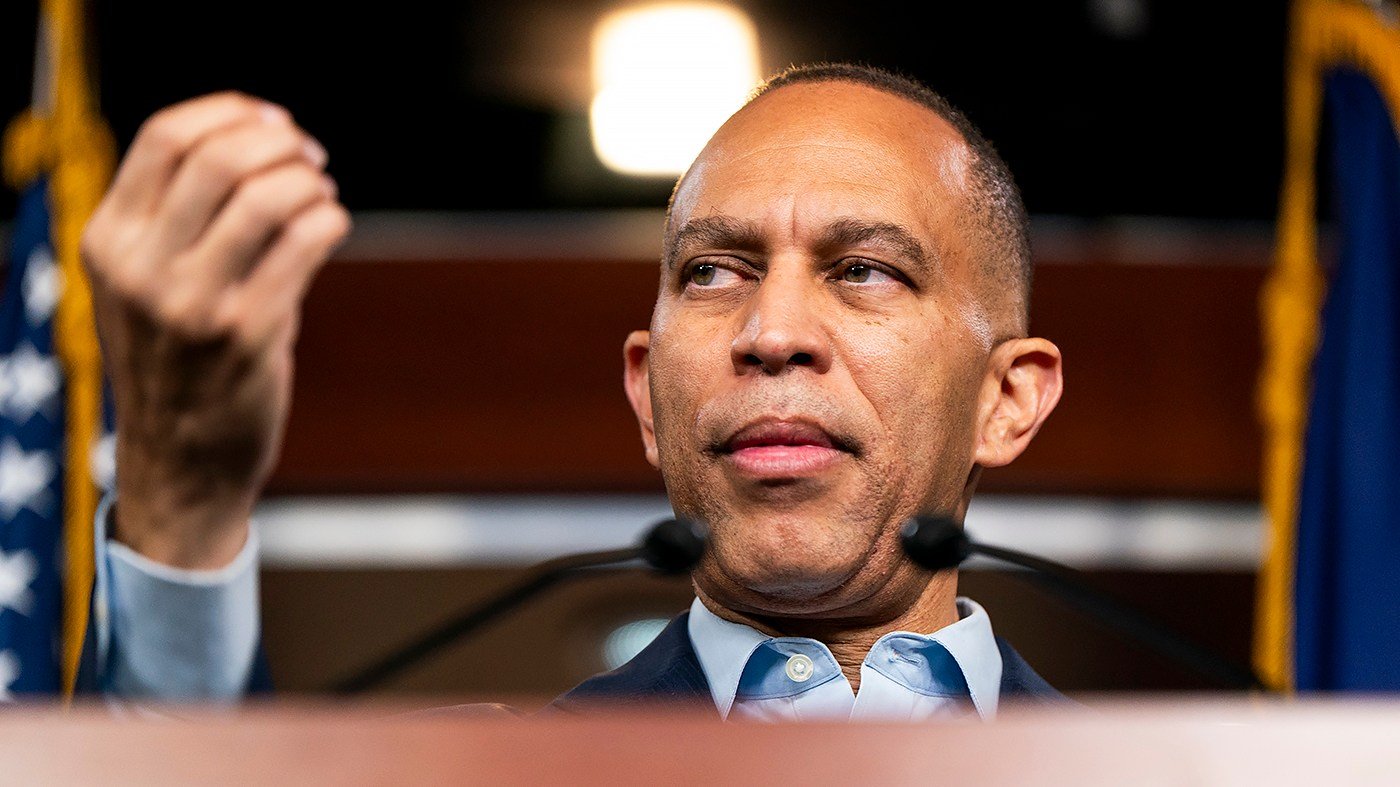
House Minority Leader Hakeem Jeffries (D-N.Y.), the front-runner to become Speaker in the next Congress, said Sunday that he will move to prohibit lawmakers from trading stocks “very early” in the new session. His comments came during an interview on CBS News’s “Face the Nation” with Margaret Brennan.
“We’ve got to clean up the mess in Washington,” Jeffries said, adding that the effort should start with Congress itself. “We should begin by dealing with our own house, which is why very early on in the new Congress, House Democrats are going to move to ban members of Congress from trading stock.”
The announcement follows the Democrats’ successful midterm elections earlier this month, which saw the party reclaim control of both the House and Senate, including wins in traditionally tough territory such as Texas and Kansas. The shift in power gives Democrats a fresh opportunity to advance ethics reforms that stalled in the previous Congress.
In late September, Senate Democrats blocked the Stop Insider Trading Act, which would have barred members from purchasing new stocks of publicly traded companies. The measure failed 53-47, short of the 60 votes needed to proceed, with no Democrats supporting it at the time. Critics argued the bill did not go far enough to prevent conflicts of interest.
Jeffries’s pledge comes as he consolidates support for the Speaker’s role. Last Wednesday, House Democrats nominated him for the position, putting him on track to become the first Black Speaker in the chamber’s history. He received 251 votes from his caucus, with 11 members voting against him.
Beyond the stock trading ban, Jeffries has outlined other legislative priorities for the next Congress, including reversing Medicaid cuts enacted by Republicans and expanding ObamaCare tax credits, which are set to expire at the start of 2026.
The push for a stock ban has gained momentum in recent years, with public polling showing widespread support for barring lawmakers from individual stock trading. Jeffries’s commitment to act early signals that the issue will be a centerpiece of the Democratic agenda when the new Congress convenes.
Political analysts note that the move could face resistance from both parties, as some lawmakers argue that trading restrictions would deter qualified individuals from seeking office. However, Jeffries’s strong position within his caucus and the public’s demand for reform may give the effort added weight.
As Jeffries prepares to lead an oversized and potentially fractious Democratic caucus, his early focus on ethics could help unify members around a shared goal. The upcoming leadership votes, including the race for Senate leadership, will test the party’s ability to deliver on its promises.
Jeffries’s comments also come amid broader scrutiny of ethics in Washington, including concerns about Supreme Court transparency and executive branch accountability. His call to address these issues “with respect to the administration” suggests a wide-ranging reform agenda.
The exact details of the proposed stock trading ban have yet to be unveiled, but Jeffries indicated that House Democrats will introduce the measure early in the session. The move is likely to reignite debate over how to best ensure that lawmakers are acting in the public interest, not their own financial self-interest.