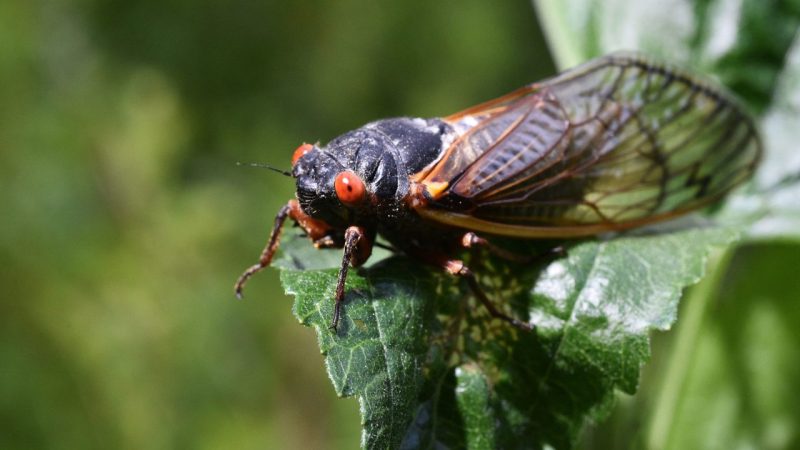
Following the historic dual emergence of 2024 and last year's single brood awakening, the United States is entering what entomologists call a quiet year for periodical cicadas. No major broods are scheduled to emerge from their long underground dormancy in 2026. However, political observers in regions like Virginia and North Carolina may notice a phenomenon that echoes the unpredictability seen in early political polling: the appearance of off-schedule insects known as 'stragglers.'
The Science of Being Off-Cycle
These stragglers are periodical cicadas that emerge one to four years before or after their brood's predicted appearance. According to Michael Skvarla, an entomologist at Penn State University, these insects may appear in regions home to different broods entirely. "Occasionally, you'll get some 17-year cicadas that pop out at 13 years, which is probably how the 13-year cicada broods evolved," Skvarla explained. Research indicates they can also emerge four years late, at the 21-year mark.

The precise mechanism behind this mistiming remains unknown. Scientists believe cicadas count years by detecting seasonal sap flow in tree roots. An unseasonable warm spell followed by a cold snap could trigger an extra sap flow, potentially tricking the insects into counting an additional year. "We don't know how they keep track," Skvarla noted, highlighting a significant gap in biological understanding. This uncertainty mirrors the challenges in tracking early political shifts, similar to the stunning early approval drop observed for some new governors.
Prime Numbers and Survival Strategy
The 13- and 17-year cycles themselves are a scientific puzzle. Both are prime numbers, which theorists suggest minimizes the frequency with which different broods synchronize, reducing competition and predator adaptation. The rare synchronization occurred dramatically in 2024's 'cicada-geddon,' when Brood XIX (13-year) and Brood XIII (17-year) emerged simultaneously across the eastern U.S.
The mass emergence strategy is a survival mechanism called predator satiation, where the sheer number of cicadas ensures enough survive to reproduce despite birds and mammals feasting on them. "That doesn't work when you're a straggler," Skvarla said. "They wake up and are getting eaten pretty immediately." Their solitary nature makes them difficult to study, much like gauging the trajectory of 2028 presidential hopefuls based on early convention appearances.
Where to Expect Stragglers in 2026
Entomologists have identified likely origins for this year's stragglers. Cicadas appearing one year early or late could be from Brood XIV, a 17-year brood that emerged last year in West Virginia, Virginia, and North Carolina, or from Brood XXII, which is scheduled for a 13-year emergence in Louisiana and Mississippi in 2027.
Stragglers appearing four years off-schedule are likely part of Brood II, slated for a major emergence in 2030 across a broad swath from Connecticut and New York down to Georgia and Oklahoma. Residents in these areas should not expect the deafening choruses associated with full brood emergences. "You may hear some if you know what you're listening for," Skvarla added, "but it's not going to be like the deafening chorus you get in a normal emergence."
The study of these anomalies is hampered by their rarity and geographic spread, a research challenge not unlike analyzing the impact of federal workforce reduction initiatives in their early stages.
Looking Ahead to Future Emergences
For those missing the spectacle, the next major event is scheduled for 2027, when Brood XXII emerges from its 13-year slumber in Louisiana, Mississippi, Kentucky, and Ohio. The following year, Brood XXIII will appear across eight states in the Midwest and South, marking its first emergence since 2015.
The persistence of these mysterious, prime-numbered life cycles—and the occasional straggler that disrupts them—serves as a reminder of the complex natural systems operating on timelines far longer than electoral cycles. Understanding these biological patterns requires long-term study, a discipline increasingly rare in a world focused on immediate trends, from AI-driven career anxiety among students to the volatile early numbers in political approval ratings.