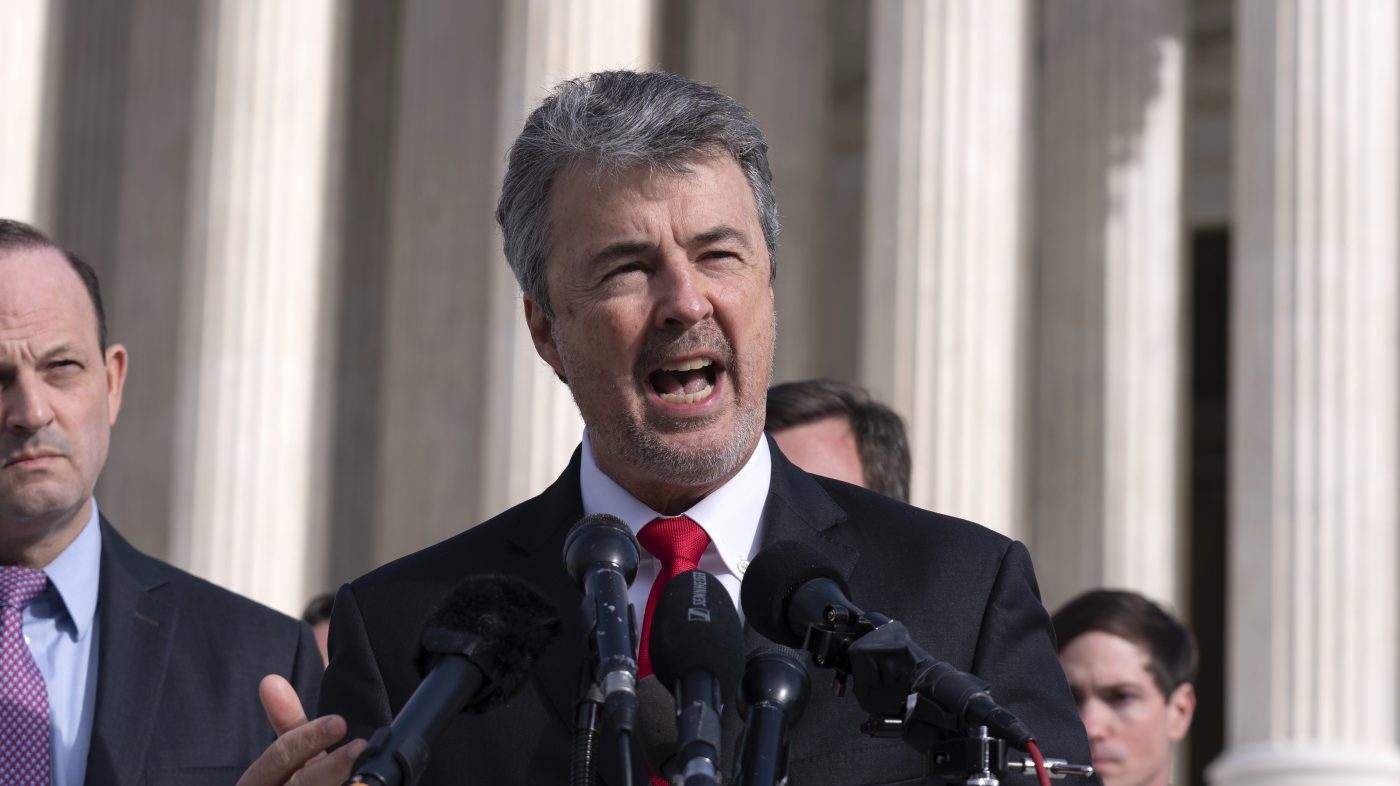
Alabama Republicans formally requested the Supreme Court on Wednesday to allow a congressional map that would erase the state's second majority-Black district, potentially handing the GOP a pickup in November. The move comes after a three-judge panel blocked the map on Tuesday, ruling it intentionally discriminated against Black voters in violation of the Constitution.
State officials argue that the Supreme Court's recent 6-3 decision narrowing the Voting Rights Act in a Louisiana case should clear the way for their map. “Alabama, no different than Louisiana, may stick to its neutral political and policy goals. That’s not intentional racial discrimination,” wrote Attorney General Steve Marshall’s office in the application.
The request lands before Justice Clarence Thomas, who handles emergency matters from Alabama. He may refer it to the full court, a common step for high-profile cases. Marshall asked for intervention by June 1, either to greenlight the map or issue a temporary pause while the justices weigh arguments.
This battle is the latest twist in a redistricting saga that has already reached the high court once. Earlier, the Supreme Court ruled Alabama’s previous map—with only one majority-Black district—likely violated the Voting Rights Act. That ruling forced a court-drawn map that paved the way for Democratic Rep. Shomari Figures’ election.
Now, Alabama contends the court-drawn design should be scrapped immediately, citing the Supreme Court’s recent Voting Rights Act decision. That case, which involved Louisiana, narrowed how courts assess racial discrimination claims. After the ruling, the high court wiped Alabama’s court-drawn map and ordered a fresh review. But on Tuesday, the same panel reaffirmed its block, saying the justices’ decision did not change their finding of intentional discrimination.
Alabama Republicans are pushing to implement a map that does not create a second majority-Black district, even though their previous attempt was struck down. The state’s argument hinges on the idea that the Supreme Court’s new standard allows maps drawn for political, not racial, reasons—even if they dilute Black voting power.
The case has drawn intense scrutiny, as it tests the limits of the Voting Rights Act under the current conservative Supreme Court. Critics warn that approving Alabama’s map could embolden other states to dismantle minority-majority districts, while supporters say it respects the court’s recent guidance.
Alabama’s redistricting fight now returns to the high court, where the justices will decide whether to intervene before the November elections. The outcome could reshape the state’s congressional delegation and set a precedent for redistricting battles nationwide.