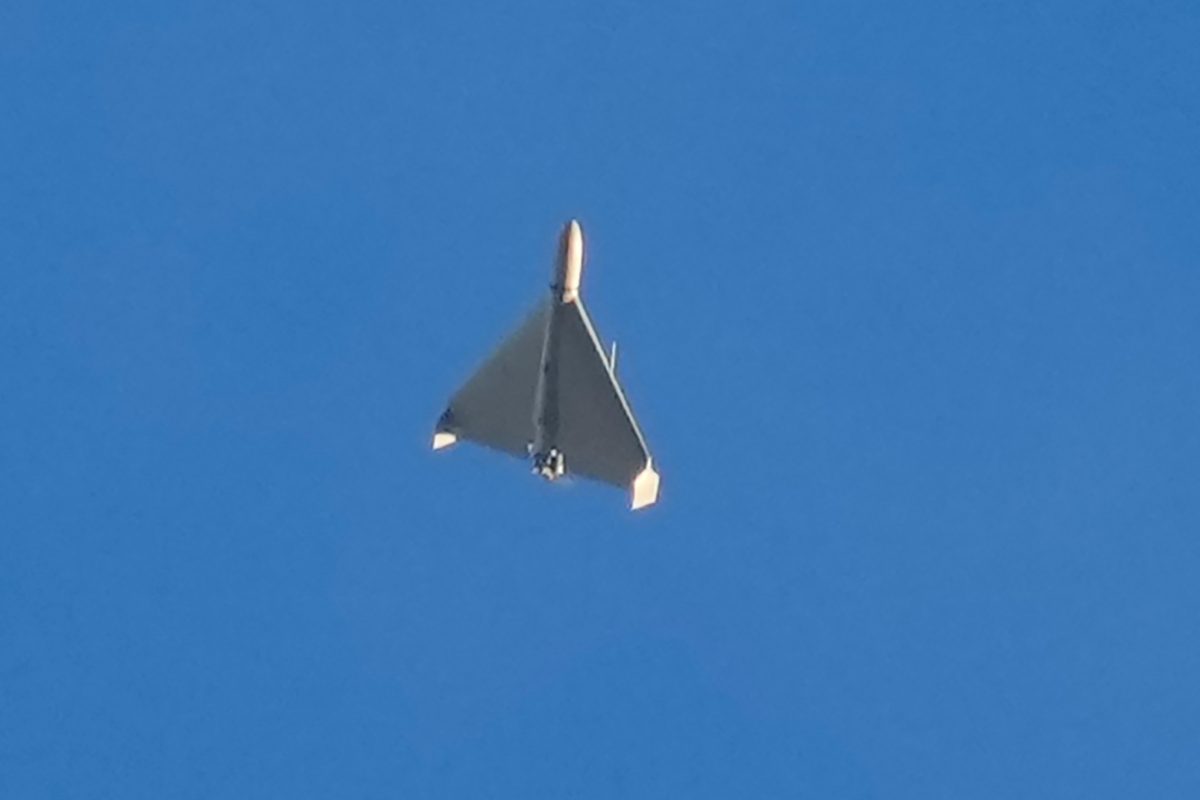
The Department of Defense is preparing to commit $54.6 billion to its Defense Autonomous Warfare Group, marking the single largest investment in autonomous military systems ever recorded. While the scale represents a necessary correction to years of underinvestment in unmanned capabilities, the massive expenditure carries equally substantial risks if implementation mirrors past procurement failures.
Learning from the Predator Experience
Military history offers a clear warning from the early deployment of Predator drones during the Afghanistan and Iraq conflicts. The initial focus centered almost exclusively on acquiring platforms—airframes, sensors, and communication links—while assuming the technology itself constituted operational capability. This proved mistaken. Each continuous surveillance patrol required approximately 150 personnel across multiple specialties, creating bottlenecks not in aircraft availability but in trained human operators and supporting infrastructure.

As former Defense Secretary Bob Gates noted, the fundamental challenge with unmanned systems proved to be manning them. The Air Force eventually established complete career fields, training pipelines, and institutional frameworks for remotely piloted operations, but the years-long delay came at significant strategic cost. The lesson emerged clearly: A drone without corresponding doctrine, trained personnel, maintenance systems, and integrated intelligence support remains merely a spreadsheet asset rather than a functional weapons system.
Three Warning Signs in Current Approach
Current autonomous warfare planning shows three concerning indicators of repeating this imbalance. First, no joint U.S. military doctrine exists for employing autonomous formations at scale—units capable of coordinating at machine speed and executing commander's intent during degraded communications. Without this foundational framework, "autonomous" remains an empty label rather than an operational capability.
Second, autonomous warfare demands entirely new organizational structures and command methodologies. Substantial force structure changes must accompany the technological investment, with commanders requiring extensive training to encode intent into parameters machines can execute independently. Current military education pipelines remain misaligned with producing leaders capable of commanding large-scale autonomous formations.
Third, effective autonomous systems require rapid feedback loops between operators, engineers, and commanders—a capability demonstrated effectively in conflict zones like Ukraine. While the U.S. cannot precisely replicate Ukraine's model, it must develop equivalent mechanisms for translating operational experience into rapid adaptation. Current bureaucratic structures move too slowly for this emerging warfare paradigm.
The Ukraine Contrast and Strategic Implications
Ukrainian and Russian forces are actively redefining modern warfare through sweeping changes to operational concepts, force structure, leader development, and adaptation cycles. The United States has yet to implement similar reforms reflecting lessons from Ukraine's use of remotely piloted systems, creating a widening gap not in technology but in the ability to employ it within an evolving combat framework.
Perhaps most alarmingly, less than two percent of the new autonomous warfare investment targets doctrine and integration—the very elements determining whether $55 billion produces a fighting force or merely expensive inventory. This comes as adversaries like China study current conflicts and Russia adapts under actual combat conditions, creating potential asymmetries that could prove persistent and difficult to overcome.
Congressional Oversight Opportunities
Legislators possess concrete mechanisms to improve outcomes from this historic investment. Congress should direct and fence at least five percent of autonomous warfare funding specifically for doctrine development, training programs, and force design. Acquisition processes must incorporate continuous feedback mechanisms rather than relying solely on static contractual requirements. Additionally, periodic reporting on adaptation cycles—measuring how quickly operational lessons translate into doctrinal, training, and procurement changes—would provide necessary accountability.
The United States has previously navigated major military transitions, though often after costly delays. The emerging era of autonomous warfare may not afford similar margins for error, particularly as global tensions remain elevated in multiple theaters. Without correcting the current imbalance between platform procurement and enabling capabilities, this $55 billion investment risks becoming another case study in how technological advantage can be squandered through inadequate preparation for its operational use.